Children's Museum of Denver with Kids - Joy Park, Exhibits and Tickets
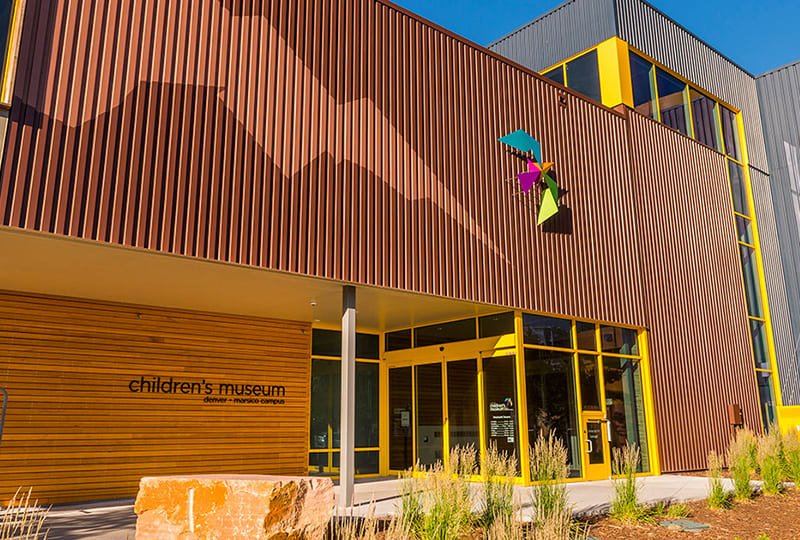
At the Children's Museum of Denver at Marsico Campus, children do more than look at displays: they splash in Water, try out jobs in My Market and Fire Station No. 1, invent in the Art Studio and explore a Colorado-inspired outdoor play landscape. This is primarily a museum for children from infancy through about age eight, not a conventional history museum. The best visit balances messy exploration with breaks, especially if Joy Park is open or an older child hopes to tackle Adventure Forest.
Under age 1 is free; age 1 costs $17.75; ages 2-59 cost $19.75; ages 60+ cost $17.75. Tickets are sold onsite, not online.
Prices, discounts and arrival →The museum suggests one to three hours. Reserve more time for water play, outdoor Joy Park and repeated visits to favorite rooms.
Bloom serves newborns through 36 months. Preschoolers love pretend play; children ages five and up may qualify for Adventure Forest.
Free visitor parking and strong baby facilities help, but active galleries, limited stroller space, wet play and weather-dependent outdoor areas take planning.
See the full Family Friction score →From tiny explorers in Bloom to big adventures in Joy Park
The Children's Museum of Denver exhibits are organized around investigating, imagining, exploring and creating, which makes the experience especially rewarding for children who learn through movement. A preschooler can serve pretend groceries in My Market, help an imaginary animal at Ready Vet Go, or act out a rescue in Fire Station No. 1. These are not performances to sit through: adults are most useful when they follow the child's ideas, help with turn-taking and resist rushing from one room to the next. School-age children may be drawn to Kinetics!, where they can test motion and gravity, or Energy, where experiments make cause and effect visible.
For younger visitors, Bloom is the biggest reason to come. This nature-inspired space is intended for newborns through 36 months and includes small-scale climbing, light-and-sound experiences, peek-a-boo features and convenient feeding areas. Toddlers who have outgrown the infant stage can also experiment with Water and Bubbles. Those galleries reward curiosity but can result in soaked sleeves, so bringing a complete change of clothes is more useful than planning a perfectly tidy itinerary. Children who need a calmer reset may prefer the Book Nook before heading back to energetic activities.
The Children's Museum of Denver Joy Park extends play outside into a miniature Colorado landscape with sand, a river, ruins, an orchard and opportunities to climb, dig and splash. Bring sun protection, a towel and a swimsuit or swim diaper when conditions suit water play. For older, confident climbers, Adventure Forest is a separate elevated 500-foot course within the outdoor area. Participants must be at least five years old OR 44 inches tall and must climb independently, with a helmet. It can close for heat or weather and follows a seasonal schedule, so do not promise it to a child without checking first. The museum's usual visit length is one to three hours, but families who spend most of their time in Joy Park may naturally linger longer.
Exploring more of the Mile High City? Discover parks, museums and age-appropriate outings in our Denver with kids guide, and pair this hands-on morning with a relaxed afternoon rather than another demanding attraction.
Best ages for pretend play, sensory discovery and first big climbs
Infant
A gentle first museum experience in Bloom with floor-level exploration, lights and textures, supported by private nursing areas. A short visit around feeding and sleep often works best.
Toddler
A prime age for Bloom, toddler-scale play, bubbles and repeated pretend routines. Bring backup clothes and expect them to revisit the same station many times.
Little Kids
An excellent fit for My Market, Fire Station No. 1, Water and art projects. Joy Park adds sand and streams; supervise closely around water and climbing.
Big Kids
A strong fit for Kinetics!, Energy, the Assembly Plant and big-body play. Adventure Forest is possible for children who meet the age or height rule and can climb independently.
Tweens
Creative and outdoorsy children may still enjoy real tools, physical challenges and Adventure Forest. Those seeking deep exhibits may finish the indoor rooms quickly.
Teen
Most teens will find the general museum geared toward much younger children. Some may enjoy mentoring siblings or the outdoor climbing challenge, but it is not a teen-focused destination.
Family Friction: wet play, open-ended rooms and outdoor plans
KidWaypoint scores eight practical family challenges. Higher scores mean more planning or effort, not less educational value. The busy, tactile indoor rooms and weather-sensitive outdoor attractions matter more here than driving or admission logistics.
Free guest parking, changing facilities and dedicated infant play reduce some barriers. The tradeoffs are first-come entry, limited stroller parking, lively shared play stations, water and sand mess, and an outdoor climbing area whose access depends on eligibility, weather and season.
| Factor | Score | Why |
|---|---|---|
| Parking & Arrival | 2/5 | Museum guest parking is free on site, with bicycle parking near the entrance. Nearby stadium and event traffic may complicate arrival, and the museum advises families to leave extra parking time on busy days. |
| Queue & Wait Time | 3/5 | General admission is sold onsite on a first-come, first-served basis; online reservation is unavailable. Popular play areas and Adventure Forest entry may require waiting, although no universal queue time is published. |
| Heat & Weather Exposure | 2/5 | Most play rooms are indoors, so rain does not cancel the whole outing. Joy Park and Adventure Forest may close in inclement weather or extreme temperatures, and outdoor water play requires sun protection. |
| Walking Distance & Terrain | 2/5 | Families move among multiple play zones and an outdoor park, with frequent standing and following active children. Choosing a few stations keeps walking manageable; Adventure Forest involves strenuous climbing. |
| Stroller & Mobility Access | 3/5 | The museum advises a stroller-free visit because designated stroller parking is limited and it does not rent strollers. Most exhibits are wheelchair accessible, but Altitude and Adventure Forest climbing structures are exceptions. |
| Restroom & Baby-Care Access | 1/5 | Most restrooms have changing tables. Bloom provides private nursing spaces and bottle warmers; another nursing station is near Energy on the second floor, and the cafe has microwaves for bottles. |
| Sensory & Crowd Load | 3/5 | Fire Station, water activities and hands-on rooms can be noisy or crowded. Free reservation-based low-sensory evenings and front-desk sensory supports offer alternatives for eligible families. |
| Schedule Flexibility | 2/5 | Self-directed exhibits allow families to change course freely, but scheduled activities, onsite-only admission, seasonal Adventure Forest hours and weather-related outdoor closures require checking on the day. |
| Scored total | 18/40 | Medium Friction |
Come light: limited stroller parking, excellent infant facilities
The museum encourages families to leave strollers behind where possible. A compact carrier, spare clothes and a simple baby-care plan can be more convenient than pushing a large stroller through active play rooms.
Stroller parking is limited throughout the building and the museum does not offer stroller rentals. If a stroller is necessary, ask staff where it can be placed without blocking circulation.
This protected early-learning environment offers age-scaled experiences, private nursing areas and bottle warmers - useful when older siblings need a different pace.
Water and Joy Park can lead to wet clothes or sandy shoes. A towel and a sealed bag for wet items make the ride home easier.
Changing tables are in most restrooms. An additional private nursing station with a chair and outlet is on the second floor near Energy; cafe microwaves can heat bottles.
Children's Museum of Denver tickets, hours and free parking
Standard admission is purchased in person, with the youngest babies free. Joy Park and Adventure Forest are included in admission, but specific activities, weather conditions and climbing requirements affect what families can use.
| Activity or service | Cost | What to know |
|---|---|---|
| Under age 1 | Free | Babies younger than their first birthday enter free with an accompanying adult. |
| Age 1 | $17.75 | Special lower price for one-year-old children. |
| Ages 2-59 | $19.75 | Standard rate applies to children ages two and older and accompanying adults through age 59. |
| Age 60+ | $17.75 | Senior admission, with the same adult-child supervision rules. |
| Museum members | Free | Admission is included with an active qualifying membership. |
| Joy Park and Adventure Forest | Included | Outdoor play is included; Adventure Forest is seasonal, weather-dependent and has climbing eligibility requirements. |
| SNAP access | $3 per person | Eligible SNAP households can show an EBT card; discounted admission applies for up to ten people per visit. |
| Joy Park Free Nights | Free on selected dates | Seasonal evening events generally run one Friday per month May-September; only Joy Park and restrooms are open. |
Family cost example: Two adults plus a five-year-old and a two-year-old pay $79.00 at standard admission rates. Add a one-year-old and the total is $96.75; a baby under one does not increase the ticket cost. Museum guest parking is free, while cafe food, souvenirs and optional paid workshops may add expense.
When can families visit, and can they book online?
- Ordinary hours are 9:00 a.m.-4:00 p.m., seven days a week. The museum lists closures for Thanksgiving, Christmas Eve, Christmas Day and New Year's Day; special events can alter opening dates.
- General-admission tickets are not sold online and regular entry is first-come, first-served. Arrive earlier if visiting during a school break or holiday, and check in together as a family.
- Adventure Forest currently follows a fall Friday-Sunday schedule through October 31, 2026, with additional selected dates. Its last entry is listed as 3:30 p.m.; weather can force earlier closure.
- Seasonal Joy Park Free Nights are separate from full museum entry. Verify the live calendar before relying on a special event or program time.
The museum specifically designs its experiences for newborns through about age eight, and ordinary guests should expect a one-to-three-hour visit. Activities at the Teaching Kitchen or Art Studio can follow separate daily schedules; some take-home art processes may have an additional fee. Adults cannot enter without a child, and children must be accompanied and supervised by adults.
Play smarter: start with the messy must-do, not every room
Six practical decisions make this highly interactive museum easier for families with young children.
- Begin where your child will care most.Choose Bloom for babies, pretend-play rooms for preschoolers or Kinetics! for school-age children. Spend meaningful time there before trying to cover the entire campus.
- Pack a separate wet-play bag.Joy Park has a river and sand, and indoor Water can get clothes damp. Take a swimsuit or swim diaper, towel, change of clothes and a bag for wet items.
- Check Adventure Forest before promising it.Climbers must be at least age five or 44 inches tall and climb independently. Helmets are required, and closed-toe shoes are recommended; seasonal hours and heat can cancel climbing.
- Leave bulky strollers in the car if feasible.Stroller parking is limited and rentals are unavailable. Use a carrier if practical, and note nursing and bottle facilities inside Bloom.
- Use the cafe or your own food for a reset.The museum allows outside food and beverages, and the cafe sells snacks and meals. Keep food out of exhibit play areas and take a break before children become overtired.
- Consider a low-sensory session when appropriate.The museum offers free low-sensory evenings by reservation for families who need reduced crowding and ambient noise. Check current dates and registration before traveling.
Children's Museum of Denver FAQs: practical answers before you go
Admission rules, children's museum of denver joy park, exhibits, climbing restrictions and baby-care logistics explained for real family visits.
How much does the Children's Museum of Denver cost, and can we reserve tickets online?
Children's Museum of Denver tickets are sold at the museum rather than through an advance online admission checkout. Under age one is free, age one costs $17.75, guests ages 2-59 are $19.75 each, and visitors age 60 and above pay $17.75. A family with two adults and two children over age two pays $79.00 before food or paid extras. Museum members have free entry, while eligible SNAP households can pay $3 per person for up to ten visitors by presenting an EBT card. Because ordinary entry is first-come, first-served, there is no guaranteed timed reservation for standard admission. Check the official visit page before setting out, especially on school holidays, and remember that adults must attend with children.
What are the best Children's Museum of Denver exhibits for toddlers and preschoolers?
For newborns through 36 months, start in Bloom, a purpose-built early-learning space with modest climbing, visual discovery, play elements and nursing facilities. Preschoolers often want to spend much longer in pretend-play settings such as My Market, Ready Vet Go and Fire Station No. 1, where they can imitate familiar adult activities and work alongside other children. Water and Bubbles reward sensory exploration but may involve wet clothes, while Book Nook provides a gentler pause. Older preschoolers can also try age-appropriate art and physics experiments in the other galleries. Rather than planning one lap of every exhibit, let your child choose two or three favorites, budget one to three hours and bring backup clothes for messy activities.
Is the Children's Museum of Denver Joy Park open in bad weather, and what should kids wear?
Children's Museum of Denver Joy Park is an outdoor play area with sand, water, climbing and Colorado-inspired features, so the experience changes substantially with the weather. The museum may close Joy Park or individual features during storms, extreme temperatures or other unsafe conditions. Do not assume the outdoor sections will be available simply because the indoor museum is open. On suitable days, dress children for digging and getting wet; pack sunscreen, a swimsuit or swim diaper, a towel, dry clothes and shoes that can handle sand or splashes. On rainy or very hot days, prioritize indoor exhibits instead. If outdoor play is the main reason for your trip, check operating updates close to departure.
Can my child climb Adventure Forest, and is it included with admission?
Adventure Forest is a 500-foot outdoor climbing course and art installation in Joy Park, rather than a simple toddler playground. It is included with regular museum admission, but climbers must be at least five years old or 44 inches tall, and they must be able to climb on their own. Children check in with an adult for orientation, helmets are required and sturdy closed-toe shoes are strongly recommended. The course involves demanding climbs, crawls and confined passages, so do not treat the age or height threshold as a guarantee that every child will enjoy it. As of October 2026, the museum lists a restricted fall schedule through October 31 and last entry at 3:30 p.m.; weather can interrupt access. Younger siblings can stay with an adult in other areas of Joy Park while an eligible child climbs.
Is parking free, and what should families know about arriving with a stroller?
Parking for museum guests is free at 2121 Children's Museum Drive, and there is free bicycle parking near the entrance. This is different from the paid public event-parking service the property offers for Broncos games or other downtown activities. The museum advises allowing extra time for parking during peak periods, and the admission line works on a first-come, first-served basis rather than an online reserved time. Although most exhibits are wheelchair accessible, the museum recommends leaving strollers in the car where possible because stroller parking is limited; stroller rentals are not available. A baby carrier can be more convenient for indoor play, while wheelchair users should note that elevated climbing structures are exceptions to full exhibit accessibility.
Can we visit with a baby, bring our own food and find a quieter space?
Yes. Babies under one enter free, and the museum has unusually useful care facilities for families with infants: Bloom is specifically designed for newborns through 36 months, has private nursing areas and bottle warmers, and breastfeeding is welcome throughout the museum. Another private nursing station is located on the second floor near the Energy exhibit, while changing tables are available in most restrooms. Outside food and beverages are allowed, and the cafe offers sandwiches, snacks, salads and drinks; keep meals outside the hands-on exhibit spaces. Standard sessions can be lively, so children who are easily overwhelmed may benefit from a short visit, breaks in quieter areas such as Book Nook, or a separately reserved low-sensory evening if eligible. Always supervise children closely; this is an active shared-play museum, not a drop-off program.