Myrtle Beach State Park with Kids - Family Tips
Myrtle Beach State Park offers a quieter alternative to the resort-lined beaches of the Grand Strand. Families can explore a mile of relatively undeveloped oceanfront, walk through a maritime forest, visit a fishing pier and discover coastal wildlife at the Nature Center. Children can search for shells and shark teeth, play on two playgrounds or join educational programs.The main challenges are busy summer parking, outdoor weather and choosing safe swimming areas.
Ages 16+ pay $8, ages 6-15 pay $4, and ages 5 and under enter free. Fishing, camping and selected programs cost extra.
Admission and family costs →Plan a couple of hours for the beach, pier and Nature Center. Allow longer for picnicking, swimming or nature trails when open.
Toddlers enjoy sand and playgrounds; older children can explore coastal ecosystems, birdwatching and fishing.
Useful restrooms and family facilities help, but summer parking demand, weather exposure and ocean safety require planning.
See the Family Friction score →A protected beach, maritime forest and coastal wildlife
Myrtle Beach State Park opened in 1936 as South Carolina's first state park. Today, its protected maritime forest and roughly one-mile stretch of natural beach offer a different experience from the busy resort areas. Tall live oaks, magnolias and dunes create a setting where children can explore coastal nature rather than simply move between hotels and beach shops.
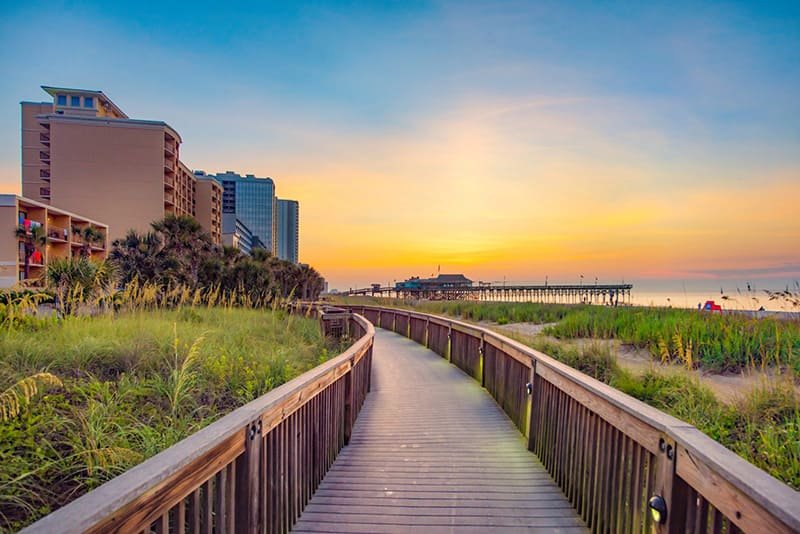
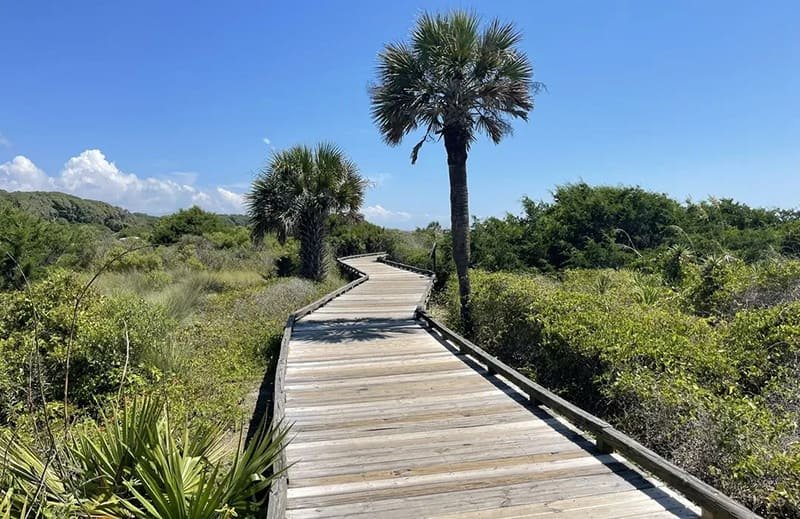
The beach is the main attraction for many families. Children can build sandcastles, search for shells, look for shark teeth and observe seabirds. Boardwalks provide access across the dune system, while outdoor showers, changing facilities and nearby restrooms make a beach day more manageable.
Swimming is permitted in the ocean at visitors' own risk. Seasonal lifeguards are stationed on the beach north of the fishing pier, generally from mid-May to mid-September. Families should choose a lifeguarded area when available and never assume the entire mile of shoreline is supervised.
What is there to do at Myrtle Beach State Park?
Beyond the beach, the park has two main playgrounds: one in the picnic area near the ocean and another within the campground between camping circles three and five. Families can enjoy picnic tables and grills or use the designated picnic shelters.
The Nature Center provides opportunities to learn about local animals and habitats. Its published hours are Tuesday through Sunday, 11:30 a.m.-4:30 p.m. Ranger-led and self-guided activities cover subjects such as sea turtles, birds and coastal ecology. Check the current program calendar because activities and prices vary.
The fishing pier offers excellent views of the beach and opportunities to observe anglers. Fishing requires an additional fee, but visitors fishing directly from this pier do not need a separate South Carolina saltwater fishing license. Children interested in marine wildlife can look for the educational fish-identification displays around the pier.
Myrtle Beach State Park trails
Two short trails introduce families to the maritime forest. Sculptured Oak Trail is approximately 0.5 miles, while Yaupon Trail is about 0.4 miles. Both are rated easy and pass through wooded habitats with live oaks, hollies, magnolias and other coastal plants. The trails connect toward the beach via boardwalks, making them suitable for a short nature-focused outing when open.
Children can look for birds, identify different leaves and explore the park's self-guided scavenger hunt activities. The official scavenger hunt takes approximately one hour and covers about one mile.
Important seasonal closure: The park has announced that all nature trails will close from November through January for maintenance and construction. Families visiting during that period should plan around the beach, pier, Nature Center and other accessible park areas instead of expecting a forest hike.
Looking for more family activities along the coast? Explore beaches, nature attractions, museums and entertainment in our Myrtle Beach with kids guide. This state park is especially appealing when your family wants a calmer outdoor day away from the main tourist strip.
Nature discoveries for toddlers through teens
Infant
Babies enter free. Choose shaded picnic areas, bring sun protection and use a stroller on suitable paved paths and boardwalks.
Toddler
Toddlers can enjoy sand play, playgrounds and short walks. Stay close near the ocean and consider visiting before peak afternoon heat.
Little Kids
Children can search for shells, explore the Nature Center and enjoy the playgrounds. Simple birdwatching and nature games add variety.
Big Kids
A good age for forest scavenger hunts, beach discoveries and learning about sea turtles, dunes and coastal wildlife.
Tweens
Tweens may enjoy nature trails, fishing, birdwatching and learning how maritime forests protect coastal environments.
Teen
Teens interested in swimming, nature photography, fishing or coastal ecology can enjoy a longer visit beyond the main beach.
Family Friction: beach safety, summer crowds and weather exposure
KidWaypoint evaluates eight practical family challenges. Higher scores indicate more effort or planning rather than lower attraction quality.
Restrooms, changing facilities, outdoor showers and playgrounds make family visits more comfortable. The main challenges are peak-season parking, outdoor heat, sandy terrain and supervising children near the ocean. Early arrival and choosing activities near the main beach access can reduce the effort.
| Factor | Score | Why |
|---|---|---|
| Parking & Arrival | 3/5 | Parking is available within the park, but spaces are limited. Summer weekends and holidays can bring capacity closures, especially between 10:00 a.m. and 2:00 p.m. |
| Queue & Wait Time | 2/5 | Vehicles enter through a paid admission gate. During peak periods, the park may temporarily stop admitting cars until parking becomes available. |
| Heat & Weather Exposure | 4/5 | The beach and most recreation areas are outdoors, with exposure to intense sun, heat, wind and thunderstorms. Forested sections provide some shade. |
| Walking Distance & Terrain | 2/5 | Beach sand and natural trails can be tiring, but boardwalks and short walking routes help families choose manageable distances. |
| Stroller & Mobility Access | 2/5 | Boardwalks and developed park areas offer easier access than beach sand or forest trails. Stroller suitability varies by route and surface. |
| Restroom & Baby-Care Access | 1/5 | Bathrooms, changing facilities and outdoor showers are available near beach access areas. Dedicated nursing facilities are not confirmed in the published information. |
| Sensory & Crowd Load | 2/5 | The park offers quieter natural surroundings than the central resort beach, although popular beach sections and playgrounds can still be crowded. |
| Schedule Flexibility | 2/5 | Families can explore at their own pace, but Nature Center hours, seasonal lifeguards, trail maintenance closures and capacity limits affect activities. |
| Scored total | 18/40 | Medium Friction |
Use boardwalks and developed areas with younger children
The park has useful family facilities near the beach, but forest paths and soft sand can be difficult for ordinary strollers.
Developed picnic and beach-access areas reduce unnecessary walking with children, supplies and strollers.
The park provides boardwalk crossings over the dunes. Ordinary strollers may still struggle once they reach deep sand.
The Sculptured Oak and Yaupon trails are natural walking routes. Uneven ground and seasonal closures may make them unsuitable for wheeled equipment.
Bathrooms, changing spaces and outdoor showers are available near the beach. Bring dry clothes and a bag for wet or sandy items.
Myrtle Beach State Park tickets, opening hours and extra costs
Standard admission covers the park, beach, nature trails when open and public recreation areas. Fishing, camping and certain educational programs require additional payment.
| Ticket or service | Cost | What to know |
|---|---|---|
| Adult admission, ages 16+ | $8 | Daily park admission for beach, general recreation areas and nature activities. |
| Child admission, ages 6-15 | $4 | Access to the park's main public areas. |
| Children ages 0-5 | Free | No daily admission charge. |
| South Carolina resident seniors, 65+ | $5 | Reduced daily admission for eligible residents. |
| Beach and playgrounds | Included | Oceanfront access, two playgrounds, picnic tables and outdoor showers. |
| Sculptured Oak and Yaupon trails | Included when open | Trails are scheduled to close November through January for maintenance and construction. |
| Nature Center | Included | Published hours: Tuesday-Sunday, 11:30 a.m.-4:30 p.m. |
| Pier fishing, ages 16+ | $8 per day | Additional charge beyond park admission. No separate SC saltwater license is needed to fish from the pier. |
| Pier fishing, ages 6-15 | $3 per day | Daily fishing pass required; ages 5 and younger fish free. |
| Pier fishing, eligible SC seniors | $5 per day | Discounted daily pier fishing rate. |
| Camping and cabins | Varies | Separate overnight reservations and accommodation charges. |
| Parking | Included with admission | Limited vehicle spaces; the park may temporarily close to incoming visitors when full. |
Family cost example: Two adults and two children ages 8 and 11 pay $24 for daytime park admission. If one child is five or younger, the total drops to $20. Adding pier fishing for both adults and the eight-year-old would add $19 in daily fishing fees, without including equipment rental.
What time does Myrtle Beach State Park open?
- March-November: daily 6:00 a.m.-10:00 p.m.
- December-February: daily 6:00 a.m.-8:00 p.m.
- Nature Center: Tuesday-Sunday, 11:30 a.m.-4:30 p.m.
- Pier Store: daily 6:30 a.m.-5:00 p.m.
- Park office: daily 8:00 a.m.-5:00 p.m.
- All nature trails are scheduled to close from November through January for maintenance.
- Summer parking is busiest from approximately 10:00 a.m. to 2:00 p.m., particularly on weekends and holidays.
The best arrival time for a family beach day is early morning, before peak parking demand and stronger afternoon heat. Check the park's official notices before visiting for temporary closures or changes to programs.
Plan a calmer beach day with fewer surprises
The best family visit combines beach time with one additional activity rather than attempting to explore every part of the park.
- Arrive before the summer parking rush. The park can reach capacity between 10:00 a.m. and 2:00 p.m. on busy days. Early arrival improves your chances of getting a space.
- Choose lifeguarded swimming areas. Seasonal lifeguards operate north of the pier, generally from mid-May through mid-September. Always check flags, weather and water conditions.
- Bring a picnic and refillable water. Picnic tables and grills are available. Packing familiar snacks helps families avoid leaving the park during busy periods.
- Make the Nature Center part of your outing. Check its Tuesday-Sunday operating schedule and current ranger programs before promising children an indoor wildlife activity.
- Check trail closures before planning a hike. Sculptured Oak and Yaupon trails are scheduled to be closed from November through January.
- Search for shells without disturbing wildlife. Encourage children to observe seabirds, plants and any turtle nesting areas from a distance. Never approach or interfere with nesting sea turtles.
- Bring dry clothes for the trip home. Outdoor showers and changing facilities help, but children may still leave with sandy shoes and wet swimwear.
- Check fishing fees separately. Standard admission does not include pier fishing. A separate SC fishing license is not required on the pier, but daily fishing fees apply.
Myrtle Beach State Park FAQ: hours, admission, trails and swimming
Essential information for parents planning a beach and nature outing in South Carolina.
What time does Myrtle Beach State Park open and close?
Myrtle Beach State Park opens daily at 6:00 a.m. From March through November, the park closes at 10:00 p.m.; from December through February, it closes at 8:00 p.m. The Nature Center operates Tuesday through Sunday from 11:30 a.m. to 4:30 p.m., while the Pier Store generally opens from 6:30 a.m. to 5:00 p.m. Individual programs and facilities may have different schedules. During summer, arriving early is especially useful because limited parking can fill and the park may temporarily stop admitting cars.
What is there to do at Myrtle Beach State Park with children?
Families can explore a mile of natural beach, look for seashells and shark teeth, use two playgrounds, visit the Nature Center, have a picnic or enjoy views from the fishing pier. When open, the short Sculptured Oak and Yaupon nature trails provide opportunities to observe a maritime forest and coastal birds. Ranger-led activities and self-guided scavenger hunts offer additional learning opportunities. The park is particularly suited to families who enjoy a slower, nature-focused beach visit rather than resort entertainment.
Where is Myrtle Beach State Park located, and is parking included?
Myrtle Beach State Park is located at 4401 S Kings Highway, Myrtle Beach, SC 29575, approximately three miles south of downtown on Business Highway 17. The 312-acre park includes a protected maritime forest and oceanfront recreation areas. Parking is included with paid park admission, but the number of spaces is limited. Summer weekends and holidays are particularly busy, and the park identifies 10:00 a.m.-2:00 p.m. as a peak arrival period. Families should arrive early and avoid unnecessary departures because re-entry can be delayed when the park is full.
Which Myrtle Beach State Park trails are best for kids?
Sculptured Oak Trail is approximately 0.5 miles and Yaupon Trail is about 0.4 miles. Both are designated easy hiking trails through maritime forest habitat. Children can observe live oaks, magnolias, birds and native coastal plants along the routes. The trails connect toward the beach using boardwalk access, and families can combine them for a slightly longer walk. However, the park has announced a complete trail closure from November through January for maintenance and construction. During those months, families should choose other park activities rather than expecting the forest trails to be available.
How much are Myrtle Beach State Park tickets for a family?
Daily Myrtle Beach State Park admission costs $8 for adults ages 16 and older, $4 for children ages 6-15 and is free for children ages five and younger. South Carolina resident seniors age 65 and older pay $5. A family with two adults and two children ages eight and ten pays $24. Admission includes access to the public beach, playgrounds and nature trails when available. Fishing from the pier, overnight camping and certain programs have separate charges. Park parking is included with admission, subject to available spaces.
Is Myrtle Beach State Park safe for swimming with children?
Swimming is allowed in the Atlantic Ocean at visitors' own risk. Horry County provides seasonal lifeguards north of the fishing pier, generally from mid-May through mid-September. Parents should supervise children continuously, choose lifeguarded areas when available and pay attention to rip-current warnings. The park advises keeping at least 150 yards away from the fishing pier while swimming. Always leave the beach during thunder or lightning, and never assume calm-looking water is free from dangerous currents. Outdoor showers, changing facilities and restrooms are available near beach access areas.