The Walt Disney Family Museum with Kids in San Francisco
The Walt Disney Family Museum in San Francisco tells the story of a working artist and filmmaker, not a theme park. Children can watch early cartoons take shape, discover how sound and movement changed animation, and study a remarkable miniature Disneyland. Families who enjoy drawing, movies and inventive machines will find far more to discuss here than familiar characters.
Children ages 5 and under enter free. Senior and student tickets are $20; screenings, programs and special exhibitions may cost extra.
See ticket categories and add-ons →A focused family visit can be shorter, while animation fans may linger at films, original artwork and the Disneyland model.
School-age children and teens can follow the filmmaking story; preschoolers may prefer selected visual highlights rather than every gallery.
Indoor galleries, step-free museum access and strong stroller support help; paid Presidio parking, screening audio and timed tickets add planning.
Read the Family Friction details →From hand-drawn characters to a tiny Disneyland full of details
A wall of familiar characters is not what makes The Walt Disney Family Museum interesting. Children enter a story about how cartoons were actually made, before computers could move a character across a screen. Original drawings, early films, storyboard sequences and listening stations reveal that a few seconds of movement once required many individual artistic choices. The galleries follow Walt Disney's childhood, early experiments and studio breakthroughs, so parents can point out the difference between a finished cartoon and the drafts, cameras and sound techniques behind it. Visitors encounter milestones associated with Mickey Mouse and synchronized sound, but the displays are as much about artists, collaborators, mistakes and problem-solving as they are about famous films. This is especially engaging for children who like to draw characters or wonder how a movie begins.
The technical exhibits are often the ones that prompt the best questions. A multiplane camera demonstrates how layers of artwork could create depth in animated scenes, long before digital effects were available. Nearby examples of storyboards, music and timing make the filmmaking process easier to understand. The museum also presents the extraordinary collection of honors from Walt Disney's career, including the distinctive Academy Award honoring Snow White and the Seven Dwarfs. A child who has never seen an older black-and-white cartoon may be surprised by how much expression animators achieved with simple lines. Parents can keep the visit lively by choosing a few short films or interactive stations instead of reading every biographical panel. The museum's chronological organization helps older children connect changes in animation with the tools that made them possible.
One of the most memorable displays is the large model of Disneyland as Walt envisioned it, crowded with miniature streets, rides, buildings and moving details. It can hold an observant child for a long time, especially if you ask them to find tiny trains and different themed areas. The Lilly Belle miniature locomotive and the story of Walt's fascination with railroads provide a different way into his imagination. Beyond the permanent galleries, the museum runs film screenings, talks and educational programs, but these should not be assumed to be included with ordinary admission. There are no roller coasters or costumed-character greetings here. The payoff is seeing a creative career unfold through real objects, sketches, mechanical inventions and personal history. Families with younger children may want a shorter route built around the animated clips and Disneyland model, leaving the longer reading for another visit.
Make the museum one part of a San Francisco family day. Find outdoor breaks, hands-on attractions and ideas for different ages in our guide to San Francisco with kids.
The more they love making things, the more they gain from the galleries
Infant
Babies can accompany a parent in a compact stroller and benefit from the accessible interior, but the displayed artwork, films and biographical text are not designed for infant participation. A short outing and care breaks work better than a full tour.
Toddler
Some moving images and colorful displays may catch a toddler’s attention. Much of the museum asks visitors to look and listen rather than touch, so plan one or two visual stops with an adult and avoid a long chronological route.
Little Kids
Children who already enjoy animated movies may like the Disneyland model, miniature train and short film clips. They are unlikely to follow every historical panel, making a selected highlight route more sensible than trying to see everything.
Big Kids
A strong age for noticing early animation drawings, understanding how a camera changes flat pictures into movement and spotting details in the miniature Disneyland. Ask them to compare old and modern cartoons as you explore.
Tweens
Excellent for tweens who sketch, make videos or enjoy explaining how creative technology works. The storyboards, original artifacts and multiplane camera reveal the teamwork and experimentation hidden behind finished films.
Teen
Animation, design, filmmaking and media-history enthusiasts can engage with the personal narrative and production methods in depth. Teens looking for an interactive thrill attraction may prefer a different stop.
Family Friction: calm galleries, with a few practical catches
KidWaypoint considers arrival, waiting, weather, walking, stroller use, care facilities, sensory demands and schedule freedom. A higher score signals more family logistics, not lower cultural value.
Most of the visit takes place indoors, with accessible galleries and useful support for caregivers carrying small children. Compact strollers may be brought inside, a limited number are available to borrow, and most restrooms have changing tables. The museum encourages timed tickets and the neighboring Presidio lots charge for parking, but the building is not an enormous walking destination. Films and listening stations add sound, while noise-cancelling headphones are available. The fixed opening schedule and optional screenings are the main reasons to plan ahead.
| Factor | Score | Why |
|---|---|---|
| Parking & Arrival | 2/5 | Paid parking is available across the Main Parade Lawn or behind the museum at Taylor Road; accessible spaces are identified nearby. The museum is in Presidio, not downtown Montgomery Street. |
| Queue & Wait Time | 1/5 | Timed admission helps manage arrivals. The museum recommends reserving ahead because admission slots have limited capacity, but does not establish routine long entry lines. |
| Heat & Weather Exposure | 0/5 | Permanent galleries are indoors. Families may cross exposed Presidio paths when arriving or take an outdoor break, but the museum experience itself is not dependent on good weather. |
| Walking Distance & Terrain | 1/5 | The galleries occupy an indoor historic building with a planned progression. Families can concentrate on selected displays; some walking and standing are still part of a complete visit. |
| Stroller & Mobility Access | 2/5 | Compact strollers, wheelchairs and mobility aids are welcome, while oversized everyday strollers, double strollers and wagons are restricted. Larger mobility strollers are accommodated when needed for access. |
| Restroom & Baby-Care Access | 1/5 | The museum reports changing tables in most restrooms, universal restrooms in the galleries and additional restrooms on the lower level. |
| Sensory & Crowd Load | 2/5 | Video, music and listening stations are common. Complimentary noise-cancelling headphones and a downloadable social narrative help children sensitive to busy media environments. |
| Schedule Flexibility | 2/5 | A timed entry reservation and defined museum closing time require planning; family visits through the permanent galleries are otherwise self-paced. Separate screenings have their own schedules. |
| Scored total | 11/40 | Low Friction |
Compact strollers are welcome; oversized models need a different plan
The museum is wheelchair accessible and welcomes compact strollers throughout its galleries. The major distinction is stroller size: ordinary double strollers, wagons and oversized models are not permitted, while larger mobility strollers are accommodated when required for accessibility. Plan how you will carry or transport a small child before arriving with bulky gear.
Personal compact strollers may be used inside the museum. Standard double strollers and wagons are not permitted in the galleries or Museum Store, even if they are convenient for walking through the Presidio. The museum specifically recommends leaving large ordinary strollers in the car. Do not assume a folded oversized stroller can be kept beside every exhibit.
The museum offers complimentary compact strollers and manual wheelchairs on a first-come, first-served basis. A rental is not guaranteed simply because your family has paid for admission. Ask at the Ticket Desk when you arrive, or contact the team in advance if a loaner is important to your plan. The museum also welcomes walkers, scooters and personal wheelchairs.
An oversized stroller used as a mobility aid is treated differently from a large stroller brought only for convenience. The museum states that larger mobility strollers and wheelchairs are accommodated for accessibility purposes. Families who depend on such equipment should discuss their needs with Guest Experience staff before traveling rather than leaving essential mobility support behind.
Main restrooms are on the lower level below the store, with two universal restrooms in the galleries; most restrooms include changing tables. These confirmed amenities help with diaper changes during a longer visit. For children bothered by exhibit audio, free noise-cancelling headphones are offered while supplies last. The museum also has a downloadable social narrative that can prepare a child for the layout and typical visit.
The Walt Disney Family Museum tickets, hours and Presidio parking
General admission covers the permanent museum galleries. Movie screenings, special exhibitions, workshops and other events can carry separate terms. The museum recommends reserved timed admission, and children younger than twelve must remain with a responsible adult.
| Ticket or rental | Price |
|---|---|
| General admission, adults | $30 |
| General admission, seniors 65+ | $20 |
| General admission, students with valid ID | $20 |
| General admission, youth ages 6-17 | $15 |
| General admission, children ages 0-5 | Free |
| Museum members, general admission | Free |
| Film screening, adult / senior / student | $10 |
| Film screening, youth | $8 |
Additional costs: Film screenings cost $5 when purchased with general admission or for an eligible member guest; members and children 5 and under attend screenings free. Special exhibitions and programs may carry separate charges. Presidio parking and café purchases are extra. Tickets for very young children should follow the museum’s reservation instructions.
The Walt Disney Family Museum hours and arrival planning
- Usual opening days: Thursday through Sunday.
- Public museum hours: 10:00 a.m.-5:30 p.m.; last gallery admission at 4:30 p.m.
- Check the museum calendar for holiday closures, special programs and occasional schedule changes.
- Choose a timed admission slot in advance, especially when planning a particular film screening or a short family day.
The gallery route is self-paced, and many families spend two to three hours inside. Children who want to watch long film excerpts or read the historical panels may use more of that window than younger children who prefer the miniature model and a handful of short videos. Film tickets and special-program reservations are separate from a standard gallery visit, so check the event details rather than assuming a screening is included.
Find the Disneyland model, then follow the ideas that built it
The most memorable discoveries often come from comparing an early sketch with the elaborate worlds Disney eventually created. A focused route helps kids stay curious instead of getting lost in the timelines.
- Explain the difference before entering.Tell children this is a museum about Walt Disney, drawing, film and inventive technology, not a miniature Disneyland with rides or character meetings.
- Start a drawing conversation.At the early animation galleries, ask children what details make a character look surprised, frightened or excited before you move to the finished film clips.
- Save time for the model.Do not rush past the large Disneyland miniature. Let each child choose a land, spot a train and compare its arrangement with a theme park they recognize.
- Consider sound-sensitive visitors.The galleries contain film audio and listening stations. Ask about the museum’s complimentary noise-cancelling headphones and use the social narrative if transitions are difficult.
- Plan screenings separately.A regular ticket is not a promise of a free film screening. Check the theater schedule, ticket cost and running time before committing children to an additional program.
- Pair the visit with fresh air.The Presidio Main Parade Lawn and nearby outdoor areas offer space to move after a museum visit; plan for variable San Francisco wind and weather outside.
Questions families ask before stepping into Disney history
A closer look at the museum’s purpose, the Disneyland model, visit length and what children can actually expect.
What is The Walt Disney Family Museum, and is it connected to Disneyland?
The Walt Disney Family Museum is a nonprofit museum devoted to Walt Disney's life, artistic development and work in animation, film, television and theme-park design. It presents original drawings, personal items, early movies, production equipment, awards and detailed models, rather than rides or character meet-and-greets. The museum was founded through the efforts of Walt's daughter Diane Disney Miller and her family. Despite the familiar name and imagery, it is an independent institution, not a theme-park branch of the Walt Disney Company. Families familiar with Disneyland will recognize many creative milestones, but the galleries also explain failed business attempts, new technical approaches and the people who contributed to Disney productions. Think of it as a story about creativity and problem-solving, with Disney characters appearing as historical examples along the way.
How did The Walt Disney Family Museum come to be in the Presidio?
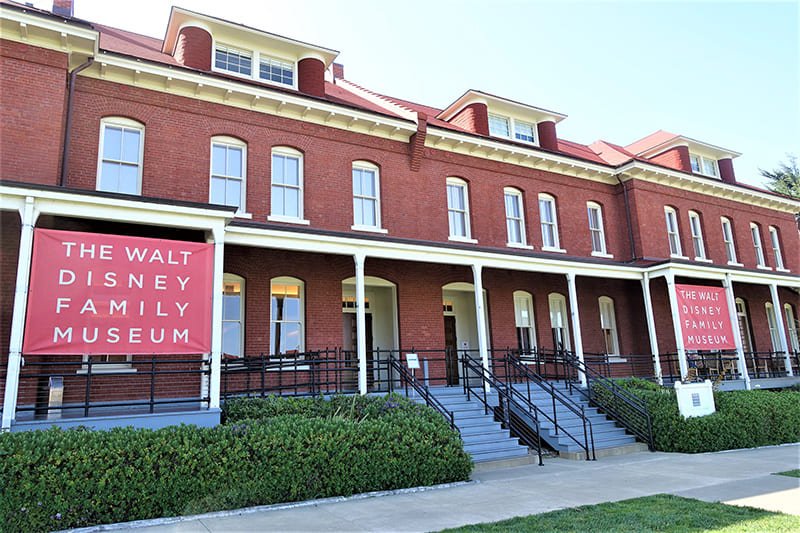
The museum opened to the public after Walt Disney’s family developed a place dedicated to preserving his personal and creative history. Its home is a restored former Army barracks in San Francisco's Presidio, a historic military district that is now a national park site. The project was championed by Walt Disney's daughter, Diane Disney Miller, who wanted to tell her father's personal story through authentic documents, artworks and objects. The building is different from the modern studio spaces visitors may imagine when they hear the Disney name. Its brick exterior also makes the museum a useful stop for families interested in the Presidio itself. Children may enjoy hearing that an old military building was transformed into galleries filled with movie history. Its permanent galleries trace a much longer story than the museum’s own history, and temporary programs can change between visits.
Is The Walt Disney Family Museum worth it for children who just love Disney movies?
It depends on what makes those movies exciting to the child. A youngster who likes drawing, figuring out how animation works or comparing older and newer characters may find the museum fascinating. The multiplane camera, storyboards, short film clips and elaborate Disneyland model give parents plenty of tangible objects to discuss. Children who mainly want to see Elsa, meet Mickey Mouse or go on rides might be disappointed, because this is a historical museum rather than a themed entertainment center. Parents of preschoolers can keep the outing rewarding by selecting the most visual displays and ending before the child loses interest. School-age children and teens who enjoy art or filmmaking can usually follow more of the full chronological story. For many families, the value comes from what they learn about creative work, not the number of attractions they can ride.
How long does The Walt Disney Family Museum take with kids?
Most visitors spend approximately two to three hours exploring the permanent galleries, but the right family schedule depends on ages and attention spans. A younger child may enjoy only a shorter selection of clips, animation tools and the Disneyland model, while a teen interested in movies might want much more time for photographs, letters, storyboards and recorded interviews. Trying to read every panel while supervising a restless preschooler is unlikely to improve the visit. A helpful compromise is to choose two or three priorities before entering and let older children linger where they find something intriguing. If you have booked a separate film screening, add its actual running time and check whether there is a gap between your gallery reservation and the show. The museum has a closing time and last-admission cutoff, so an arrival near the end of the day leaves less time for a relaxed visit.
What makes the Disneyland model and early animation exhibits special?
The large Disneyland model presents the theme park as Walt Disney imagined and developed it, not simply as a current tourist map. Young visitors can search for miniature buildings, trains, paths and themed areas while parents explain how a drawing becomes a physical place that families can explore. Elsewhere in the museum, early animation artwork shows how artists invented expressions and movements from successive still images. The multiplane camera adds an engineering angle: several layers of artwork could move at different speeds, creating depth in animated scenes. These exhibits work well together because one reveals the mechanics of making a moving picture, while the other shows the same kind of imaginative planning on a much bigger scale. Children who bring a sketchbook might enjoy inventing a tiny attraction or character afterward, although the museum's collection objects should not be touched unless a display specifically invites interaction.
Are the films, workshops and special exhibitions included in general admission?
Not necessarily. A standard gallery ticket covers the permanent museum experience, but theater screenings, special exhibitions, workshops and talks can have additional prices, separate booking requirements or limited space. The museum posts specific film ticket categories, including discounts when a screening is purchased with general admission, so do not assume one ticket automatically covers a whole day of events. This matters for families trying to schedule a child's favorite animated feature: a screening may occur at a different time than the gallery entry or may not be offered on the day of the visit. Read the listing for the particular program to see the age suitability, duration and purchasing instructions. If a special activity is your main reason for going, reserve it before organizing the rest of your Presidio itinerary. The regular permanent galleries are still a substantial visit without an added event.