Golden Gate Bridge with Kids: a Short San Francisco Walk
The Golden Gate Bridge is more than a photograph from a viewpoint. Walk out from the San Francisco end and children can feel the bridge move from landscape to enormous engineering project: towers overhead, cables climbing into the fog and ships passing far below. The pedestrian sidewalk is free, and families can turn around after a few minutes rather than committing to a full crossing. Check the sidewalk hours, bring a warm layer and plan to keep little walkers close.
Walking on the public pedestrian sidewalk and viewing the bridge from the south-end plaza cost nothing. Car parking, food and optional tours are separate.
Free walk and optional costs →A brief viewpoint visit and a short walk onto the bridge fit within roughly 30-75 minutes. Add time only if children want a longer out-and-back route.
Children who can walk safely beside traffic and appreciate giant structures tend to enjoy this outing most. Toddlers can come in a well-controlled stroller.
No admission queue or ticket helps, but wind, traffic noise, a narrow shared environment and scarce parking can raise the effort for families.
See the Family Friction breakdown →Stand beneath the towers, then decide how far the family wants to go
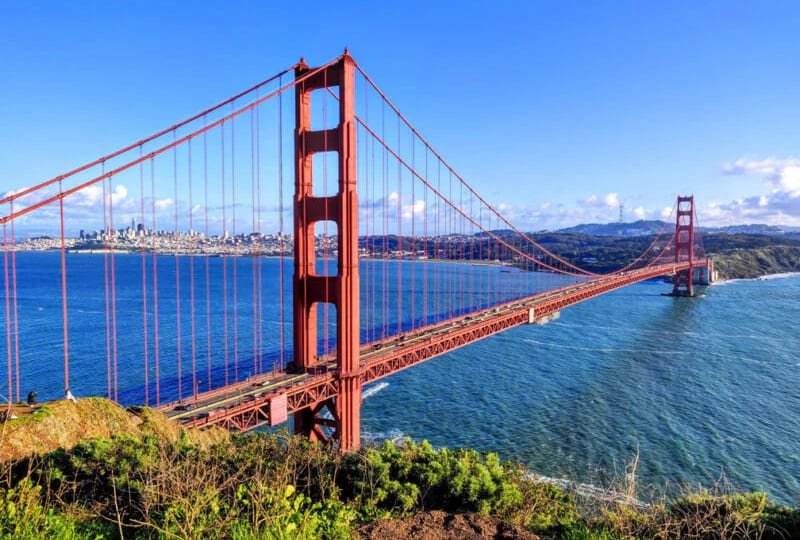
The first surprise for children is the scale. From a distance, the Golden Gate Bridge looks like two neat red-orange towers linked by delicate lines. On the walkway, the towers become huge steel frames and the vertical suspension cables line up like giant strings. Children can compare the thickness of the cables, look for ships in the strait and watch fog move across the Marin Headlands. The bridge spans the entrance to San Francisco Bay, linking the city with Marin County, so the view changes as you walk farther from shore. If a child is interested in how things work, start with the exhibits near the south-end Welcome Center before stepping onto the pedestrian sidewalk. The bridge's color, International Orange, is easy to spot even on a gray afternoon, though fog can hide the far side completely.
The south-end visitor plaza is a useful starting point for a family visit. There are viewpoints, interpretive displays and the Golden Gate Bridge Welcome Center, which explains the bridge's history and engineering. Outside, families can examine a cross-section of a main suspension cable and other displays that turn an abstract number into something children can see. From there, approach the pedestrian entrance to the east sidewalk. A ten-minute walk out and a ten-minute walk back may be enough for a preschooler; school-age children may want to continue until one tower looms overhead. There is no special prize for reaching the far side. One full crossing is about 1.7 miles, and anyone who plans to walk back doubles the distance before adding the trip from the parking lot or bus stop.
This is a very different kind of outing from a museum. Vehicles run beside the walkway, gusts can surprise even steady walkers, and cyclists may use some shared sections according to the bridge's operating rules. Young children need close supervision, particularly when everyone stops for photographs. Families who prefer a quieter picture can spend extra time at the south-end viewpoints instead of pushing farther onto the span. The Golden Gate Bridge works well as a short, memorable stop paired with another Presidio outing, but conditions matter more than the clock: if fog erases the view, the wind is unpleasant or a child becomes anxious, it is perfectly reasonable to turn around. The walk itself is the attraction.
Make the bridge one stop in your San Francisco plan. Compare waterfront sights, parks and other family activities in our San Francisco with kids guide.
Who likes standing on the bridge, and who prefers seeing it from shore?
Infant
Infants can accompany a caregiver in a secure stroller on the pedestrian route, but the wind, traffic noise and absence of a place to settle midway make a short plaza-and-sidewalk visit preferable. Check weather before approaching the span.
Toddler
Toddlers may delight in seeing the huge towers and passing ships, but the busy walkway is not somewhere to run. Keep them in a stroller or immediately beside an adult and choose a very short out-and-back stretch.
Little Kids
Kids of this age often enjoy identifying cables, spotting boats and reaching a visible landmark before turning around. A simple mission, such as walking toward the first tower, is more engaging than insisting on a full crossing.
Big Kids
School-age children can understand how the suspension structure works and enjoy the changing bay views. Let them compare the bridge from the plaza with its much larger appearance from the walkway.
Tweens
Tweens may appreciate the engineering exhibits, the unusual height above the water and a longer walk if conditions are comfortable. They can help decide the turnaround point based on the weather and family energy.
Teen
Teens interested in photography, architecture or big-city landmarks may want more time to capture the cables, towers and headlands from different angles. Explain that cycling and pedestrian rules are strictly managed.
Family Friction: the wind and arrival are harder than the walk itself
KidWaypoint evaluates practical friction for families across arrival, waiting, weather, terrain, mobility, facilities, sensory load and scheduling. Here the public path is simple and free, but the exposed setting deserves more attention than a typical paved park walk.
There are no admission tickets or tour times to manage for an ordinary bridge walk, and families can turn around whenever they need to. The main effort comes from reaching the south-end plaza without relying on limited parking, then navigating a busy, noisy, often windy pedestrian route. The paved east sidewalk allows stroller use, but it is not a sheltered promenade and cyclists can be present on designated shared segments. Restrooms and accessible facilities at the visitor area make preparation easier, provided caregivers use them before setting out.
| Factor | Score | Why |
|---|---|---|
| Parking & Arrival | 3/5 | The southeast visitor lot is small, paid and subject to restrictions or closures; transit avoids the uncertainty of finding a space at a popular landmark. |
| Queue & Wait Time | 0/5 | No admission checkpoint or ticket queue is required for ordinary walking access. Crowded stretches can still slow movement and photographs. |
| Heat & Weather Exposure | 4/5 | The elevated outdoor sidewalk has no weather shelter. Wind, fog, sudden chill and rain can make even a short walk uncomfortable. |
| Walking Distance & Terrain | 2/5 | The paved sidewalk is straightforward, and families choose their own turnaround point. The bridge is long, and reaching the entrance from transit or parking adds steps. |
| Stroller & Mobility Access | 2/5 | Pedestrians using wheelchairs are allowed on the east sidewalk, and families can push strollers there. Wind, narrow busy areas and shared cyclist movements require extra care. |
| Restroom & Baby-Care Access | 2/5 | Accessible public restrooms are at the south-end visitor plaza, not out along the bridge sidewalk. Specific baby-changing facilities are not established here. |
| Sensory & Crowd Load | 4/5 | Traffic runs immediately beside the walkway, wind can be loud and visitors may cluster for photos. The plaza offers a less intense alternative. |
| Schedule Flexibility | 1/5 | There is no timed ticket or minimum walking distance, but pedestrian gates close at published seasonal times and temporary restrictions may apply. |
| Scored total | 18/40 | Medium Friction |
Stroller access on Golden Gate Bridge: a paved route with real exposure
The pedestrian east sidewalk permits visitors using wheelchairs and is a practical route for a stroller, but it is not equivalent to a quiet neighborhood sidewalk. The bridge is exposed to wind and noise, and cyclists may appear on shared sections. Start from the San Francisco Welcome Center area, use its facilities first and choose an easy turnaround distance. Families do not need to carry a stroller up ladders or pay to enter the pedestrian route. The challenge is controlling it safely, especially when other visitors stop suddenly for photos.
The Bridge District directs all pedestrians, including visitors using wheelchairs, to the east sidewalk facing San Francisco. A stroller can follow that paved pedestrian route; families should not assume the west sidewalk is another pedestrian option. Look for the signed entrance from the south-end plaza, and check current closures before approaching the gates. The approach around the visitor area is more practical than trying to improvise a route from a distant viewpoint. Because operational arrangements can change, follow posted pedestrian directions rather than crossing into a bike-only area.
Walk beside the child rather than letting a young walker get ahead, and keep the stroller close to the inner part of the marked pedestrian space without blocking others. Where bicycles share the east side, riders are instructed to yield, but adults still need to allow room for passing and turning. Narrow conditions occur near towers and when people gather for photographs. A compact stroller may be easier to maneuver than a wide double stroller, though that is a practical judgment, not a published size restriction. Pause only where the walkway remains clear, and keep straps, blankets and loose items secured against gusts.
The Welcome Center has automatic street-level doors, and public restrooms with wheelchair-accessible stalls are in a separate building across its parking area. The south-end plaza also includes viewing points where a caregiver can decide whether going onto the bridge is sensible that day. There is no need to promise a baby-changing table, feeding room or stroller rental: those particular facilities are not established by the official visitor guidance used here. Bring the supplies your child ordinarily needs and handle diaper changes before beginning a longer exposed walk. If you need a completely step-free approach from transit or parking, use accessible route signage at the plaza rather than taking an unfamiliar shortcut through nearby slopes and stairs.
A short out-and-back is often the best plan with a stroller. The first span of sidewalk delivers views of the cables and bay, while a full walk to the Marin side creates a long return journey unless other transport is arranged. Check wind and visibility before setting off; the bridge can feel colder than nearby city streets. On a windy day, avoid loose rain covers or items that could flap into the child's face or obstruct your grip. If a small child is overwhelmed by road noise or the walkway becomes crowded, turn back to the plaza. Accessible pavement makes entry possible, but comfort and safety still depend on conditions.
Is walking Golden Gate Bridge free? Sidewalk hours, tours and parking
Yes. There is no admission charge to walk on the bridge's public pedestrian sidewalk or to enjoy the outdoor south-end viewpoints. Driving across the bridge is a separate activity with vehicle toll rules; those tolls do not apply to walking. Parking, snacks, transport and optional commercial excursions are additional expenses.
| Ticket or rental | Price |
|---|---|
| East-side pedestrian sidewalk admission | Free |
| Golden Gate Bridge south-end public viewing plaza | Free |
| Self-guided out-and-back bridge walk | Free |
| Official outdoor engineering displays around the plaza | Free |
| Welcome Center information exhibits | Free |
| San Francisco City Guides bridge walk, when scheduled | Free |
| Southeast visitor parking lot, per hour | $5 |
| Southeast parking maximum consecutive stay | 3 hours |
| Bus, rideshare or other transportation | Separate fare |
| Commercial guided tours or bicycle rentals | Separate charge |
| Welcome Center purchases or café food | Optional extra |
Family cost example: Two adults and two children who arrive without paying for transport can walk onto the bridge and use its outdoor public viewpoints for $0 in admission. If they park in the southeast visitor lot for one hour, the published parking charge is $5, subject to availability and access restrictions. Food and paid tours are optional.
When is the Golden Gate Bridge pedestrian sidewalk open?
- During Pacific Standard Time, published pedestrian access on the east sidewalk is 5:00 am-6:30 pm.
- During Pacific Daylight Time, published east sidewalk access is 5:00 am-9:00 pm; some operational closures may begin earlier.
- The Golden Gate Bridge Welcome Center normally opens 9:00 am-6:00 pm, separately from pedestrian sidewalk hours.
- Check the Bridge District alerts for construction, safety restrictions and gate changes before visiting.
The bridge is open to road traffic around the clock, but that does not make its pedestrian sidewalk a 24-hour walking route. Automatically controlled gates enforce the seasonal pedestrian schedule, and temporary construction or safety work can change access. Daylight is more comfortable for families who want to see the water and keep children together. The Welcome Center and its nearby facilities have their own hours, so a dawn walk should not assume indoor visitor services are open.
Treat the first tower as an option, not a finish line
A comfortable bridge visit depends on the route back as much as the view ahead. These checks keep the day flexible for younger walkers.
- Look at the weather at the bridge, not just downtown.Fog and wind are highly local. A warm city afternoon can still feel chilly over the strait, so bring a layer for every child.
- Start with the plaza exhibits.Let children study the suspension cable and steel structure on land, then see the real cables at full scale from the bridge.
- Choose a turnaround point together.A short out-and-back gives the view without committing anyone to a lengthy return. Count the distance back before extending the walk.
- Use the restrooms before boarding the sidewalk.The south-end visitor plaza has public restrooms, but no toilets are offered out on the exposed bridge span.
- Keep children close at photo stops.Road noise, other walkers and cyclists on shared sections can distract a child. Stop only where others can pass safely.
- Check parking restrictions or take transit.The Welcome Center lot is small and may close to vehicles during busy periods. A bus or rideshare may make the trip easier.
Golden Gate Bridge questions families ask before the walk
How to make the landmark visit interesting without turning it into a long, chilly expedition.
Where is the Golden Gate Bridge, and what does it connect?
The Golden Gate Bridge spans the Golden Gate strait at the entrance to San Francisco Bay. Its southern end meets San Francisco near the Presidio, while the northern end reaches Marin County. The bridge is not located in Golden Gate Park, despite the similar name, and it does not lead to Alcatraz Island. Families who want to walk onto the bridge should aim for the Golden Gate Bridge Welcome Center and south-end pedestrian plaza, where signs direct visitors to the east sidewalk. The bridge's location also explains why the scenery changes with the weather: ocean fog can roll through the strait while other neighborhoods remain sunny. Even when the Marin shore is hidden, children can look at the towers, suspension cables and traffic that make the structure different from ordinary city bridges. A map pinned to the midpoint of the bridge may send a driver somewhere unhelpful, so choose the visitor plaza as your arrival destination.
Which Golden Gate Bridge viewpoint is easiest with children?
For a first visit with younger children, the viewpoints near the southern Welcome Center are the simplest place to begin. They offer the classic view of the towers without requiring a walk out over the water, and the visitor plaza provides a place to assess wind, crowds and how energetic everyone feels. The Battery East area is another nearby vantage point, but its approach and parking arrangements are separate from the main plaza. Golden Gate Overlook provides a different perspective on the bridge and its twin towers from farther inland, with a walk that should be planned in its own right rather than treated as part of the bridge sidewalk. Families seeking a photograph should decide whether they want the bridge behind everyone or the experience of being on the bridge. Both can fit into a short outing, but doing every viewpoint may involve considerably more walking than children expect.
Are Golden Gate Bridge tours necessary, or can families explore independently?
A tour is not necessary to enjoy the Golden Gate Bridge. Families can look around the south-end plaza, read the engineering displays and walk along the pedestrian sidewalk without purchasing an admission ticket or reserving a guide. For children who enjoy stories about building large structures, San Francisco City Guides offers free guided bridge walks on published days, with scheduling subject to availability. Commercial sightseeing excursions may also include the bridge, but their price often pays for transportation or an organized itinerary rather than access to the pedestrian sidewalk. If you prefer flexibility with children, independent exploration has a useful advantage: you can shorten the outing when the wind picks up or a younger child is tired. The official visitor displays can provide enough background for an engaging family conversation even without a formal tour. Ask children to predict what the thick cables do and then look closely at the structure as you walk.
What makes the Golden Gate Bridge an engineering landmark?
The Golden Gate Bridge is a suspension bridge: the road deck is held up by vertical suspender cables connected to two enormous main cables that drape between the towers and continue to anchorages on land. Those main cables carry the load through the towers and anchorages, allowing the bridge to span open water without a line of supports across the shipping channel. Children can spot these parts from the viewing plaza and then see them close up on the walkway. The bridge's orange-red paint, known as International Orange, makes its outline stand out against the water and fog. The main towers and Art Deco details also make the structure recognizable from many corners of San Francisco. A helpful family challenge is to identify the deck, towers, vertical hangers and curved main cables in a photograph, then find the same elements on the actual bridge. The Welcome Center's displays provide extra context for children interested in design and construction.
Is the Golden Gate Bridge walk frightening for children who dislike heights?
Some children find the bridge thrilling; others are unsettled by the height above the water, wind against their faces or the continuous sound of vehicles. The pedestrian route is a real bridge sidewalk, not a theme-park viewing platform, and it can feel more intense than photographs suggest. Parents should talk through what the visit will involve before stepping onto the span and avoid making a nervous child feel that reaching the far shore is the goal. A comfortable alternative is to enjoy the visitor plaza and nearby overlooks, where the bridge can still be appreciated from land. If your child wants to try the walkway, begin with a short section and check in after a few minutes. Allowing a retreat is more useful than promising that there will be a quieter place farther along. For children who are particularly sensitive to noise, traffic may be a bigger issue than the height itself.
Can families combine a bridge walk with another Presidio stop?
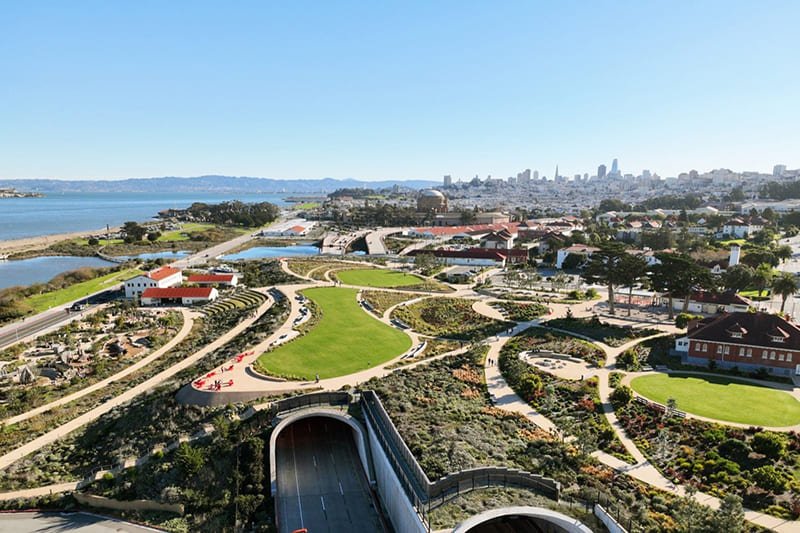
Yes, but it helps to choose one nearby addition rather than scheduling several major sights after the bridge. The Presidio has open spaces, trails and viewpoints, and families can continue toward areas such as Battery East after a short bridge visit. Presidio Tunnel Tops and its Outpost Playground can be appealing for children who want to run and play after a period of careful walking, but they are not immediately beside the bridge entrance. Travel between stops takes time and may involve slopes, so checking the route is important when a stroller is involved. Families with school-age children may prefer to explore the bridge exhibits and then relax with a snack in the visitor area instead. The Golden Gate Bridge works best as one part of a flexible day, not as an obligation to hike the entire span and then cover every nearby overlook. Keep the outing focused on what children will actually enjoy.