Family Travel Guide · Georgia
Top Things to Do in Savannah with Kids
Savannah is an easy city to like and a hard one to schedule in July. The historic center is small and walkable, but the heat and humidity are real, and a plan that works in April can fall apart in August. This guide covers what to do in Savannah, GA with kids by age and weather, how to move around without a car, and which nearby beaches and towns make good day trips.
Overview
Savannah is small enough to walk, and the heat decides how far you get
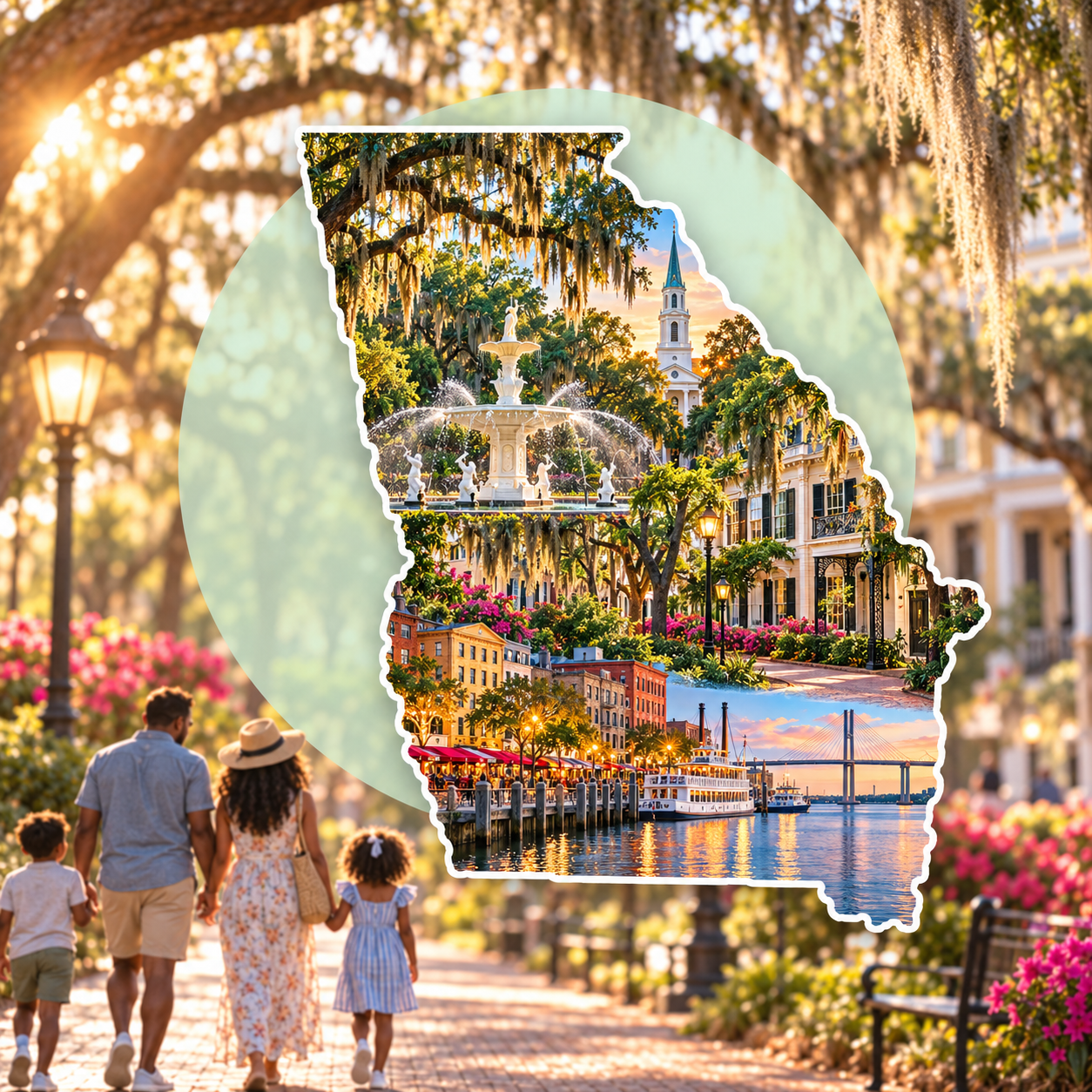
Savannah was founded in 1733, and the downtown still follows a grid of small squares. According to Chatham Area Transit, the Historic Landmark District covers about 2.5 square miles, with 22 green squares and more than 1,600 historically significant structures. For a parent with a stroller or a tired five-year-old, that layout matters: a shaded place to stop is never more than a couple of blocks away.
The weather is the harder part. Guides put July highs in the low 90s, and humidity runs well above 70 percent for much of the year. One 2026 planning guide estimates afternoon heat indexes of 95 to 100°F in peak summer. Another places the rainy season between June and September, with July among the wettest months and around 12 rainy days, occasionally with flooding. Hurricane season runs from June 1 to November 30, with the highest risk between August and October.
None of this rules out a summer trip. It changes the shape of the day.
| Time of day | What fits | Why |
|---|---|---|
| Early morning, until about 10:00 | Walks through squares, outdoor stops, riverfront | Coolest hours, lowest humidity |
| Late morning to mid-afternoon | Indoor stops, lunch, hotel pool or nap | Peak heat and the most likely window for storms |
| Late afternoon and evening | Squares, a ferry ride, an early dinner | Shade returns, kids have energy again |
Spring and fall give more room. Several seasonal guides name mid-March to mid-May and October through November as the best windows, with milder temperatures and, in fall, less rain. March is the exception: it is the busiest and most expensive month, and festival season books up early. Families who can choose dates often find that late April and May, or October, offer the easiest balance of weather and crowds.
One practical note on surfaces. Parts of the historic district, including River Street, have brick or cobblestone paving. Strollers with small wheels bounce on it, and a baby carrier or a stroller with larger wheels is more comfortable.
Why families love it
- Twenty-two squares inside 2.5 square miles, so rest stops with shade are close together.
- Free downtown transport, including the dot shuttle and the Savannah Belles Ferry.
- A beach about 18 miles away, with the same-day return still easy.
- Spring and fall weather that suits long outdoor mornings.
Best time with kids
Mid-March to mid-May and October through November are the usual recommendations. Late April and May are warm but manageable, and fall is drier. Summer works if the day starts early and moves indoors by late morning. Check school calendars, and book March early.
Skip Savannah if
- Your family has a low tolerance for heat and humidity and can only travel in July or August.
- You want a ride-based or high-stimulation trip, since Savannah's pace is slower and quieter.
- The beach is the main goal. The nearest ocean beach, Tybee Island, is a drive away, not a walk.
Zoom in for a more accurate location, then click a marker to learn more about the attraction and get directions via Google Maps.
Plan by age
What to do in Savannah, Georgia, with kids, from strollers to teens
Savannah rewards slow plans. A toddler wants a square with room to move, a ten-year-old can follow a story, and a teenager wants a neighborhood that feels real. The tabs below sort places by the age group that usually gets the most out of each stop, from infants through teens. No place repeats in the weather or free sections that follow.
Shaded squares make good stroller breaks in Savannah, but brick and cobblestone surfaces in parts of the historic district can jolt a stroller, so test a route before committing. Keep outings to cool mornings and early evenings.
 Indoor
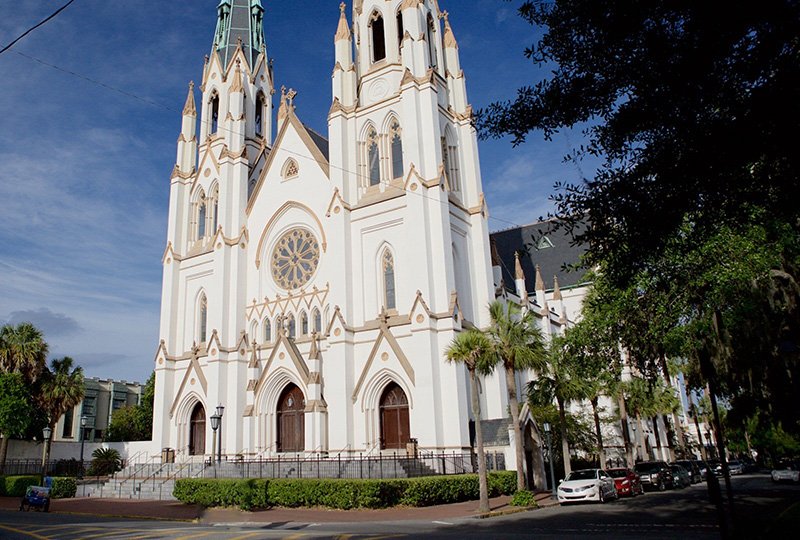
Cathedral Basilica of St John the Baptist
Visit Savannah's Cathedral Basilica of St John the Baptist for colorful stained glass, soaring Gothic arches and a short, quiet architectural stop beside Lafayette Square.
Attraction guide → Outdoor
Follow a free Savannah squares scavenger hunt from Chippewa to Madison and Monterey, with live oaks, monuments and distinctive historic homes along Bull Street.
Attraction guide →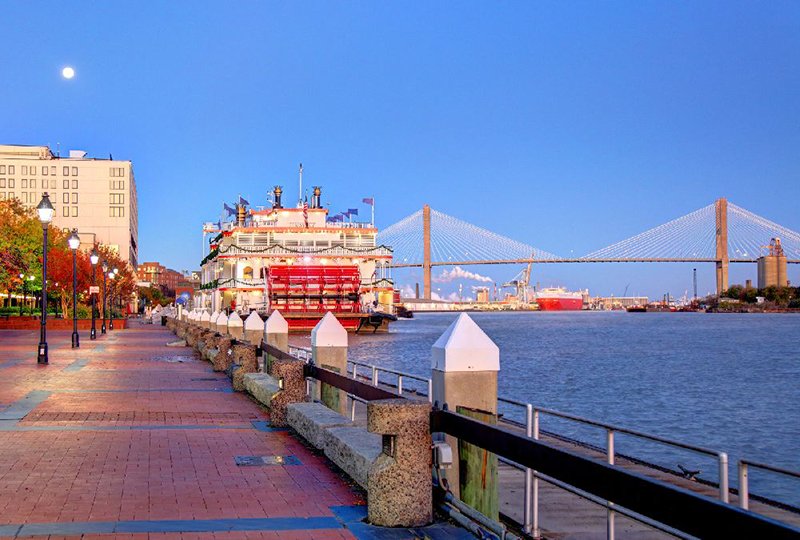 Outdoor
Watch giant cargo ships from Savannah River Street, explore historic warehouses and riverside monuments, and add sweets or a riverboat cruise to a free waterfront walk.
Attraction guide →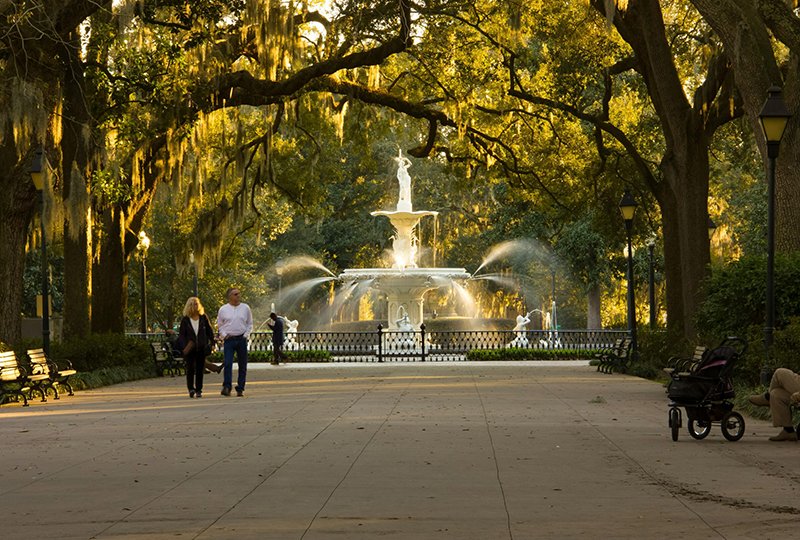 Outdoor
Forsyth Park is a free 30-acre Savannah landmark with a historic fountain, moss-draped live oaks, playgrounds, open lawns and Saturday farmers market.
Attraction guide →Toddlers get more from Savannah's squares and open lawns than from any scheduled stop, because there is room to wander and stop. Cover short distances between breaks and leave midday for a nap in air conditioning.
IndoorCathedral Basilica of St John the Baptist
Visit Savannah's Cathedral Basilica of St John the Baptist for colorful stained glass, soaring Gothic arches and a short, quiet architectural stop beside Lafayette Square.
Attraction guide →OutdoorFollow a free Savannah squares scavenger hunt from Chippewa to Madison and Monterey, with live oaks, monuments and distinctive historic homes along Bull Street.
Attraction guide →OutdoorWatch giant cargo ships from Savannah River Street, explore historic warehouses and riverside monuments, and add sweets or a riverboat cruise to a free waterfront walk.
Attraction guide →OutdoorForsyth Park is a free 30-acre Savannah landmark with a historic fountain, moss-draped live oaks, playgrounds, open lawns and Saturday farmers market.
Attraction guide →Ages 3 to 6 do best with short, concrete outings, such as a boat ride, animals or a hands-on room, followed by a square to run in. Keep each stop under two hours in summer.
IndoorCathedral Basilica of St John the Baptist
Visit Savannah's Cathedral Basilica of St John the Baptist for colorful stained glass, soaring Gothic arches and a short, quiet architectural stop beside Lafayette Square.
Attraction guide →OutdoorFollow a free Savannah squares scavenger hunt from Chippewa to Madison and Monterey, with live oaks, monuments and distinctive historic homes along Bull Street.
Attraction guide →OutdoorWatch giant cargo ships from Savannah River Street, explore historic warehouses and riverside monuments, and add sweets or a riverboat cruise to a free waterfront walk.
Attraction guide →OutdoorForsyth Park is a free 30-acre Savannah landmark with a historic fountain, moss-draped live oaks, playgrounds, open lawns and Saturday farmers market.
Attraction guide →School-age kids can connect Savannah's history to what they learn in class, so the city's stops carry more than scenery. Pair a history morning with a free-play afternoon.
IndoorCathedral Basilica of St John the Baptist
Visit Savannah's Cathedral Basilica of St John the Baptist for colorful stained glass, soaring Gothic arches and a short, quiet architectural stop beside Lafayette Square.
Attraction guide →OutdoorFollow a free Savannah squares scavenger hunt from Chippewa to Madison and Monterey, with live oaks, monuments and distinctive historic homes along Bull Street.
Attraction guide →OutdoorWatch giant cargo ships from Savannah River Street, explore historic warehouses and riverside monuments, and add sweets or a riverboat cruise to a free waterfront walk.
Attraction guide →OutdoorForsyth Park is a free 30-acre Savannah landmark with a historic fountain, moss-draped live oaks, playgrounds, open lawns and Saturday farmers market.
Attraction guide →Tweens usually respond to stories with a twist and to places they can explore a little on their own. Savannah's small downtown makes that manageable with a clear meeting point.
IndoorCathedral Basilica of St John the Baptist
Visit Savannah's Cathedral Basilica of St John the Baptist for colorful stained glass, soaring Gothic arches and a short, quiet architectural stop beside Lafayette Square.
Attraction guide →OutdoorFollow a free Savannah squares scavenger hunt from Chippewa to Madison and Monterey, with live oaks, monuments and distinctive historic homes along Bull Street.
Attraction guide →OutdoorWatch giant cargo ships from Savannah River Street, explore historic warehouses and riverside monuments, and add sweets or a riverboat cruise to a free waterfront walk.
Attraction guide →OutdoorForsyth Park is a free 30-acre Savannah landmark with a historic fountain, moss-draped live oaks, playgrounds, open lawns and Saturday farmers market.
Attraction guide →Teens tend to prefer Savannah's creative side, such as galleries, shops and food, over formal tours. Let them lead a walk through a few squares with a destination at the end.
IndoorCathedral Basilica of St John the Baptist
Visit Savannah's Cathedral Basilica of St John the Baptist for colorful stained glass, soaring Gothic arches and a short, quiet architectural stop beside Lafayette Square.
Attraction guide →OutdoorFollow a free Savannah squares scavenger hunt from Chippewa to Madison and Monterey, with live oaks, monuments and distinctive historic homes along Bull Street.
Attraction guide →OutdoorWatch giant cargo ships from Savannah River Street, explore historic warehouses and riverside monuments, and add sweets or a riverboat cruise to a free waterfront walk.
Attraction guide →OutdoorForsyth Park is a free 30-acre Savannah landmark with a historic fountain, moss-draped live oaks, playgrounds, open lawns and Saturday farmers market.
Attraction guide →Plan by weather
Best things to do in Savannah with kids when the heat or rain hits
Savannah's weather tends to arrive in one of two forms: a hot, still afternoon, or a short thunderstorm that clears an hour later. The tabs below separate genuinely indoor stops from outdoor ones, so the day can shift without a full rebuild. On hot days, start outside and move in by late morning. On wet days, pick places where the main experience sits under a roof.
Cathedral Basilica of St John the Baptist
Savannah History Museum
Ships of the Sea Maritime Museum
Jepson Center and Telfair Children's Art Museum
Free attractions
Savannah on a $0 admission budget
Free here means admission itself costs nothing. Parking, food and any extras are separate, so each card flags them where they apply. Savannah is well suited to this kind of day: the squares, the waterfront and the free downtown transport cover a lot of ground without a ticket.
No admission ticket is required; the suggested $3 donation per adult is voluntary.
Free self-guided walk through Savannah's public squares; optional house tours and guided walks cost extra.
Free public waterfront walk and cargo-ship watching; shopping, food and cruises cost extra.
Free entry to Forsyth Park, its fountain area, playgrounds and public walking paths.
Savannah with Kids - Download Travel Guide
Imagine strolling beneath enormous oak trees draped in Spanish moss, discovering quiet historic squares, watching ships along the Savannah River, and ending the afternoon with ice cream or a relaxed picnic. Savannah offers a different kind of family vacation, where fascinating history, Southern charm, outdoor exploration, and simple pleasures come together. Our free Savannah travel guide helps you experience the city's most interesting places without turning every outing into a packed sightseeing schedule.
What is the ultimate Savannah travel guide? For families with children, it's a resource that makes Savannah's historic surroundings approachable, entertaining, and easy to explore. Inside this PDF, you'll discover museums with interactive activities, historic trains and maritime exhibits, beautiful parks, wildlife encounters, and coastal adventures. From Forsyth Park and River Street to Oatland Island Wildlife Center and the sandy shores of Tybee Island, the guide introduces experiences that appeal to different ages and interests.
If you're looking for a useful Visit Savannah guide that considers the needs of parents, this free download offers more than recommendations for popular landmarks. Learn which areas are convenient for walking, where to enjoy inexpensive family outings, and why shaded breaks are especially important during warm weather. You'll also find suggestions for indoor activities, stroller considerations on cobblestone streets, and practical ways to combine historic sightseeing with opportunities for children to play and explore.
Download Free PDF GuideHistoric streets, coastal escapes, and little adventures worth sharing
Discover the family-friendly side of Savannah through carefully selected attractions, scenic neighborhoods, affordable activities, and practical advice for exploring the Hostess City of the South with children.
- 18 family attractions worth exploring Discover Savannah Children's Museum, Georgia State Railroad Museum, Ships of the Sea Maritime Museum, Fort Pulaski, and other fascinating places combining history, creativity, and outdoor discovery.
- 13 free and budget-friendly places Spend time in Forsyth Park, explore the historic squares, walk along River Street, admire the Cathedral Basilica of St. John the Baptist, and enjoy memorable outings that don't require expensive tickets.
- Historic districts and family walking areas Get to know Savannah's Historic District, riverfront, Forsyth Park, and Victorian neighborhoods, with suggestions for keeping sightseeing manageable for younger children.
- Local discoveries beyond the main sights Explore Factors Walk, the Starland District, Jones Street, Ellis Square, and other atmospheric corners where Savannah's distinctive character comes to life.
- Tybee Island and outdoor experiences Find inspiration for a family beach day, explore marine life at Tybee Island Marine Science Center, and discover wildlife and nature experiences near Savannah.
- Rainy-day ideas and practical family tips Prepare for changing weather with museum alternatives, understand which historic streets can be difficult with strollers, and avoid common mistakes involving summer heat, walking distances, and overly ambitious itineraries.
Recommendations for families
Savannah with kids: where to stay, how to move and what to pack
Where to stay
Staying in or near the Historic District keeps the squares, the riverfront and the free shuttle within reach, which suits families with children who walk well. A base outside downtown trades walkability for easier parking. Families whose main goal is the beach can consider Tybee Island itself, though that changes the whole trip from a city stay to a beach stay.
Getting around
According to Chatham Area Transit, the downtown shuttles and ferries are free, local bus fares are $1.50 one way, and a day pass costs $3. The airport express route, 100X, charges $5 one way and $8 round trip, per the airport's website. The city has five public parking garages, and the dot shuttle connects to them, so parking once and riding free is a workable pattern. Check current schedules on the CAT site before relying on specific times.
Heat and water
Carry water for every child, plan shade breaks every hour or so, and put sunscreen and a hat on young children from the first outing. The same square that works as a rest stop in the morning can be too hot at 2:00.
Storm season
Hurricane season runs from June through November. One travel guide advises keeping a flexible booking policy for stays in that window, and checking forecasts before leaving the hotel.
Pavement and crowds
Brick and cobblestone surfaces can be uneven, so keep young children on the hand near curbs and River Street. Agree on a meeting spot before entering busy areas, especially during festivals and weekends.
Day trips from Savannah
Three coastal places to visit with kids
Tybee Island
Tybee is about 18 miles east of downtown, roughly 30 minutes in good traffic, according to a Savannah travel guide. The road onto the island is a single route, and summer weekends can bring heavy traffic, with the worst outbound window between 10:00 and noon. Leaving earlier or later helps. It is the easiest beach day from the city.
Hilton Head Island, South Carolina
Hilton Head is about 40 miles from Savannah, around 45 to 60 minutes by car, depending on traffic. One travel guide describes Coligny Beach Park as the island's most popular beach, with a boardwalk, restrooms, showers and a fountain for kids. It is a longer outing and works better for families with school-age children who can handle the drive.
Beaufort, South Carolina
A day-trip guide puts Beaufort about 43 miles northeast of Savannah, roughly an hour away, with a historic downtown that pairs well with Hilton Head, which is about 35 miles away. It suits families who want a quieter town and are comfortable with a full driving day.
City with kids: common questions
Questions parents ask about Savannah with kids
What is there to do in Savannah, Georgia, with kids besides touring the historic district?
Quite a lot, and much of it sits outside the typical walking-tour route. The age and weather sections above cover hands-on indoor stops, animal and outdoor experiences, parks and a free ferry ride across the river. Beaches add another layer: Tybee Island is about 18 miles away, and Hilton Head Island is roughly 40 miles. A family with kids under six can fill a day with a square, a short outing and a nap, while older children can handle longer walking days and a day trip.
How many days does a family need in Savannah with kids?
Three to four days is a practical range. Three days covers the historic district, one indoor or outdoor outing a day and a flexible block for weather. Four days leaves room for a beach day. These are editorial ranges, not official minimums. Families with toddlers often spread the same sights over more days, since midday rest is part of the plan in warm months.
When is the best time to visit Savannah with kids?
Mid-March to mid-May and October through November are the windows most guides recommend, with milder temperatures and, in fall, drier weather. March is the busiest and most expensive month, and July and August are the hottest and wettest. Hurricane season runs from June through November, with peak risk from August to October, so summer and early fall bookings benefit from flexibility.
Do families need a car in Savannah?
Not for the historic district. According to Chatham Area Transit, the downtown shuttles and ferries are free, local buses cost $1.50 one way and a day pass is $3. The airport express runs on the 100X route for $5 one way. A car makes sense for Tybee Island, Hilton Head and Beaufort. Families who rent one should plan around downtown parking, and use the five public garages that connect to the dot shuttle.
Is Savannah stroller-friendly?
The historic district is compact, and the squares give frequent shade and rest points, but parts of downtown, including River Street, have brick or cobblestone paving that can be rough on small wheels. A stroller with larger wheels or a baby carrier tends to be more comfortable. Test a route before a long day, especially in summer heat.
What are the top things to do in Savannah with kids when it rains?
Rain falls throughout the year, and summer thunderstorms often arrive in the afternoon, usually passing within an hour or two. One guide counts around 12 rainy days in July. The rainy-day tab above covers indoor options where the experience happens under a roof. Check the forecast the morning of, and keep one indoor stop on the shortlist so a storm does not cancel the day.
Visited Savannah with kids?
Parents planning a trip find recent notes more useful than any guide: how hot a July afternoon felt, which routes worked with a stroller, how long the drive to the beach took on a weekend. Leave your experience under the specific attraction you visited so the next family can plan around it.