Things to Do in Orlando in Rain: Indoor Activities and Family Planning Tips
An Orlando, FL vacation often involves outdoor attractions, long walking days, and carefully planned schedules. Then the forecast changes, dark clouds appear over the theme parks, and parents are left deciding whether to continue with their plans or find somewhere dry. Fortunately, there are plenty of things to do in Orlando in rain that don't require spending another day at a major theme park. Museums, interactive experiences, family performances, and indoor entertainment venues can provide alternatives when outdoor plans become uncomfortable or unsafe.
The challenge is choosing an activity that actually works for your family. A museum that interests a teenager may not keep a toddler occupied, while an energetic indoor play venue might be overwhelming for a child who needs a quieter afternoon. This guide covers Orlando rainy day activities, explains the city's seasonal rainfall patterns, and offers practical advice for adjusting your itinerary without unnecessary expenses or complicated travel.
Where to Go When Rain Changes Your Orlando Plans?
A rainy day in Orlando doesn't necessarily mean staying at the hotel. Families can switch to indoor activities, visit educational venues, or choose entertainment that doesn't depend on clear skies. The most useful option depends on how long the rain is expected to last, the ages of your children, and where you're staying. Comparing admission requirements, parking arrangements, and indoor access before leaving can make the day considerably easier.
Orlando Public Library Children’s Library
Indoor reading and library activities offer a weatherproof stop once families arrive downtown.
WonderWorks Orlando
Most of WonderWorks is indoors, including its exhibits and major activities. It can be crowded on rainy days, and parking at Pointe Orlando is separate from admission.
Crayola Experience Orlando
This indoor attraction at The Florida Mall keeps the main visit out of Orlando rain. Families can spend 3-4 hours moving between art stations, play areas and take-home projects without planning around outdoor exhibits.
SEA LIFE Orlando Aquarium with Kids
SEA LIFE Orlando Aquarium is an indoor alternative when Florida rain interrupts outdoor plans. Families can explore the ocean tunnel, watch jellyfish and visit the Coastal Rockpool without spending several hours outside.
Orlando Science Center with Kids
All exhibit halls, theaters, and the cafe at Orlando Science Center are indoors, and family guides describe a covered walkway from the parking garage to the second-floor entrance. Reviewers mention filling a rainy weekday with 3 to 4 hours of exhibits, films, and live programs. Garage parking costs $4 per hour, so a rainy-day visit of several hours is easy to budget.
Best Indoor Activities in Orlando for a Rainy Day
The best indoor activities Orlando rainy day searches bring up range from museums to commercial entertainment centers. Not all indoor venues offer the same experience, and some require more planning than others. For families traveling with children of different ages, the most practical choices are usually places where activities can be enjoyed at different speeds without relying on outdoor facilities.
Explore Central Florida's History Indoors
The Orange County Regional History Center is a useful alternative to high-energy indoor attractions, especially for families interested in history, culture, and educational exhibits.
Located in downtown Orlando inside a historic courthouse, the museum explores Central Florida's past through permanent and temporary displays. Its exhibits cover regional history, changing communities, and the people who shaped the area. School-age children who enjoy reading, discussing exhibits, or connecting historical objects to everyday life may find this particularly rewarding. Parents traveling with very young children should consider whether a more traditional museum setting matches their attention spans.
The History Center also provides a practical option for families who want a break from crowded entertainment districts. According to its official visitor information, the museum has elevators, accessible facilities, and a nearby parking garage. It also offers parking validation for eligible visitors. For families watching their expenses, the museum publishes general admission rates and information about available discounts, including participation in the Museums for All program.
Before visiting: Check the official hours and admission page, particularly when special exhibitions or building renovations may affect access.
Try an Interactive Optical Illusion Experience
Children who enjoy visual puzzles, photography, and unusual interactive environments may prefer the Museum of Illusions Orlando.
Situated in the International Drive area, this indoor attraction uses perspective, visual effects, and interactive installations to challenge visitors' perception. The experience can be particularly appealing to older children and teenagers who enjoy taking photographs, testing visual tricks, and comparing what they see with how an illusion actually works.
For younger children, parents should consider whether the exhibits will be understandable and enjoyable without extensive explanations. Some illusion environments may also feel visually disorienting. Families traveling with children who are sensitive to unusual lighting or sensory effects should review the current exhibition information before booking. Rather than treating it as a full-day activity, consider how this experience might fit alongside a meal or another nearby indoor stop.
Planning advice: Check available ticket options, accessibility details, and reservation requirements directly through the venue before visiting.
Choose a Family Performance Instead of Another Attraction
An indoor theater performance offers a different kind of rainy-day experience, particularly for families who have already spent several days walking through parks and museums. The Dr. Phillips Center for the Performing Arts in downtown Orlando hosts performances that may include family-oriented theater, music, dance, and touring productions. The suitability of any show depends on its content, schedule, recommended audience, and individual children's ability to remain seated. The venue's own family entertainment guidance recommends reviewing the show's story and presentation before buying tickets. This is especially useful when planning a first theater visit with younger children.
Parents should also consider performance volume, intermissions, restroom access, and seating preferences. The center provides accessibility information and has family facilities, but arrangements can vary by performance and theater. Check the official family performance calendar before planning around a specific event.
Unlike a walk-in museum, a theater performance is less flexible when thunderstorms affect travel. Allow additional time for parking and arrival, and review the ticket policy if severe weather is expected.
Comparing Rainy-Day Activity Types
| Activity | Best suited to | Important considerations |
|---|---|---|
| Regional history museum | Curious school-age children and teenagers | Reading, exhibit engagement, attention span |
| Interactive illusion museum | Families interested in puzzles and visual experiences | Sensory effects, ticket availability |
| Family theater performance | Children who enjoy stories, music, or stage shows | Fixed schedule, noise levels, ability to remain seated |
| Indoor recreation center | Children who need physical activity | Age or height restrictions, supervision, footwear |
| Movie theater | Families seeking a relatively simple indoor outing | Film ratings, sound levels, screening schedules |
These are planning suggestions rather than official age ratings. Parents should verify the specific venue's requirements before choosing an activity.
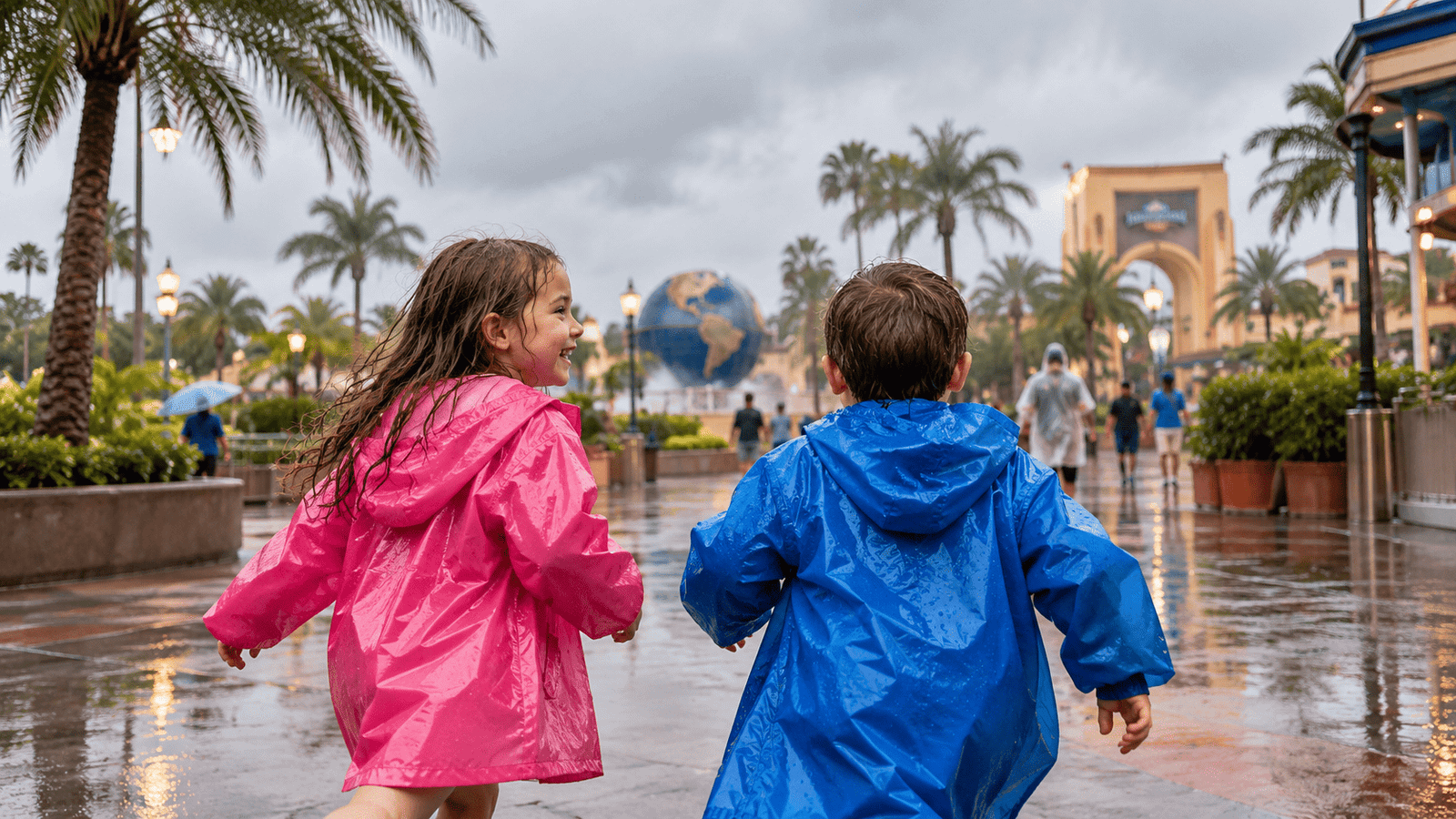
What to Do in Orlando in the Rain Without Overspending?
Rain can create unexpected costs during a family vacation. Parents may purchase last-minute tickets, pay for additional transportation, or choose an expensive attraction simply because it appears to be the closest indoor option. A better approach is to evaluate whether the activity provides enough value for the family's remaining time, energy, and budget.
Start With the Activities You've Already Paid For
Before purchasing new tickets, review reservations and accommodations already included in your trip. Some hotels and resorts have indoor recreation areas, scheduled children's activities, or covered common spaces. However, these amenities differ significantly between properties, and not every activity is included in the room rate.
If you're staying at a resort, ask the front desk which facilities remain available during rain and whether any programs require registration. Families holding theme park tickets should also check official park applications for temporary closures, weather notices, and operating attractions. Leaving the property is not always the most economical decision, especially when transportation costs and unused admission are involved.
Consider Lower-Cost Indoor Alternatives
Parents researching what to do in Orlando in the rain may overlook simpler options while searching for major tourist attractions. Depending on where you're staying, consider:
- Community recreation programs: Check local recreation centers for public access, available programs, and visitor eligibility.
- Independent bookstores: Some offer children's sections, reading areas, or scheduled events. Verify whether activities are running before traveling.
- Movie matinees: Compare local theaters and ticket prices, particularly when traveling with older children who are comfortable sitting through a film.
- Indoor shopping and dining areas: These can provide shelter and a convenient meal break, although they should not automatically be treated as free entertainment.
- Hotel-based activities: Ask about available games, indoor recreation rooms, and scheduled children's programs before paying for an outside experience.
Be careful with attractions advertised as free. Parking charges, optional activities, food purchases, and admission conditions can make a supposedly inexpensive outing cost more than expected.
Match the Backup Plan to Your Children's Ages
A rainy-day alternative should solve a practical problem, not create a new one.
| Children's ages | Useful activity characteristics | What parents should check |
|---|---|---|
| Infants (0-1) | Comfortable indoor spaces and flexible departure | Changing facilities, stroller access, noise |
| Toddlers (2-3) | Short activities, room for movement, easy breaks | Safety rules, restrooms, supervision |
| Little Kids (4-6) | Interactive displays, creative activities, simple explanations | Minimum ages, overstimulation, waiting |
| Big Kids (7-9) | Hands-on exhibits, games, discovery activities | Participation requirements, available supervision |
| Tweens (10-12) | Problem-solving, interactive challenges, creative experiences | Activity difficulty, independence rules |
| Teens (13-17) | Immersive entertainment, performances, challenging activities | Teen appeal, restrictions, total admission cost |
This table provides general planning guidance, not verified admission eligibility for individual venues.
For families with several children in different age groups, consider whether everyone can participate in the same activity. A venue with separate areas may sound convenient, but splitting supervision between adults can become difficult when children are far apart.
Rain is a normal part of Orlando's climate, particularly during the warmer months, but it doesn't have to determine the quality of a family vacation. The most useful strategy is to build flexibility into your itinerary before bad weather arrives. Choose indoor activities that match your children's interests instead of automatically selecting the most heavily advertised attraction. Consider the distance from your accommodation, the full cost of the outing, and whether outdoor transfers could be affected by thunderstorms. Families with younger children may benefit from shorter, easier activities, while older kids and teenagers may prefer interactive experiences or performances. Checking official schedules and weather alerts before leaving helps avoid unnecessary travel and disappointment. With a realistic backup plan, a rainy day can become an enjoyable change of pace rather than a disruption.
How Often Does It Rain in Orlando?
Orlando has a humid subtropical climate, with a particularly wet period during the warmer months. Rainfall is part of the city's normal weather pattern, but the frequency and intensity of precipitation vary considerably throughout the year. According to the National Oceanic and Atmospheric Administration (NOAA), Orlando International Airport records an annual average of 51.45 inches of precipitation based on climate normals from 1991-2020.
June through September are particularly wet. During these months, frequent showers and thunderstorms can interrupt outdoor sightseeing, especially during the afternoon.
The National Weather Service explains that summer thunderstorms in Central Florida are strongly influenced by sea breezes and atmospheric conditions. This helps explain why a morning can begin with sunshine before thunderstorms develop later in the day.
The following figures come from NOAA's official climate normals for Orlando International Airport.
| Month | Average rainfall | Average days with measurable rain |
|---|---|---|
| January | 2.48 in | 7.0 |
| February | 2.04 in | 6.4 |
| March | 3.03 in | 6.8 |
| April | 2.58 in | 6.3 |
| May | 4.02 in | 8.4 |
| June | 8.05 in | 16.2 |
| July | 7.46 in | 17.1 |
| August | 7.69 in | 17.2 |
| September | 6.37 in | 14.2 |
| October | 3.46 in | 8.4 |
| November | 1.79 in | 6.0 |
| December | 2.48 in | 7.1 |
Source: NOAA National Centers for Environmental Information. A measurable rain day is defined here as receiving at least 0.01 inch of precipitation. These are long-term averages, not predictions for a particular vacation.
What These Rainfall Patterns Mean for Families?
During summer, scheduling the most weather-dependent activities earlier in the day can reduce the chance of disruption. However, afternoon storms are not guaranteed, and some weather systems produce prolonged rain rather than short showers. Families visiting during wetter months should consider keeping at least one indoor alternative available for each day of their itinerary. A few useful adjustments include:
- Check hourly forecasts instead of daily weather icons. A forecast showing rain doesn't necessarily indicate continuous rainfall from morning until evening.
- Keep outdoor reservations flexible when possible. Review cancellation and rescheduling policies before purchasing tickets.
- Avoid long outdoor transfers during thunderstorms. Lightning is a more serious concern than getting wet, particularly in exposed parking lots and open areas.
- Bring lightweight rain protection. Compact ponchos, waterproof bags, and an extra set of children's clothes can make unexpected showers less disruptive.
- Leave room for changes. Avoid scheduling several nonrefundable activities around a forecast that may change.
A rainy forecast should influence how a family organizes the day, not automatically determine whether an attraction is worth visiting.
Frequently Asked Questions
How often does it rain in Orlando?
Orlando experiences measurable precipitation on approximately 121 days per year, according to NOAA climate normals for Orlando International Airport. However, those days are not distributed evenly throughout the year. June, July, and August each average more than 16 days with measurable rainfall, while several months during the cooler season average roughly six or seven. These figures count days with at least 0.01 inch of precipitation and do not mean rain lasts all day. Summer rainfall frequently develops through showers and thunderstorms, which can be concentrated in particular areas. Families should therefore use hourly weather forecasts when making daily plans rather than assuming that a rainy forecast means continuous wet weather.
What are the best things to do in Orlando in rain with toddlers?
Toddlers generally benefit from indoor activities that allow flexible movement, frequent breaks, and easy access to restrooms. A calm museum visit may work for a toddler who enjoys looking at objects and exploring with an adult, but some children will prefer a supervised indoor play environment or a short activity near the hotel. Before visiting, parents should confirm whether the venue has age-appropriate facilities, diaper-changing areas, stroller access, and restrictions on food or drinks.
Avoid committing to expensive nonrefundable tickets if your child's energy level, nap schedule, or attention span may make an early departure necessary.
Can families still visit Orlando theme parks when it rains?
Yes, many theme parks continue operating during rainfall, but individual attractions and outdoor activities may close temporarily because of lightning, strong winds, or other unsafe conditions. Some indoor rides and entertainment may remain available, depending on the severity of the weather and the park's operational decisions.
Families should consult the park's official app for attraction status and safety announcements. Do not assume that rainfall automatically qualifies visitors for a refund, complimentary ticket, or rescheduled admission. If thunderstorms are approaching, follow staff instructions and seek appropriate indoor shelter rather than waiting outside for an attraction to reopen.
What are the best indoor activities in Orlando on a rainy day for teenagers?
Teenagers may enjoy interactive museums, illusion exhibits, escape rooms, arcade experiences, or live performances, depending on their interests. For teenagers who enjoy photography and visual challenges, interactive illusion installations can be appealing. Others may prefer activities involving teamwork, games, or physical movement. When considering an escape room or recreational venue, check whether minors can participate independently, whether adult supervision is required, and whether the activity has difficulty or accessibility restrictions.
Parents should also ask teenagers what type of activity they would actually enjoy before purchasing tickets. An attraction marketed toward families isn't necessarily engaging for every age group.
Are there free Orlando rainy day activities for families?
There may be free or low-cost indoor options, but availability often depends on local eligibility, scheduled programs, and individual venue rules. Some community facilities and cultural organizations provide special admission opportunities. The Orange County Regional History Center, for example, publishes reduced-admission and free-admission programs for eligible visitors. Travelers should not assume that discounts offered to county employees, local library cardholders, or specific groups are available to all tourists. Checking the official admission policy in advance can prevent confusion at the entrance. Families should also account for parking, transportation, and meals when comparing costs.
Is it better to visit Orlando in summer if you're worried about rain?
Summer is one of Orlando's wettest periods, so families hoping to minimize rain-related disruptions may prefer to investigate other seasons. However, rainfall is only one factor when choosing travel dates. School schedules, temperatures, attraction availability, holiday crowds, and overall travel costs may be equally important. Rain remains possible throughout the year, including during relatively dry months. Families traveling in summer should pay particular attention to thunderstorm forecasts and schedule weather-dependent activities with flexibility.
For most visitors, preparing an indoor backup plan is more practical than expecting a completely rain-free trip.
What should families pack for a rainy day in Orlando?
A small amount of preparation can make unexpected showers much easier to manage, especially when traveling with young children. Lightweight ponchos or compact rain jackets are useful for moving between attractions. A waterproof pouch can protect phones, documents, and tickets, while a spare change of clothes is helpful when children get soaked during outdoor transfers.
Parents using strollers should check whether their rain covers provide suitable ventilation and follow the stroller manufacturer's instructions. Never use an improvised covering that could restrict airflow or cause overheating. Comfortable footwear, a portable phone charger, and a plan for reaching indoor shelter are also useful. During lightning, prioritize safe shelter over rain protection or continuing outdoor sightseeing.