Atlanta BeltLine Eastside Trail with Kids: Murals and City Views
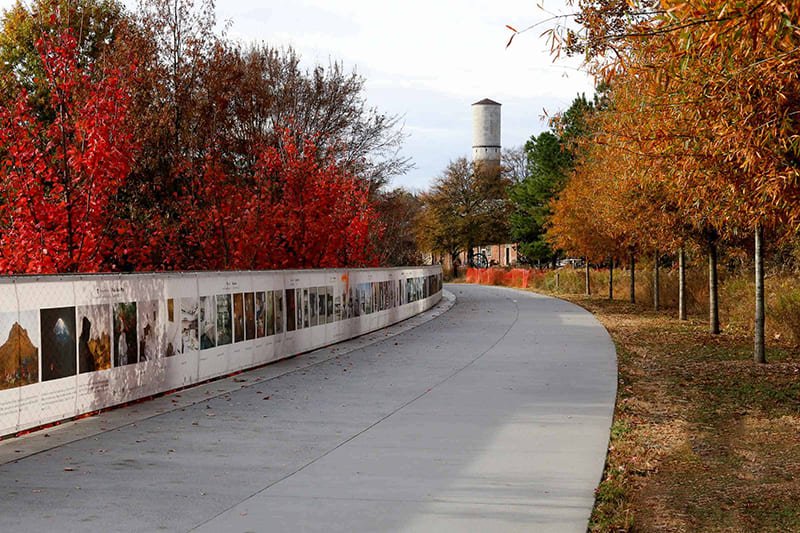
Atlanta looks different from its old railroad corridor. Along the Eastside Trail, colorful murals appear beneath bridges, cyclists glide past neighborhood patios and children can turn an ordinary walk into an art hunt. Access is free, and families can explore a small section around Ponce City Market instead of committing to the entire trail.
The open public trail and its outdoor artwork require no ticket. Food halls, parking, bike rentals and rooftop attractions charge separately.
Free trail access and optional costs →Walk a short stretch near Ponce City Market, stop to notice art and return before children lose interest. Longer routes are entirely optional.
School-age children can search for murals and sculptural details. Tweens and teens may enjoy the street art, skyline and neighborhood atmosphere.
A free, flexible route, but shared bike traffic, summer heat, variable restroom spacing and city parking demand attention.
Read the complete family score →Murals under bridges, a changing city skyline and places to pause
The Atlanta BeltLine Eastside Trail follows part of a former railroad corridor, and the change of viewpoint is immediately noticeable. Children walk past the backs of old industrial buildings, garden plantings, restaurants and walls that artists have turned into open-air canvases. Instead of assigning the family a long trail mileage goal, begin a small challenge: find an animal in a painting, a face hidden inside a pattern and a sculpture that looks different when seen from the other side. Atlanta BeltLine Art includes commissioned and changing pieces, so a mural seen in an old photograph might not still be there. That uncertainty can make the search more interesting, as long as parents promise discoveries rather than a specific artwork.
For a manageable first stretch, use the trail entrance by Ponce City Market and explore toward Historic Fourth Ward Park. The market occupies a former industrial building, and the trail crosses the area on elevated sections that open up views of buildings and portions of the Atlanta skyline. A child who has been walking between museums downtown may enjoy watching everyday neighborhood life from this different angle. Farther along, Historic Fourth Ward Skatepark offers a chance to watch practiced skaters from a safe spectator spot; a side trip toward the park can provide a change from a straight paved route. The trail is a shared travel corridor, though, not a closed playground. Keep an eye on children who stop suddenly for a photograph or wander toward bicycles.
What makes this outing family-friendly is its flexibility. Nobody needs to reach the end at Reynoldstown. The wider Eastside Trail links Piedmont Park, Old Fourth Ward, Inman Park and other neighborhoods, and the familiar stretches near Ponce City Market and Krog Street Market give families options for a snack, restroom stop or early exit. Public art often sits beside bridges and underpasses, while some of the best skyline glimpses appear around the North Avenue crossing. Use a small art checklist if it helps, but leave time for a child to notice something no guidebook mentions. The walk itself is free; eating at the market, renting bicycles or visiting rooftop attractions is an entirely different decision.
Atlanta has plenty of family adventures beyond this trail. Explore indoor attractions, parks and age-based suggestions in our Atlanta with kids guide.
An outdoor art walk for curious older kids, with shorter options for siblings
Infant
An infant can come along in a stroller on the paved main trail, but a short section with quick access to shade or a restroom is more sensible than an ambitious walk.
Toddler
Toddlers may enjoy a few bright walls and passing cyclists but need continuous hand-holding near the shared path. Keep this a brief outing and avoid busy periods.
Little Kids
Little Kids can play a simple color-spotting game and take a break near a park, although lengthy walks and fast-moving trail users can limit their enjoyment.
Big Kids
Big Kids can find details in murals, compare sculpture materials and collect photo clues. They are old enough to practice staying to the right and checking for bikes.
Tweens
Tweens can connect street art with neighborhoods and discuss how a former rail route became public space. Add skyline photos or a skatepark spectator stop.
Teen
Teens with an interest in photography, design or city life can set their own art themes and follow a longer stretch toward Inman Park if energy allows.
Family Friction: what an easy-looking paved trail still asks of parents
This score considers how much effort is involved in reaching the trail, sharing it with others, handling weather, moving with a stroller and finding essential stops. It is not a rating of the art or the neighborhood.
A free entrance and freedom to leave after just twenty minutes make Centennial Olympic Park easier to fit into a family day than a timed museum. Wide outdoor walking areas also help families manage a stroller and an energetic toddler. The friction comes from downtown traffic, event-related changes and a fountain whose show times do not necessarily match a child’s schedule. Hot sun or heavy rain can quickly shorten the stop. Parents who check the calendar and do not make water play the whole point of the visit can keep the day flexible.
| Factor | Score | Why |
|---|---|---|
| Parking & Arrival | 3/5 | The trail has many street entrances but no single dedicated family parking area. Paid market garages and limited neighborhood street spaces call for checking the chosen starting point. |
| Queue & Wait Time | 0/5 | There is no ticket booth or standard entry line. Bottlenecks can form around popular markets and public art on crowded days. |
| Heat & Weather Exposure | 4/5 | The trail and art are outdoors. Sun, humidity, heavy rain and lightning can make a longer family walk uncomfortable or unsafe. |
| Walking Distance & Terrain | 2/5 | The main pathway is paved and generally easy to walk, but the full route extends several miles and access ramps, road crossings and side paths add effort. |
| Stroller & Mobility Access | 2/5 | The paved main corridor suits many strollers; some entrances are ramps while other connections may involve slopes or stairs. Confirm the exact access point. |
| Restroom & Baby-Care Access | 2/5 | BeltLine information identifies accessible public restroom installations, including one near Historic Fourth Ward Skatepark, with changing stations; facilities are spaced along the corridor. |
| Sensory & Crowd Load | 3/5 | The Eastside Trail is a popular shared-use route. Passing bicycles, scooters where permitted, runners, dogs and busy market access can overload a child who prefers quiet. |
| Schedule Flexibility | 1/5 | Self-guided visits need no reservation and can end at multiple access points. Seasonal events, construction or crowding can temporarily change the best route. |
| Scored total | 17/40 | Medium Friction |
The pavement is stroller-friendly; sharing it is the real challenge
The Eastside Trail is a paved multi-use corridor, so families can keep a stroller on the main route without navigating woodland terrain. The bigger questions are which entrance has a suitable ramp, where to pause without blocking cyclists and how far to walk before needing a restroom.
Begin near Ponce City Market or a confirmed Eastside Trail connection instead of assuming every bridge and street provides a step-free entrance. Atlanta BeltLine publishes individual access points; slopes and surrounding sidewalks can differ.
The operator asks slower visitors to keep right and groups to walk no more than two abreast. If a child needs a snack, photo or clothing adjustment, move fully off the active path before stopping.
A paved main trail does not guarantee that every path to a mural, park or cafe is level. Check curb ramps and intersections before leaving the primary route, particularly with a double stroller or mobility device.
This outing has no fixed finish line. An out-and-back section near a market or park avoids discovering late that a tired child must cover the same long distance to reach your car or transit stop.
What a family Eastside Trail walk costs, and where to start
Walking, stopping for outdoor art and exploring public trail connections are free. Parking at nearby commercial properties, bike rentals and food purchases are not included.
| Activity or service | Cost | What to know |
|---|---|---|
| Self-guided Eastside Trail walking | Free | The public multi-use path has multiple entrances; choose your own distance. |
| Public art viewing | Free | Murals and other installations can change or be replaced. |
| Atlanta skyline views | Free | Views from elevated trail stretches vary with the route and surroundings. |
| Historic Fourth Ward Park detour | Free | Outdoor public park access; independently scheduled activities may differ. |
| Ponce City Market parking | Paid, variable | Commercial parking rates and rules are set by the facility. |
| Piedmont Park or Park Tavern parking | Paid, variable | Options near the northern access; check current availability. |
| Bike rental or guided ride | Separate purchase | Not required for a family walk; riders share space with pedestrians. |
| Food and rooftop attractions | Separate purchase | Market meals and Skyline Park are independent paid options. |
A family can spend $0 on the trail itself, even when stopping frequently to examine public art. The total only rises if they pay for parking, meals, rentals, rooftop entertainment or another nearby business.
How long is the Eastside Trail, and how do families use it?
- Atlanta tourism describes the Eastside Trail as roughly 3 miles from Piedmont Park toward Reynoldstown; evolving segment boundaries can produce different route measurements.
- A family art hunt near Ponce City Market can be limited to 45-90 minutes including time for photos and rests.
- Useful access points include Ponce City Market, North Avenue, Historic Fourth Ward Park and the northern end at 10th Street and Monroe Drive.
- The trail is a public, self-guided route rather than an attraction with reserved admission sessions; check temporary closures and event notices.
A short section is the sensible default with children. Start near an entrance that meets your parking or transit needs, walk until the murals and skyline have held everyone’s interest, then turn around. The entire corridor is not required for the experience, and the surrounding food halls and parks can make good optional end points.
Small choices that keep an art walk enjoyable
A little structure helps children notice more while keeping the trail safe for everyone using it.
- Give each child a different art clue.Ask one child to find an animal, another to find repeated shapes and an older sibling to look for a message in a mural. Art changes, so make clues flexible.
- Make photos a pull-off activity.Stop on a widened edge or a designated gathering area, not in the cycling line. The BeltLine asks users to move off the active path for rests and conversations.
- Look up before leaving the North Avenue area.Elevated stretches near North Avenue offer skyline glimpses. Views change as new buildings rise, so choose the actual view that catches the family’s interest.
- Carry water even for a short outing.The open trail has sections without immediate indoor shelter. Sun and humidity can make a modest out-and-back walk feel longer.
- Plan one natural stopping point.Ponce City Market, the Historic Fourth Ward park connection or another accessible exit gives the walk a purpose without forcing children to finish the whole trail.
Atlanta BeltLine Eastside Trail: family questions beyond the basics
From the old railway route to keeping children safe around bikes, these answers give families context for the walk.
Why is the Atlanta BeltLine Eastside Trail built on an old railroad corridor?
The Atlanta BeltLine is a long-term effort to connect neighborhoods through paths, parks, public art and transportation improvements using former railroad rights-of-way. The Eastside Trail was the first major completed section of the project, following a disused rail corridor through areas that now mix residential streets, converted industrial buildings and public green space. For children, that transformation is easy to see where old brick structures meet modern patios and a smooth concrete trail. It can also start a useful conversation: why would a city turn a former freight corridor into a place people can walk? Rails once connected factories and businesses. Today, the route links neighborhoods and gives people a different way to travel short distances without driving. The trail is still an evolving piece of a larger network, so not every stretch beyond the familiar Eastside section has the same surface or facilities.
What can children do besides looking at murals?
The art hunt can be the reason to start walking, but there is plenty of ordinary city life to observe. Families can pause near the Historic Fourth Ward Skatepark to watch skaters from an appropriate public viewing area, notice how bridges frame the skyline or compare the older industrial buildings with newer developments. The trail also connects to green spaces where a walking-only outing can become a park break. For children who like nature, ask them to look for changes in trees and plantings along the former rail corridor. A camera or small notebook can turn a simple walk into a collection of shapes, colors and views. Keep the activity informal; the trail is not a museum with fixed exhibit labels or a scavenger hunt managed by staff. Children will learn more by discovering what is there than by trying to match a list copied from an old travel guide.
Are there good Atlanta skyline views directly from the Eastside Trail?
Yes, certain elevated stretches offer views toward Atlanta’s skyline, particularly around the bridge crossing near North Avenue. The scenery changes as the trail passes through different neighborhoods: a stretch may be framed by brick buildings and painted bridge supports, followed by an opening toward city towers. Do not expect a continuous unobstructed panorama. New development and trees can alter individual sightlines, and some well-known rooftop photographs come from paid attractions such as Skyline Park at Ponce City Market rather than from the free trail itself. For families, the most rewarding approach is to notice the view that appears naturally along the walk rather than searching for one exact photograph. If skyline pictures are the main goal, allow time to stop safely away from moving cyclists and choose a clear-weather outing.
How should families walk around cyclists and other trail users?
The Eastside Trail is a shared multi-use path, not a pedestrian promenade reserved for sightseeing. Its official etiquette guidance asks slower traffic to keep to the right, people walking together to avoid occupying the full trail width and faster users to pass on the left while announcing themselves. That means a parent should help children understand that an approaching bicycle may need space even when the family is admiring an interesting mural. Keep children close, especially near crossings and entrances where people join from restaurants or streets. For a photograph, snack or stroller adjustment, move completely off the active path whenever there is an appropriate area. Families with very young children may prefer quieter times and a shorter section, because maintaining that awareness throughout a long walk can become tiring. Dogs and other trail users add another reason to avoid sudden changes of direction.
Is the Eastside Trail a good way to explore Atlanta neighborhoods without a car?
It can be, particularly for families staying near Midtown, Old Fourth Ward or Inman Park. The route links public art and green spaces with access to Ponce City Market, Krog Street Market and nearby neighborhoods, although every side trip may require using sidewalks and crossings beyond the main BeltLine pavement. That difference matters with children and strollers: being close on a map does not guarantee a step-free, traffic-free route to a destination. Decide where to begin and end before setting out, and check transit connections rather than assuming every access point has the same service. A short walk can offer a useful feel for Atlanta outside the downtown museum district, even if the family never reaches the southern end. Meals, shops and rented activities along the way remain separate choices, not included features of the public trail.