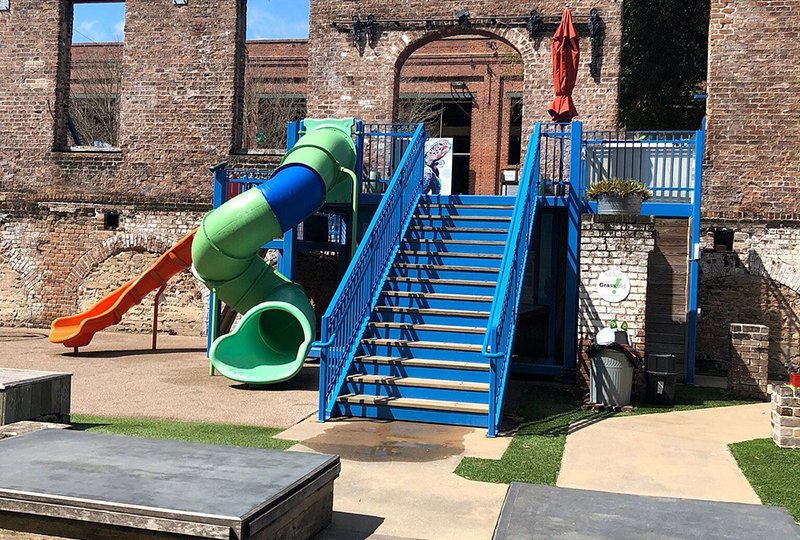
Georgia State Railroad Museum with Kids - Historic Trains in Savannah
Walk through an actual 19th-century railway repair complex, step into historic railcars and watch how locomotives once moved around a working roundhouse. Georgia State Railroad Museum is an unusually tactile history outing for families, but train rides run only on selected dates, most pathways are outdoors and gravel makes strollers harder to push.
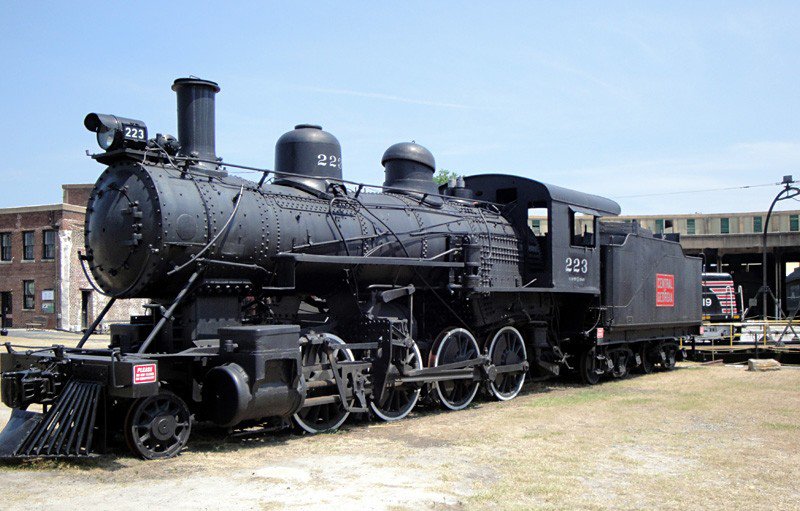
Children ages 3-12 pay $14, while adult admission is $20. Railroad admission includes the STEAM Center, but not the outdoor Children's Museum Exploration Station.
Compare tickets and extras ->Allow at least 90 minutes for the shops, locomotives and railcars. Add waiting time if you plan a scheduled site tour by train.
Toddlers enjoy the enormous engines, children 4-9 can examine cars and mechanisms, and tweens may appreciate the industrial history.
Gravel and grass, weather exposure and limited train departures make this more involved than a conventional indoor museum.
See the full Family Friction score →Climb aboard history in Savannah's old railroad repair shops
An ordinary train museum might display locomotives behind barriers. Here children enter a former working railway complex where the setting is part of the story. In the 1850s, workers used these shops to repair the engines and rolling stock that connected Savannah with towns farther inland. The surviving roundhouse, tall brick smokestack, machine-shop buildings and rails show how much equipment was needed to keep a railroad moving. Start outside with the largest engine you can see and ask children to compare its wheels, couplings and scale with a car or school bus. The surroundings are wonderfully concrete for younger visitors: rail lines lead into buildings, enormous machines occupy real workspaces and every object seems to have a mechanical purpose.
What children can do depends on the day, and that distinction matters. The museum describes opportunities to walk through historic railcars and try a working handcar, although specific demonstrations can change with staffing and maintenance. On selected train-operation days, families can also join a short guided site tour by train. The ride is not a continuous tourist railway around Savannah; it is a short interpretation of the repair shops and their history, sometimes including the remarkable operating turntable. Passes for an available ride are included with admission, but are issued at the gift shop on a first-come, first-served basis. A child who has been promised an engine ride may be disappointed if you arrive on a non-operating day or after passes are gone. Check the date before buying, then collect passes as soon as you enter.
This is a good place to let children notice details that faster sightseeing misses. Which car carried passengers? How might workers have moved a heavy engine into the right workshop? Why does a roundhouse have doors arranged in a fan? Older children can connect the answers to engineering, labor and the growth of Savannah; preschoolers can simply enjoy spotting wheels, whistles, stairs and different kinds of railway cars. A visit also includes access to the neighboring indoor STEAM Center, useful for changing pace after the outdoor rail yard. It does not automatically include the separate outdoor Exploration Station of Savannah Children's Museum, even though the attractions share the broader complex and a gift shop. That makes the museum a flexible half-day experience as long as you plan around the terrain, weather and train schedule.
Let the train tracks introduce your family to Savannah. After exploring the former repair shops, find hands-on museums, riverfront walks and child-friendly stops in our Savannah with kids guide.
Big engines appeal to preschoolers; railway engineering gives older kids more to discover
Infant
An infant can accompany the family, but the uneven outdoor ground and occasional loud machinery make this a caregiver-focused stop rather than an infant activity. Consider a carrier instead of relying on a lightweight stroller.
Toddler
Toddlers may be delighted by the height of locomotives, the rails and the sight of a real passenger car. Keep a hand on them near tracks, steps and equipment, and plan a shorter visit with frequent breaks.
Little Kids
An excellent age for pretending to be a train driver, comparing wheels and exploring accessible car interiors with an adult. A scheduled short train ride may be a highlight, but arrange the pass first.
Big Kids
Children seven to nine can look more closely at the turntable, historical railcars and how the repair shops functioned. Give them a challenge to work out how an engine changes tracks.
Tweens
Older primary-school children who enjoy mechanical systems or history may connect the workshops to the movement of goods and passengers. The STEAM Center provides a useful change of activity.
Teen
Teens with a particular interest in transportation, photography or industrial history may enjoy the historic buildings. It is less likely to hold the attention of teenagers expecting thrill rides or a long railway excursion.
Family Friction: outdoor railway terrain, train departures and weather
The practical challenge here is not the admission line. It is moving around an authentic industrial site and matching a child's expectations to a limited operating schedule. These eight factors consider how easy the visit is to manage as a family.
The museum is straightforward to find and has its own gravel parking area, but this is an exposed rail yard with mixed gravel and grass underfoot. Train-pass availability depends on selected operating days and first-come distribution, which can restrict the day's plan. Ramps serve several major areas, yet a lightweight stroller still takes effort on loose ground. The indoor STEAM Center helps on warm days, but it does not make the overall attraction reliably rainproof. For families comfortable with a historic outdoor site, the reward is close-up access to trains and real railway infrastructure.
| Factor | Score | Why |
|---|---|---|
| Parking & Arrival | 1/5 | On-site gravel parking is reached from Louisville Road between Martin Luther King Jr. Boulevard and West Boundary Street. The gate is locked at 4 p.m., so families must retrieve their vehicle before closing. |
| Queue & Wait Time | 3/5 | Ordinary museum admission is uncomplicated, but ride boarding passes are distributed through the gift shop on a first-come basis. A popular operating day may require waiting or may run out of preferred departures. |
| Heat & Weather Exposure | 4/5 | Locomotives, rails and much of the former repair complex are outside. Heat, sun and thunderstorms matter, and the museum warns that inclement weather can affect opening. |
| Walking Distance & Terrain | 3/5 | The preserved repair shops cover a working industrial landscape. Expect meaningful walking between buildings, open rail areas and exhibits, with gravel or grass rather than uniformly smooth museum floors. |
| Stroller & Mobility Access | 3/5 | Ramps reach parts of the museum and its train loading platform, but the official accessibility information stresses gravel and grass. Large wheels cope better than small stroller casters, and individual railcars can have steps. |
| Restroom & Baby-Care Access | N/A | Official visitor information does not clearly establish baby-changing facilities or a dedicated nursing room at the railroad museum. Plan to ask at the entrance and carry essential supplies. |
| Sensory & Crowd Load | 2/5 | Wide-open areas reduce crowding, yet train demonstrations, whistles, machinery, other groups and open industrial structures may be stimulating for noise-sensitive visitors. |
| Schedule Flexibility | 2/5 | The museum opens daily, but operating locomotives and train tours run on selected dates. A train-dependent visit needs an advance schedule check and early collection of a boarding pass. |
| Scored total | 18/35 | Medium Friction |
Historic gravel and grass make stroller choice more important than distance
The site is largely accessible, with ramps to some buildings and the train loading platform, but it has not been resurfaced like a modern museum. For toddlers, sturdy stroller wheels or a carrier will usually be more practical than a compact travel stroller.
Use the on-site gravel lot and keep the 4 p.m. gate closing in mind. Bring only what you want to move across uneven surfaces.
The operator confirms ramp access to parts of the museum, including the train loading platform, yet gravel and grass remain between many historic buildings.
Car interiors and historic vehicle steps can be narrow or raised. Ask staff about the accessible portion of the day's route rather than lifting a stroller onto equipment.
Admission to the railroad museum includes the indoor STEAM Center. Use the change of scene when children need a rest from heat or outdoor walking.
Georgia State Railroad Museum tickets, train rides and opening hours
An adult ticket costs $20 and a child ticket for ages 3-12 costs $14. The ticket covers the railroad museum and STEAM Center. The outdoor Savannah Children's Museum Exploration Station is separate; timed train-site tours run only on selected dates.
| Activity or service | Cost | What to know |
|---|---|---|
| Adult admission | $20 | Access to historic railway site and STEAM Center. |
| Child admission, ages 3-12 | $14 | Train activities depend on scheduled operations and available boarding passes. |
| Children younger than 3 | Confirm with museum | The official main price list does not explicitly state the under-3 category. |
| Site Tour by Train | Included when operating | Pick up limited first-come boarding passes at the gift shop; check specific departure days. |
| Indoor STEAM Center | Included | An indoor exhibit area, separate from the outdoor Exploration Station. |
| Savannah Children's Museum Exploration Station | Separate admission or upgrade | Not included with a standard Railroad Museum ticket. |
| CHS All In eligible visitors | Free admission | SNAP/EBT eligibility described by the operator; bring required documentation. |
| On-site parking | Fee not specified on official FAQ | Gravel lot entrance on Louisville Road; gate locks at 4 p.m. |
Family cost example: Two adults and two children ages 3-12 pay $68 in standard admission. On an operating day, the short site train tour can be included if boarding passes remain. Meals, special programs and the outdoor Children's Museum are separate.
When is the Georgia State Railroad Museum open, and when do trains run?
- Museum: daily, 9:00 a.m.-4:00 p.m., with major holiday closures.
- Scheduled train-site rides: only select days, with listed operating-day departures often hourly between 10:00 a.m. and 3:00 p.m.
- On ride days, retrieve boarding passes at the shared gift shop as early as practical; they are issued first-come, first-served.
- Confirm the exact train schedule by calling 912-651-6823 or consulting the official calendar.
- Parking gate: closes at 4:00 p.m. sharp; a car left inside cannot be retrieved until the next morning.
The museum may be open on a date when no train tour operates. Do not treat the posted museum opening hours as a train timetable. In 2026, the operator published seasonal runs on selected dates, sometimes Wednesday through Sunday, but future departure patterns can change with maintenance, weather and staffing.
Plan the train first, then explore the 1850s repair shops
A few decisions before arriving will prevent the common disappointment of a museum visit without the train experience your child imagined.
- Check the actual train-operation date.Museum doors open seven days a week, but site tours by train only run on specific dates. Check the current calendar or phone the museum before promising a ride.
- Collect boarding passes immediately.If trains are operating, go to the gift shop first. Passes are included in admission but available on a first-come basis, not an unlimited all-day walk-on service.
- Look at the roundhouse as a working puzzle.Ask kids how an engine gets into one of the fan-shaped bays and whether the turntable can redirect it. The building tells the story even if a demonstration is not running.
- Protect feet and stroller wheels.Closed-toe shoes, sturdy stroller tires and a carrier for tired toddlers are better choices than sandals and a tiny-wheeled travel stroller.
- Use the STEAM Center strategically.Take advantage of its inclusion in the ticket for a change in activity, but remember the separate outdoor Exploration Station requires an upgrade.
- Do not leave a car after closing.The gravel parking lot gate locks at 4 p.m. Build in time to walk back, pack up and drive away before the gate is shut.
- Bring water and watch the forecast.The museum is mainly outdoors in coastal Georgia. Heat, thunder and heavy rain can change how much of the site families can enjoy.
- Treat the railroad like a working environment.Keep children close to tracks, rolling stock and demonstrations; follow staff instructions before approaching moving equipment or entering historic cars.
Georgia State Railroad Museum: questions families should answer before going
Practical details on location, admission, the train schedule, outdoor conditions, parking and how to combine attractions without buying the wrong ticket.
Where is the Georgia State Railroad Museum in Savannah?
The Georgia State Railroad Museum is at 655 Louisville Road, Savannah, GA 31401, west of the main historic-district sightseeing streets and close to Savannah Children's Museum. The attraction occupies the former Central of Georgia Railway repair shops, so visitors enter a real railroad industrial complex rather than a purpose-built exhibition hall. Its approximate map coordinates are 32.07549, -81.10348; those locate the museum grounds, not a verified door. Families arriving by car should follow Louisville Road and look for the gravel parking entrance between Martin Luther King Jr. Boulevard and West Boundary Street. The railroad museum and Children's Museum share a gift shop, but buying admission for one does not automatically include all areas of the other.
How much are Georgia State Railroad Museum tickets, and what do they include?
Standard admission is $20 for adults and $14 for children ages 3-12, according to the operator's current ticket information. The operator does not clearly publish the admission category for visitors under age three on the main price page, so families with a two-year-old should check before buying. Admission includes historic train cars, railway-shop areas and the indoor STEAM Center. It does not include the outdoor Savannah Children's Museum Exploration Station. On days with scheduled Site Tour by Train operations, boarding passes for the short ride are included, but you must collect them at the gift shop and they are distributed first-come, first-served. Two adults and two children ages 3-12 would pay $68 before optional extras. The CHS All In program also offers eligible SNAP/EBT households free entry, with identification rules to confirm with staff.
What are Georgia State Railroad Museum hours, and do trains run every day?
The railroad museum is generally open daily from 9:00 a.m. until 4:00 p.m., except for listed holidays including Thanksgiving, Christmas Eve, Christmas Day and New Year's Day. That schedule does not mean a locomotive tour runs every day. The operator publishes separate train-ride dates, and during some 2026 seasons departures were offered hourly from 10:00 a.m. until 3:00 p.m. on selected days. Operating dates, locomotives and demonstrations can change, and rides are not guaranteed in poor weather or when equipment needs maintenance. Check the current train calendar, then call 912-651-6823 if your children are particularly excited about riding. Arrive early enough to secure boarding passes rather than treating the last departure as guaranteed availability.
What can kids actually do at Georgia State Railroad Museum?
Children can examine historic locomotives and railway cars up close, explore buildings where steam-era railway workers maintained equipment, and see the shape of an authentic roundhouse and its turntable. Walking through permitted historic railcars makes the visit more memorable than seeing photographs alone, while a working handcar is among the interactive experiences advertised by the museum. Specific machinery and hands-on activities may be available only with staff supervision. On scheduled train days, families may take a short interpreted ride around the property; it is not a long train trip out of Savannah. The included indoor STEAM Center offers an additional place to engage with science and engineering ideas. For four- to nine-year-olds, a simple scavenger hunt for wheels, couplings, rail switches and roundhouse doors often works better than trying to read every historical panel.
Can families bring a stroller, and is the museum suitable in rain?
Much of this former repair facility is outdoors and has gravel and grass instead of smooth, even floors. The museum says the site is accessible for the most part and provides ramps to several areas, including the train loading platform, but do not expect every historic railcar interior to accommodate a stroller. A carrier or a stroller with substantial wheels is a better choice for toddlers than a lightweight model with small wheels. This is not a dependable rainy-day attraction: the operator says inclement weather may affect operations or close the museum. For babies and young children, bring water, sun protection and a plan for shade. The STEAM Center is indoors, but it does not protect the entire visit from thunderstorms.
Is parking available and can we visit Savannah Children's Museum too?
The Georgia State Railroad Museum has an on-site gravel parking lot accessed from Louisville Road. The operator warns that its gates lock at 4:00 p.m.; vehicles left inside cannot be collected until the next morning. A standard parking rate is not clearly published in its FAQ, so check the signs upon entering. Savannah Children's Museum is next door in the same larger railway complex, and the two attractions share a gift shop. However, the railroad ticket includes the indoor STEAM Center but excludes the outdoor Exploration Station, which requires its own admission or a suitable upgrade. Check both venues' hours before buying a combined experience: outdoor and indoor children's areas can have separate schedules, and bad weather may also affect access.
How long should families spend at the museum?
Plan roughly 90 minutes to two hours for the historic railcars, exterior displays and a look around the workshops if your children enjoy trains but tire quickly. Two to three hours is more realistic for a leisurely visit that includes a scheduled train-site tour and time in the STEAM Center. Train schedules can create waiting periods, so do not squeeze the museum between two tightly timed activities. Preschoolers may want to spend longer looking at one locomotive and shorter inside historical buildings; older children who enjoy engineering may want the opposite. Start with the activity that has limited availability, then work through the freely accessible exhibits at your own pace. Because the parking gate closes at 4 p.m., leave enough time to reach your car.