California Academy of Sciences with Kids in San Francisco
Penguins, a towering tropical rainforest, glowing reef fish and a planetarium all share one museum in Golden Gate Park. California Academy of Sciences is particularly useful for families who want several kinds of science under one roof, although planetarium age limits and popular exhibit lines shape the best route.
Standard daytime admission is $49 for adults, $45 for teens and $39 for children ages 3-12. Peak prices are higher.
Tickets and admission details →An unhurried family visit can take most of a morning or afternoon. Plan around feeding programs, rainforest access and a possible planetarium show.
The aquarium and penguins appeal across ages; Curiosity Grove serves very young children, while the planetarium is for ages 4 and up.
Excellent stroller access and family facilities help, but paid parking, busy exhibit queues and a reservation-based planetarium add effort.
See the full Family Friction score →Rainforest butterflies above, reef fish below: a museum with several worlds
There is a moment when California Academy of Sciences stops feeling like a conventional museum: you move from the open museum floor into Osher Rainforest and the air turns warm and humid. Butterflies drift through a four-story glass dome, birds move above the path, and children look down at water and foliage from successive levels. The rainforest is not simply a room with tropical plants. It is a living exhibit with animals at different heights, where moving slowly rewards children who watch the leaves and branches rather than racing ahead. Younger visitors may notice butterflies first; older kids can compare the layers of a tropical ecosystem and look for smaller animals that camouflage themselves.
Downstairs, Steinhart Aquarium changes the pace. A large Philippine coral reef and many smaller habitats hold fish, invertebrates and other aquatic life, while African penguins in Tusher African Hall often become a family favorite. Rather than promising children they will see every animal, choose a few habitats and invite them to notice what is different: how a ray moves compared with a reef fish, why a penguin swims so swiftly, or which animals blend into the rocks. Nature Lab adds a more hands-on pause, with specimens, puzzles and activities that let children investigate without needing to follow a formal tour. Curiosity Grove provides forest-themed play for the youngest visitors.
Morrison Planetarium is the big seated experience, with an immersive dome presenting space and astronomy. Its shows need reservations after arrival, and children under four cannot enter; the Academy recommends shows primarily for ages seven and up. Families with younger siblings can instead enjoy aquarium time, live programs or Hohfeld Hall presentations that do not require dome admission. The earthquake simulator, living roof and changing daily talks provide other options, so the visit can be adapted to each child. California Academy of Sciences rewards a focused approach: pick two or three headline experiences, leave room for a snack, and use the remaining time for whichever animals or experiments capture the children’s attention.
Keep exploring beyond Golden Gate Park. Find neighborhood walks, waterfront activities and more attractions for different ages in our San Francisco with kids guide.
From penguin watchers to space enthusiasts: choosing the right age
Infant
Babies can join an aquarium walk in a stroller and observe shifting light, fish and familiar voices. Caregivers can use the family restroom and changing facilities, but plan a short route and avoid loud programs.
Toddler
Toddlers respond to moving fish, penguins and short bursts of play in Curiosity Grove. Keep visits flexible and skip the planetarium, which does not admit children under four.
Little Kids
Curiosity Grove and the aquarium are particularly engaging. Four- to six-year-olds may enter the planetarium, but the dark dome and intense visuals are not ideal for every child; choose carefully.
Big Kids
A strong age for the aquarium, rainforest and hands-on Nature Lab. Children seven and up are a better fit for planetarium content and can start connecting animals with habitats.
Tweens
Tweens can investigate coral ecosystems, tropical biodiversity and astronomy in more depth. They may also enjoy observing the engineering of the living roof and the earthquake simulator.
Teen
Teens interested in biology, climate, conservation or space science can spend hours comparing exhibits. A planetarium show and a few targeted scientific questions give the visit more depth.
Family Friction: navigating a popular science museum with children
This eight-factor assessment considers arrival, queues, weather exposure, walking, stroller access, restrooms, sensory demands and the freedom to change plans. Higher scores indicate more practical effort for families rather than lower exhibit quality.
The Academy is well set up for families with young children: stroller-friendly galleries, two public elevators, changing tables and accessible restrooms reduce much of the logistical stress. Its mostly indoor exhibits also make a wet day manageable. Challenges come from Golden Gate Park parking, limited-capacity experiences and the need to reserve a planetarium slot. Humid rainforest air, busy galleries and changes in light and sound can tire sensitive children. A shorter itinerary with a snack break keeps the effort reasonable.
| Factor | Score | Why |
|---|---|---|
| Parking & Arrival | 3/5 | The Music Concourse Garage is steps from the entrance but charges hourly and may fill during busy periods. Free street parking in Golden Gate Park is limited when demand is high. |
| Queue & Wait Time | 3/5 | Popular areas such as Osher Rainforest and the Shake House have capacity limits and can develop lines. Planetarium passes are first-come, first-served and require selecting a showtime. |
| Heat & Weather Exposure | 0/5 | The main aquarium and museum galleries are indoors, making rain easy to avoid. The rainforest is deliberately hot and humid, while the optional outdoor living roof depends on weather. |
| Walking Distance & Terrain | 2/5 | Aquarium, rainforest, planetarium and other attractions span several levels. Elevators allow a shorter accessible route, but trying to see everything requires considerable movement. |
| Stroller & Mobility Access | 1/5 | Strollers are permitted throughout the museum except inside the Shake House earthquake simulator. Elevators, accessible exhibit routes and temporary stroller parking reduce barriers. |
| Restroom & Baby-Care Access | 0/5 | Changing tables are provided in all restrooms on the museum floor, a family restroom is beside the Swamp, and accessible restrooms are available throughout the building. |
| Sensory & Crowd Load | 3/5 | The Academy notes changes in sound, lighting, smells and temperature between galleries. A crowded aquarium, humid rainforest or planetarium show may overwhelm some visitors. |
| Schedule Flexibility | 2/5 | Most exhibits can be explored at a family pace, but planetarium reservations, rainforest entry times and some daily programs constrain the order of a visit. |
| Scored total | 14/40 | Medium Friction |
Stroller access: elevators, rainforest paths and practical baby-care stops
The Academy welcomes strollers in almost all public exhibit areas, including accessible routes through the rainforest and aquarium. The one stated exception is the Shake House earthquake simulator, which provides short-term stroller parking. Bring your own stroller because the museum does not rent them.
Strollers are allowed throughout the Academy apart from the Shake House. The museum does not rent strollers, so bring one that suits your child, especially if you will stay for several hours. At popular aquarium windows, park to one side rather than blocking a viewing area or emergency route. The museum offers short-term stroller parking for the earthquake simulator if adults decide to take turns entering.
Public elevators are located beside the Academy Café and the Swamp. The main entrance at 55 Music Concourse Drive is wheelchair accessible, and visitors parking in the underground garage can reach the museum by elevator. The Academy also lists ramps and alternate accessible entrances for exhibits, including the rainforest and planetarium. Ask staff for the appropriate accessible planetarium entry if stairs are a concern.
The four-story Osher Rainforest has accessible exhibit routes, but it is warm and humid by design, with butterflies and birds moving freely. Children who become uncomfortable in humidity may need a shorter circuit. Its last-entry rules differ from general museum closing times, and queues can form when capacity is limited, so do not save it until the final minutes of your visit.
Changing tables are available in all restrooms on the main museum floor, and a family restroom sits beside the Swamp. Accessible restrooms are on every floor, including larger facilities beside the Swamp and in the aquarium. Benches and seating throughout the building make a pause possible; a caregiver with an infant can alternate stimulating galleries with a quieter seated break instead of rushing between attractions.
California Academy of Sciences tickets, opening hours and parking
One daytime ticket covers Steinhart Aquarium, Osher Rainforest and available Morrison Planetarium shows, but dome passes must still be reserved and availability is limited. Standard and peak rates differ, parking is additional, and the adults-only NightLife program is not a substitute for daytime family admission.
| Ticket or rental | Price |
|---|---|
| Adult daytime, ages 19+, standard / peak | $49 / $55 |
| Youth daytime, ages 13-18, standard / peak | $45 / $49 |
| Child daytime, ages 3-12, standard / peak | $39 / $45 |
| Children ages 0-2 | Free |
| Anytime Admission, any age | $59 |
| Qualifying EBT cardholders | $5 |
| Members, eligible daytime admission | Free |
| Morrison Planetarium show pass, with daytime admission | Included, reservation required |
| Academy Café, special experiences and parking | Extra |
Family cost example: Two adults, one child ages 3-12 and one teen ages 13-18 pay $182 at standard daytime rates or $204 at peak rates. These examples exclude parking, food and optional upgrades. Check the selected-day price before purchase.
When is California Academy of Sciences open?
- Monday-Saturday: public museum hours 9:30 a.m.-5 p.m.; last daytime admission at 4 p.m.
- Sunday: public museum hours 11 a.m.-5 p.m.; last daytime admission at 4 p.m.
- Osher Rainforest: generally opens 10 a.m. Monday-Saturday and 11 a.m. Sunday; last entry at 4:30 p.m.
- Thursday NightLife: generally 6-10 p.m. for adults ages 21 and older with ID; not a family program.
Museum or individual exhibit closures can occur for special events and maintenance. Planetarium show times vary and reservations are made after arrival by scanning the lobby QR code. For families with school-age children who want a dome show, check the day’s calendar and reserve a suitable time early in the visit.
Make the rainforest and planetarium work for your family, not vice versa
A few decisions at the entrance help avoid disappointment later, especially when your group includes both preschoolers and older children.
- Reserve the dome soon after arrival.If every child is at least four and wants a show, scan the QR code in the lobby early. Passes are limited, and shows are best suited to children seven and older.
- Do not leave the rainforest to the last minute.The rainforest follows its own admission window, and lines can form because capacity is limited. Take a slower walk through its different levels.
- Look for penguin and program times.Daily schedules can include feedings, story times and other short programs. Pick one that suits the youngest child rather than racing to every event.
- Use Curiosity Grove for younger children.The forest-themed space is designed with children ages zero to five in mind. It gives small visitors a play-oriented break from longer aquarium observation.
- Carry a snack but use the right eating space.The Academy permits outside food, but food and drinks belong in designated dining or outdoor spaces, not in the rainforest or planetarium.
- Prepare for a change in climate and sound.The rainforest is warm and humid, the aquarium is cooler and darker, and some demonstrations are loud. Build a seated break into the route.
Questions parents ask about the California Academy of Sciences
More detail on the building, the animals, the dome and the decisions that make a family visit easier.
Is California Academy of Sciences worth it for a family with children of different ages?
It can be particularly worthwhile when several children have different interests, because the admission covers a substantial aquarium, a living rainforest, natural history displays and planetarium programming in one location. Younger children often stay longest with penguins, colorful fish and the Curiosity Grove play area, while older siblings can focus on ecosystems, astronomy and more detailed exhibits. The main tradeoff is price: a family with older children can spend considerably more than at a small single-topic museum, even before parking and food. Think about whether your group will enjoy at least two major areas rather than buying a ticket for a single exhibit. A child who needs regular movement and variety may appreciate the different environments, while a child sensitive to crowds or large sound effects might require breaks. There is no need to complete the whole building in one visit. Leaving with a few memorable discoveries is often a better outcome than rushing through every room.
Where is California Academy of Sciences in San Francisco, and what is nearby?
California Academy of Sciences is located at 55 Music Concourse Drive in Golden Gate Park, close to the de Young Museum and the open space of the Music Concourse. It is not on the Embarcadero waterfront or in downtown San Francisco. Families can turn a museum visit into a longer park day by walking nearby paths or spending time outside before returning to their hotel. Golden Gate Park is large, however, so it is important not to assume every attraction inside the park is a quick walk from the Academy. If you are using transit, check the specific stop and walking approach rather than searching only for Golden Gate Park. Visitors arriving by car can use the underground Music Concourse Garage, but its spaces and price are separate from admission. The location is especially convenient when the family wants an indoor attraction with an optional outdoor break.
How long should a family spend at California Academy of Sciences?
Allow roughly three to five hours for a relaxed visit if you want to explore the aquarium and rainforest and perhaps attend a planetarium presentation. This is a planning estimate rather than a fixed museum tour time. Families with toddlers may prefer a shorter outing centered on fish, penguins and Curiosity Grove, followed by a snack before everyone is tired. A school-age group can easily spend longer comparing animal habitats, exploring Nature Lab and watching a dome show. The order matters because the rainforest has a different last-entry window and planetarium passes are limited. Consider putting one scheduled experience between two self-paced areas, so a delayed queue does not disrupt the entire plan. If your children are especially interested in marine life, let the aquarium take the larger share of the day rather than forcing an equal amount of time in every gallery.
What makes the California Academy of Sciences different from other science museums?
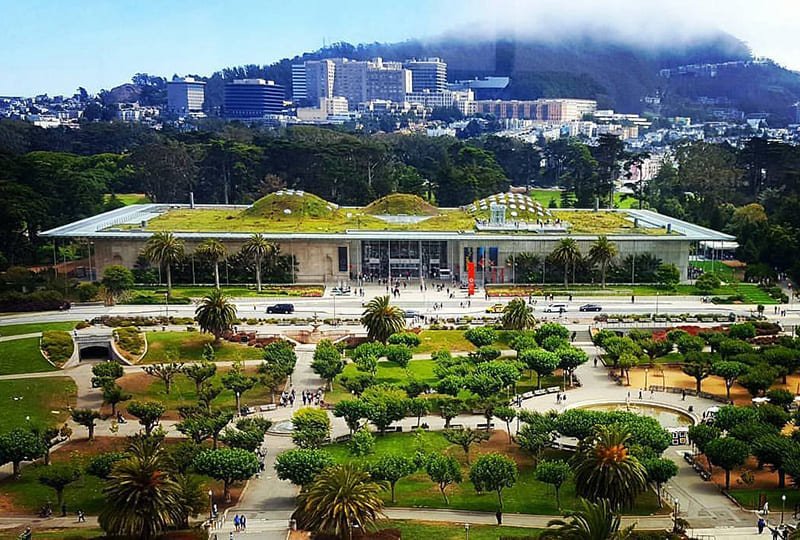
The Academy brings together several scientific fields rather than focusing entirely on interactive physics or natural history specimens. Inside the same building, children can observe living reef animals in Steinhart Aquarium, explore a warm four-story rainforest, learn about the universe in Morrison Planetarium and examine natural history material in other galleries. It also places scientific ideas beside conservation questions, helping older kids connect what they see to real environments. The living roof is another distinctive feature: its planted surface and architecture show how a museum can incorporate ecological design. Younger children do not need to understand the full science to get something from the visit. They can start by comparing animal colors, noticing how butterflies fly or identifying how a penguin moves underwater, then return to the bigger scientific questions as they grow.
What should parents know before taking a child into Morrison Planetarium?
The planetarium is an immersive, seated dome experience rather than a conventional gallery where a family can wander in and out. No child under four is admitted, and the Academy warns that its shows may not be suitable for children younger than seven because of the dark setting and dramatic imagery. Even an eligible child may be uncomfortable if they dislike loud sound, very large moving projections or sitting still for a presentation. A separate show pass is required with a daytime admission ticket, and reservations are limited. When you arrive, check the lobby instructions and select an available session that fits your family schedule. If a preschooler is unable to attend, an adult may need to stay with that child while the rest of the group enjoys the show. Hohfeld Hall offers other presentations that visitors of all ages can attend without a planetarium pass.
Can children explore the aquarium and rainforest without joining a guided tour?
Yes. Both are designed as museum exhibit experiences that families can explore at their own pace, although entry to the rainforest may be controlled when it reaches capacity. In Steinhart Aquarium, children can compare different marine habitats rather than following a compulsory guide through every display. Parents with young children might choose a few tanks and spend time observing animal movement, which often works better than reading every label. The rainforest invites a different type of attention: butterflies, birds and other animals may be easier to spot if visitors move slowly and look in several directions. The Academy also offers daily talks and programs, but those are optional additions rather than requirements for viewing the main galleries. Families should follow staff directions around live animals and respect any temporary closures. If a child needs a sensory break, it is reasonable to leave an area and continue with a calmer part of the museum.