Children’s Creativity Museum with Kids, San Francisco
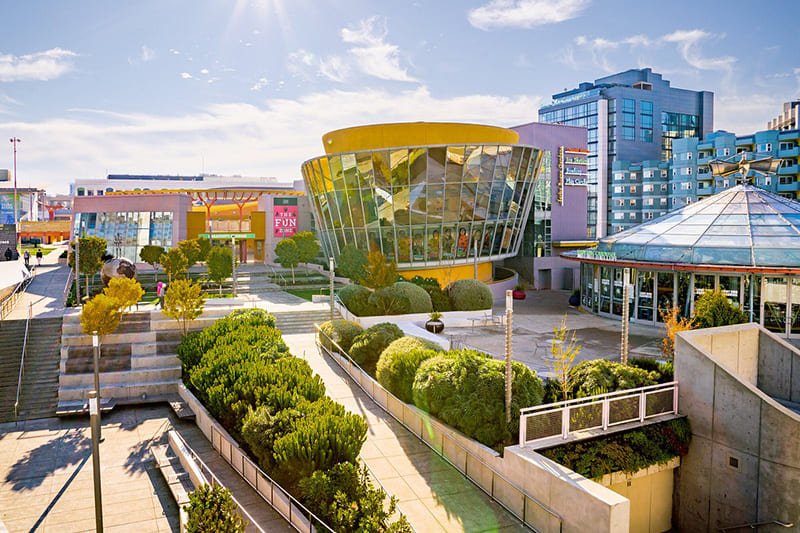
At the Children’s Creativity Museum in San Francisco, children direct tiny animated movies, build inventive tracks, experiment with music and turn everyday materials into their own projects. The two-floor museum sits in Yerba Buena Gardens, with a dedicated play space for younger children and creative challenges that invite parents to participate rather than stand back.
General admission costs $20 for each child age 1 or older and each accompanying adult; museum members enter free.
See admission and extras →Younger children may enjoy a shorter play session; budding animators often need more time to finish a story.
Lil’ Critter City engages small children, while animation, track building and design challenges suit elementary-age visitors.
Indoor play, same-day re-entry and accessible arrival routes help; downtown paid parking and busy hands-on stations require planning.
See the Family Friction breakdown →Make a movie, invent a racetrack and compose your own soundtrack
The best part of the Children's Creativity Museum is that a child gets to decide what happens next. In the Animation Studio, families use LEGO and DUPLO figures to arrange a scene, move the pieces a little at a time and watch individual frames become a stop-motion film. Staff can guide the process, and completed animations can be saved and emailed home. It is a wonderfully concrete introduction to storytelling: a dinosaur can meet an astronaut, the scene can change halfway through, and a child learns that a finished movie is made from hundreds of small decisions. A parent can help with the controls while an older sibling handles the plot.
Families with toddlers may head straight to Lil’ Critter City. Its soft Birdles Park area is designed for crawlers ages two and under, while nearby make-believe settings invite children to build with magnetic felt panels, try wind-tunnel experiments, browse picture books or put on a puppet show. Children who would rather move than sit can explore TrackMakers, constructing ramps, magnetic ball runs and connected train tracks. Changing a curve or adding height produces a visible result, so experimentation comes naturally. These areas also give siblings different ways into the same visit: one child might build an elaborate racing system while another simply enjoys releasing a ball and watching it roll.
The Making Music Studio brings another style of play. Children can test rhythms on the Dancing Dots carpet, make simple instruments and record songs or sound effects. Other maker and design activities change with the museum's programming, so the exact projects available can differ between visits. This is not a place for quietly viewing collections behind glass. Adults usually work alongside children, and a project can absorb a family for a surprisingly long time. Because the museum is at Yerba Buena Gardens, families can also take a break outside and return with the same day's admission, without confusing nearby carousel tickets with museum entry.
Keep the creative day going beyond Yerba Buena Gardens. Browse neighborhood ideas, rainy-day stops and age-by-age activities in our San Francisco with kids guide.
A gentle introduction for toddlers, bigger projects for growing makers
Infant
The soft play section in Lil’ Critter City is intended for crawlers ages two and under, but a baby will still depend on a caregiver and may need breaks. Admission is free below age one; the experience is much more limited for non-mobile infants.
Toddler
A particularly good match for magnetic felt building, puppets, picture books and gentle experimentation in Lil’ Critter City. A parent can slow the pace and help a toddler move between activities rather than trying to complete a full craft.
Little Kids
An excellent age for pretend play, simple track building, movement-based music and early stop-motion stories. These children often enjoy the process more than a polished finished product, so let their ideas lead.
Big Kids
Strong choice for animation, designing tracks with curves and boosters, and composing a soundtrack. Children this age can make more detailed decisions and keep adjusting a project after the first attempt.
Tweens
Creative tweens may enjoy editing a stop-motion story or pushing design challenges further, though several play zones are aimed at younger kids. A specific project helps make the visit worthwhile.
Teen
Better for teens interested in storytelling, animation or working with younger siblings than for those wanting a teen-focused science center. General admission still applies; group and workshop programming may offer a different experience.
Family Friction: easy to explore, harder to leave mid-project
KidWaypoint scores the practical demands of a family outing across arrival, waiting, weather, walking, mobility, care needs, noise and time flexibility. Higher points mean more effort, not a less worthwhile museum.
The museum's indoor setting, compact two-floor layout and same-day re-entry make a visit fairly manageable with younger children. Reaching the entrance is easier when families use one of the museum's published stroller-friendly approaches through Yerba Buena Gardens. Downtown garages add expense, and hands-on studios can feel busy when several children want the same workspace. Open-ended projects may also make it harder to persuade a child to leave at a precise time. One baby-care factor is left unscored because the available visitor guidance does not establish its facilities in enough detail.
| Factor | Score | Why |
|---|---|---|
| Parking & Arrival | 2/5 | There is no dedicated museum parking included in admission. The official directions list Fifth and Mission, Museum Parc and Moscone Center garages, with variable paid rates; several step-free approaches are available through the gardens. |
| Queue & Wait Time | 1/5 | The museum sells regular general admission with all-day access. There is no supported claim of routine long entrance queues, although popular hands-on workstations may involve taking turns with other families. |
| Heat & Weather Exposure | 0/5 | Both museum floors are indoors, making this a dependable rainy-day choice. The short approach through Yerba Buena Gardens remains outside, but the creative activities themselves do not depend on dry weather. |
| Walking Distance & Terrain | 1/5 | Two floors of galleries make the visit more compact than a large campus museum. Children can choose a few studios rather than follow a long mandatory route, though reaching the raised garden level requires a planned access path. |
| Stroller & Mobility Access | 1/5 | The museum explicitly identifies wheelchair- and stroller-accessible arrival options, including a ramp and elevator route. Some hands-on activities require a child to get out of the stroller to participate. |
| Restroom & Baby-Care Access | N/A | Visitor information does not clearly identify the locations of changing tables, a nursing room or stroller-storage services; ask staff about your family's specific care needs. |
| Sensory & Crowd Load | 3/5 | Music, movement, shared materials and excited conversations are a central part of the experience. A child who finds busy interactive rooms overwhelming may need frequent breaks outside the studios. |
| Schedule Flexibility | 2/5 | Same-day re-entry is included and children can choose their own sequence of activities. However, the museum has a defined closing time, and finishing an animation or craft may take longer than the family planned. |
| Scored total | 10/35 | Low Friction |
Three step-free arrival routes make the gardens easier with a stroller
Stroller access starts before the front desk: the museum sits on the raised Yerba Buena Gardens level, so use the official ramp or elevator routes rather than assuming the nearest sidewalk entrance is step-free. The two-floor indoor museum is designed to welcome wheeled visitors, but many creative stations work best when children can step out and join in.
At the southeast corner of 4th and Howard Streets, follow the ramp past the carousel, turn right by the Urge globe sculpture and continue underneath the pedestrian bridge. The museum lists this as the most common wheelchair- and stroller-accessible route. It avoids lifting a stroller up outdoor steps and is worth choosing over a seemingly shorter staircase.
The official directions identify an elevator at 750 Folsom Street, between 3rd and 4th Streets. Take it to the second floor and follow the path between the skating rink and bowling alley toward the museum. Because elevators can occasionally be out of service, the museum specifically advises using the 4th and Howard ramp as the backup.
From the area near the MLK Jr. Fountain, follow the switchback path to the upper level, pass the pizza restaurant and cross the Howard Street pedestrian bridge. This is another listed step-free option, useful for a family arriving from the Market Street side. Check which approach fits your parking garage or transit stop before you set out.
Inside, babies and toddlers may spend time on soft play surfaces and young children may want to work at activity stations. Even though stroller-friendly access is provided, a child often needs to leave the stroller to participate in animation, music or track building. A compact stroller is easier to keep close while adults assist, but do not assume the museum supplies a stroller-storage room or a rental stroller.
Children’s Creativity Museum tickets, opening hours and downtown parking
Admission is charged per person, including accompanying adults and children beginning at age one. The ticket covers the two-floor museum and same-day re-entry; the nearby historic carousel and city parking are separate costs.
| Ticket or rental | Price |
|---|---|
| General admission, ages 1+ (children and adults) | $20 |
| Infants under age 1 | Free |
| Museum members | Free |
| Same-day re-entry | Included |
| Museums for All eligible admission | Check eligibility and current rate |
| Historic carousel ride | Separate ticket |
| Nearby parking garages | Variable paid rates |
| Optional purchases | Extra |
Family cost example: Two adults and two children ages one or older pay $80 at standard admission. One adult with a baby younger than one pays $20. Carousel rides, parking and purchases outside the museum are separate.
Children’s Creativity Museum hours and re-entry rules
- Museum hours: Wednesday-Sunday, 10:00 a.m.-4:00 p.m., according to the current museum schedule.
- Monday and Tuesday: normally closed; check the calendar for special programming or changes.
- The ticket allows all-day museum access and same-day re-entry during opening hours.
- Children under 13 must remain accompanied and supervised by an adult; this is not a drop-off museum.
This is an open-ended visit, not an assigned guided-tour time. Allow children to spend time making something and leave space for a break in Yerba Buena Gardens. If there is a particular program or event you want to attend, check the museum calendar separately because not every activity is offered at every hour.
Give each child a project, then make room to change course
The studios reward experimentation more than rushing. A little planning helps siblings with different interests work at their own pace.
- Start with your youngest child.Families with toddlers may get the easiest beginning in Lil’ Critter City, where soft play, felt building, puppets and books encourage a slower warm-up before bigger studios.
- Make one animation from start to finish.In the Animation Studio, help a child pick a simple beginning, middle and ending. The museum provides materials and staff support, and a saved movie can be emailed home.
- Leave time to rebuild.TrackMakers is most interesting when kids can adjust ramps, loops or magnetic ball runs after a test rather than stopping after the first release.
- Take snacks outside.Food and drink are not allowed inside the museum under its visitor rules. Same-day re-entry lets the family pause in Yerba Buena Gardens and come back.
- Keep the carousel budget separate.The nearby carousel is a distinct attraction with its own ticket. Decide on rides before promising them to children who spot it on the way to the museum.
- Choose the stroller route before parking.The ramp at 4th and Howard and the Folsom Street elevator approach different sides of the gardens. Follow the museum's step-free directions rather than the most direct staircase.
Creative questions families ask before visiting
Practical answers about projects, age differences, group policies and what children can take away from the experience.
What can children actually make at the Children’s Creativity Museum?
Rather than touring a traditional collection of art objects, children work with materials to create something of their own. The Animation Studio lets them pose LEGO or DUPLO characters and capture successive frames to create a stop-motion film. Other rooms encourage building gravity-powered tracks, shaping ideas with recycled supplies, experimenting with instruments and composing sounds. The precise menu may vary with programming, but the common thread is trying an idea, seeing what happens and changing the design. Parents are active helpers, especially when younger children need assistance manipulating pieces or operating equipment. A child who enjoys telling stories or inventing machines may spend much longer on one project than the family expected.
Can my child take an animated movie home?
The Animation Studio is designed around creating an original stop-motion movie that can be saved and emailed after completion. Families use provided mini-figures and building materials, then make small adjustments between captured frames so the final sequence appears to move. A short, manageable storyline is usually easier for a first attempt than an elaborate production with many characters. An adult can help younger children with the technical steps while letting them make the story decisions. Bring access to an email address if you want to receive the finished work. The take-home element is digital, so do not assume every studio project will be a physical souvenir.
Does Children’s Creativity Museum work for siblings of different ages?
It can, particularly when adults divide their attention according to the children's interests. Lil’ Critter City offers book corners, puppets, soft play for crawlers and simple materials that appeal to younger children. An older elementary-school sibling may want to spend much longer in Animation Studio, Making Music Studio or TrackMakers working through a complicated idea. The challenge is not finding a single activity that every child loves equally, but deciding which children need close supervision and which can work more independently with a caregiver nearby. Because children under 13 must stay supervised, parents with one adult and several children should agree on a manageable order of stops rather than splitting up across the museum.
Are special classes or performances part of every regular visit?
The standard ticket gives access to the museum's regular galleries during public hours, but the museum also offers creative programming, performances and events that can have separate schedules or arrangements. Do not build your visit around a specific workshop, storytime or theater performance solely because you have seen it mentioned in promotional material. Check the official events calendar for the day you plan to attend and read the listing for booking instructions. Even when a special activity is unavailable, the museum's permanent creative studios provide opportunities to build, tell stories and experiment. Families whose children are especially excited about one named event should confirm it before buying a ticket.
Can schools, camps or birthday groups visit without advance arrangements?
Ordinary family admission is different from a group booking. Under the museum's visitor policies, groups of 15 or more are treated as field trips and must book through the education team before arriving. This matters for school outings, large family gatherings and camps that plan to arrive together. A birthday party may use a separate package with dedicated space and carousel arrangements, rather than being covered by regular general admission. Group organizers should contact the museum in advance and check capacity, supervision, payment and program details. Families visiting independently can use the regular public admission process and are not promised a private project station or reserved classroom.
Can we combine the museum with time in Yerba Buena Gardens?
Yes. The museum is located in Yerba Buena Gardens, so the surrounding public spaces can make a useful transition between indoor projects and a more relaxed outing. The museum's same-day re-entry policy is especially helpful for a family that wants to eat or pause outside before returning to finish a project. The historic carousel is nearby, but it is not part of standard museum admission and requires its own payment. If you are traveling with a stroller, check the museum's mapped accessible routes: the upper garden level can be reached by the 4th and Howard ramp, the Folsom Street elevator or the approach across Howard Street bridge. Treat nearby outdoor activities as optional additions rather than assuming they are all included with museum tickets.