Asheville Botanical Garden with Kids - Free Trails and Native Plants
The Asheville Botanical Garden is a peaceful, free nature stop near the University of North Carolina Asheville, where families can follow a short woodland loop past native Appalachian plants, footbridges and creekside habitats. It is a place for slow observation rather than a playground: bring comfortable shoes, keep little explorers on the paths and plan around the Visitor Center restroom hours.
There is no entry charge or parking fee for families. Donations, shopping and special programs are optional.
Free access and optional costs →The main loop is about half a mile. Slow down for bird watching, creek views, plant labels and a picnic.
Preschoolers and grade-school children who enjoy nature spotting get the most out of the walk; babies can accompany adults.
Free access and short distances help, but gravel, occasional slopes, weather and limited restroom hours require planning.
See the full Family Friction score →Creek bridges, woodland discoveries and a half-mile family walk
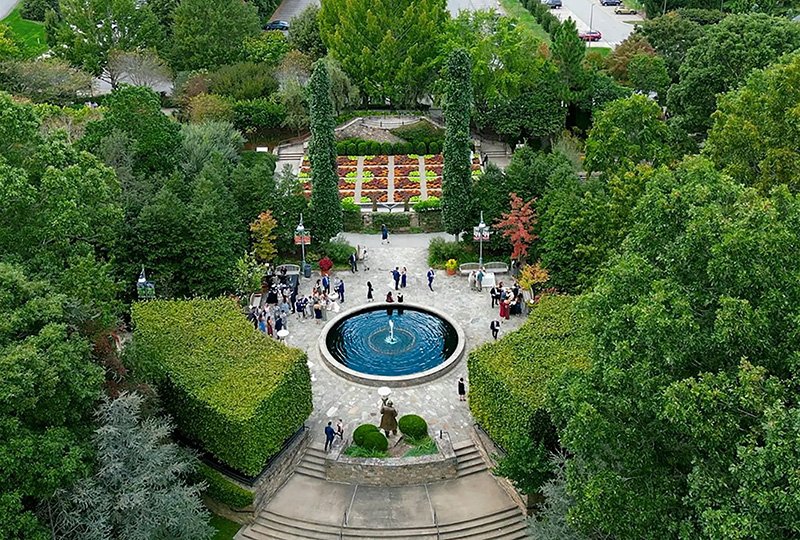
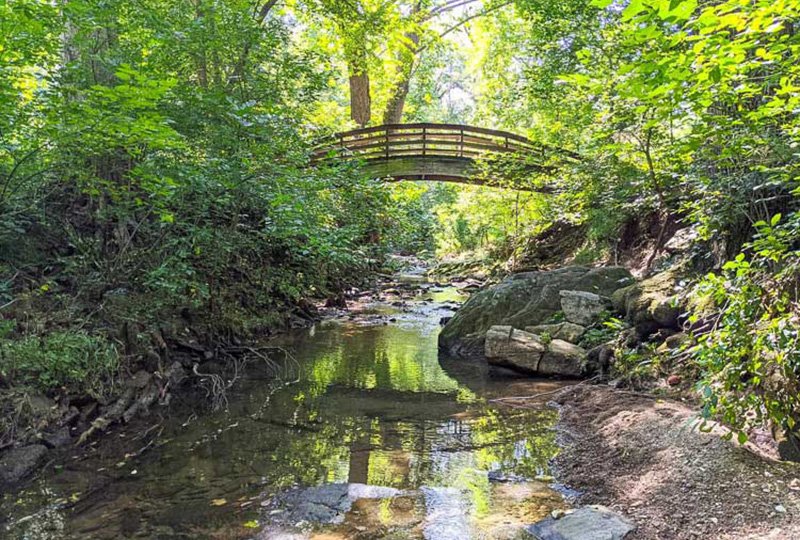
Unlike a formal flower display planted for a single season, the Asheville Botanical Garden in Asheville, NC is a 10-acre living collection devoted to plants native to the Southern Appalachian Mountains. Families walk beneath trees, pass low-growing wildflowers and ferns and see how mountain habitats change from sunny openings to moist stream edges. The approximately half-mile loop feels manageable for many young walkers, especially when parents treat the visit as a small discovery expedition instead of a timed hike. Ask children to compare leaf shapes, count bridges or listen for birds near the creek. Flowers and wildlife vary by season, and no animal sighting or particular bloom can be promised.
The garden map marks Reed Creek, bridges, Sunshine Meadow, a gazebo, the bird viewing deck, a springhouse and other landmarks. These give children specific destinations along an otherwise gentle nature walk. The stream is especially tempting, but parents should explain the rule before arriving: creek access is allowed only in designated places, and children must never scramble down banks or cross barriers. Families may enjoy a picnic at the provided benches and tables, making the outing an easy pause between busier Asheville attractions. This is a conservation garden rather than a recreational play park; ball games, bicycles, tree climbing and collecting leaves or flowers are prohibited.
The Visitor Center adds a useful educational stop when open. Volunteers can provide a map, a children’s activity booklet and access to a touch table with nature objects. That short indoor break is especially valuable for families whose children want to ask questions about what they saw. The garden is close to UNC Asheville and a short drive from downtown, so it works well as a low-cost morning outing or a quiet late-afternoon walk. Because the trails are largely compacted gravel rather than pavement and have some hills, parents with strollers should choose their route carefully and be willing to turn around at rougher sections.
Make this one stop part of a bigger mountain getaway. Compare more nature walks, museums and rainy-day options in our guide to Asheville with kids.
Little naturalists thrive here, while babies and teens need different expectations
Infant
Infants can accompany caregivers for a short fresh-air visit. Choose accessible ground near the Visitor Center or bring a carrier if you want to explore gravel routes; this is not a fully paved stroller circuit.
Toddler
Toddlers may love bridges, birds and small natural details, but they need close hand-holding near the creek and fragile plantings. A short out-and-back route is usually easier than insisting on the full loop.
Little Kids
A particularly good age for a nature treasure hunt without collecting anything. Look for different leaf shapes, insects and colors, and stop at the Visitor Center for an activity booklet when open.
Big Kids
Children can follow the map, notice how the creek changes its surroundings and practice identifying plants with an adult. This is a comfortable length for a relaxed introductory nature walk.
Tweens
Tweens who enjoy photography, drawing or biology can use the garden as an outdoor classroom. Those looking for climbing structures or strenuous hiking may find it too quiet.
Teen
Teens interested in botany, photography or ecological conservation may appreciate the native-plant collection and seasonal changes. Others may prefer a more active outing afterward.
Family Friction: gentle distances, but not a fully accessible trail network
Our eight-factor assessment looks at arrival, waits, outdoor conditions, terrain, mobility, family facilities, sensory demands and schedule freedom. Only factors supported by usable visitor information receive a score.
The Asheville Botanical Garden is easy on the budget and does not require timed admission, making it a flexible nature break for most families. The main loop is short, and the garden has its own free lot, but there are some compacted gravel surfaces, hills and creek edges that make stroller access less predictable. Everything outdoors is subject to heat or rain, while restrooms operate on shorter hours than the grounds. Parents should check the trail map and set expectations for quiet exploration rather than playground-style activity.
| Factor | Score | Why |
|---|---|---|
| Parking & Arrival | 2/5 | On-site parking is free, but spaces are limited. Weekend overflow parking in designated UNC Asheville lots may add a 5-10 minute approach and some routes include stairs. |
| Queue & Wait Time | 1/5 | There is no general ticket desk or reserved entry time for an ordinary visit, so families can walk in without a standard admissions queue. |
| Heat & Weather Exposure | 4/5 | All trails are outdoors. Rain may make gravel and dirt wetter, summer humidity can make creekside walks uncomfortable, and thunderstorms require leaving exposed areas. |
| Walking Distance & Terrain | 2/5 | The main loop is approximately half a mile, but compacted gravel, short hills and occasional uneven footing mean it takes more effort than a continuous paved sidewalk. |
| Stroller & Mobility Access | 3/5 | The Visitor Center, bird viewing deck and a small paved area are wheelchair accessible; the wider network is mostly hard-packed gravel with grades and is not accessible to everyone. |
| Restroom & Baby-Care Access | N/A | Restrooms are listed at the Visitor Center, open 10:00 a.m.-4:00 p.m.; the official guidance does not confirm changing tables or a dedicated feeding space. |
| Sensory & Crowd Load | 1/5 | The atmosphere is usually oriented toward quiet study, with no programmed rides or loud attractions. Organized groups or popular picnic spots may be busier. |
| Schedule Flexibility | N/A | Garden grounds are open sunrise to sunset and do not require advance tickets. Visitor Center hours are shorter, and organized groups require approval. |
| Scored total | 13/30 | Medium Friction |
Strollers work best near the Visitor Center, not on every garden trail
Expect compacted gravel and minor slopes once you leave the paved entrance area. Choose a sturdy stroller or baby carrier and plan shorter sections if the surface becomes difficult.
Two designated accessible parking spaces, a wheelchair ramp to the Visitor Center and nearby paved access provide the simplest starting point.
Most nature paths are hard-packed gravel with a few small hills, which may be manageable with all-terrain stroller wheels but not every mobility device.
Stay on established trails and use only designated creek access areas. Loose stones and drop-offs near water deserve extra attention.
Parents who want to follow side trails can avoid pushing a stroller across steeper or narrower surfaces by carrying young children instead.
Asheville Botanical Garden hours, free admission and parking
Entry and regular parking cost $0 for everyone. The grounds open daily from sunrise to sunset, while the Visitor Center and restrooms normally operate from 10:00 a.m. until 4:00 p.m.
| Activity or service | Cost | What to know |
|---|---|---|
| Garden admission | Free | All ages, every day; no standard timed ticket needed. |
| On-site parking | Free | Limited spaces at 151 W.T. Weaver Boulevard. |
| Main half-mile loop | Free | A self-guided nature walk with gravel and some short slopes. |
| Visitor Center activities | Free | Ask volunteers about the children’s booklet and touch table during opening hours. |
| Picnic areas | Free | Tables and benches available; pack out litter and protect plants. |
| Donations | Optional | The nonprofit garden relies on supporters to maintain free access. |
| Gift shop | Varies | Optional nature-themed purchases support the garden. |
| Organized group visits | Advance permission | Contact the Operations Manager; groups must follow garden guidelines. |
Family cost example: A family of two adults and two children pays $0 for entry, the half-mile garden walk and standard on-site parking. Add only what you choose to spend on food, gifts or donations.
When is Asheville Botanical Garden open?
- Garden grounds: daily, year-round, from sunrise until sunset; seasonal daylight changes the closing time.
- Visitor Center and restrooms: daily, 10:00 a.m.-4:00 p.m.
- The main loop is about half a mile; allow additional time for exploring, photographs and picnic breaks.
- Before a special event or organized group visit, check the garden website for any access information.
Parents with toddlers will generally have an easier visit during Visitor Center hours, when restrooms and volunteer guidance are available. An early morning walk is possible, but do not assume indoor facilities will be unlocked.
Keep the visit curious, calm and kind to the plants
These simple choices turn a free walk into a meaningful nature outing without exhausting young children.
- Collect observations, not plants.Let kids photograph leaves, sketch flowers or count different tree shapes; removing plants, seeds or natural material is prohibited.
- Bring the trail map to life.Use the half-mile loop and landmarks such as Reed Creek, the gazebo and bird viewing deck as achievable mini-goals.
- Aim for restroom opening hours.The outdoor grounds open at sunrise, but the Visitor Center and toilets normally open only from 10:00 a.m. to 4:00 p.m.
- Choose shoes for gravel.Closed-toe footwear is more dependable than sandals on compacted stones, damp spots and slight slopes.
- Explain the creek boundary first.Water is attractive to toddlers; keep them close and enter streamside areas only at designated access points.
- Pack a picnic, not sports gear.Tables and benches make snacks easy. Ball games, bikes, climbing trees and pets other than service dogs are not permitted.
Asheville Botanical Garden: detailed questions for families
Admission, hours, parking, nature trails and stroller access explained for a smooth family outing.
Is Asheville Botanical Garden free, and do we need tickets?
Yes. Admission to Asheville Botanical Garden is free for adults and children of every age, and ordinary on-site parking is free as well. There is no separate ticket to walk the half-mile loop, explore the native-plant habitats or enjoy the garden during standard opening hours. The nonprofit welcomes voluntary donations and sells items in its Visitor Center gift shop, but neither is required for a family visit. Families can therefore plan a low-cost morning walk or picnic without making a ticket reservation. Organized school, homeschool or other group visits are different: the garden asks groups to obtain prior permission to manage space and protect its sensitive plant collection. Families should remember that this is a protected botanical garden rather than a park for sports, so free entry does not mean unrestricted play or collecting flowers.
What are Asheville Botanical Garden hours, including restrooms?
The outdoor Asheville Botanical Garden grounds are open every day of the year from sunrise to sunset. That means the exact usable window changes with the seasons, and you should not assume there is a fixed evening closing hour. The Visitor Center, gift shop and public restrooms operate on a shorter schedule, normally 10:00 a.m. to 4:00 p.m. daily. This distinction matters for parents traveling with young children, because the trails may be open before toilets and indoor assistance are available. A visit between late morning and midafternoon gives you the easiest access to facilities, volunteers and the children’s activity booklet. Before traveling during a major storm or on a special-event date, check the official website for any temporary access notices.
Where is Asheville Botanical Garden in Asheville, NC?
The address is 151 W.T. Weaver Boulevard, Asheville, NC 28804, immediately beside the University of North Carolina Asheville campus and a short drive north of downtown Asheville. From downtown, drive north on Merrimon Avenue and turn left onto W.T. Weaver Boulevard, then look for the garden driveway shortly before Broadway. The garden is much smaller and more intimate than the North Carolina Arboretum, which is a separate destination southwest of downtown with its own vehicle parking charge. Asheville Botanical Garden covers approximately 10 acres and focuses on native Southern Appalachian flora. Because the walking circuit is compact and there is no admission charge, it is easy to pair with other Asheville attractions if your family wants an outdoor break between museums or meals.
How long is the Asheville Botanical Garden trail, and what will children see?
The official garden map describes a main loop of approximately half a mile, so families can usually complete the route within about 45-90 minutes when accounting for children who stop frequently. The path travels through different native-plant settings and includes creek views, small bridges, woodland sections and landmarks such as Sunshine Meadow and the gazebo. The garden map also identifies Reed Creek, the bird viewing deck and other features that can become interesting destinations for a child-led walk. This is not a zoo, a flower theme park or a playground. Seasonal blooms change through the year, and wildlife encounters are never guaranteed. Encourage children to notice leaf textures, listen to birds, draw a favorite tree or photograph the creek without disturbing habitat. A longer visit is possible if your family brings a picnic or spends time in the Visitor Center.
Is Asheville Botanical Garden stroller-friendly or wheelchair accessible?
Partially. The garden confirms designated accessible parking, a wheelchair ramp at the Visitor Center and accessible space near the entrance and bird viewing deck. Beyond these sections, most paths are hard-packed gravel rather than continuous pavement, and some have small hills. The garden specifically cautions that not all trails are accessible to every wheelchair user. Parents with a sturdy all-terrain stroller may find sections manageable in dry conditions, but small wheels, wet gravel and changes in grade can make the full loop uncomfortable. Families with mobility needs should begin by the Visitor Center, assess the surface and turn back if necessary rather than treating the whole loop as a guaranteed accessible route. A baby carrier can provide more flexibility, while older children who walk confidently may handle the uneven ground more easily.
Can kids play in the creek or bring a dog to Asheville Botanical Garden?
Children are welcome to explore and learn about nature, but Asheville Botanical Garden has conservation rules that parents should review before visiting. Creek access is permitted only in designated areas, and families should not climb down banks or create their own route to the water. Plants, seeds, stones and other natural materials must be left where they are; the garden also prohibits bicycles, sporting games, climbing trees and using hammocks. Dogs and other pets are not allowed, with an exception for service dogs. Bring water, comfortable shoes and a picnic if you wish, and supervise young children closely near bridges, creek banks and fragile flower beds. The best way to enjoy the garden is to treat it as a living outdoor classroom, letting children ask questions and explore with their eyes instead of taking souvenirs from the landscape.