Asheville Urban Trail with Kids - A Free Downtown Sculpture Hunt
Turn a downtown Asheville walk into a search for giant objects, bronze figures and hidden history. The free Asheville Urban Trail connects 30 public art stations over approximately 1.7 miles, but families do not need to finish the entire route: start at Pack Square, find a handful of sculptures and stop when the children have had enough. Expect street crossings, hills and ordinary downtown traffic rather than a separate nature trail.
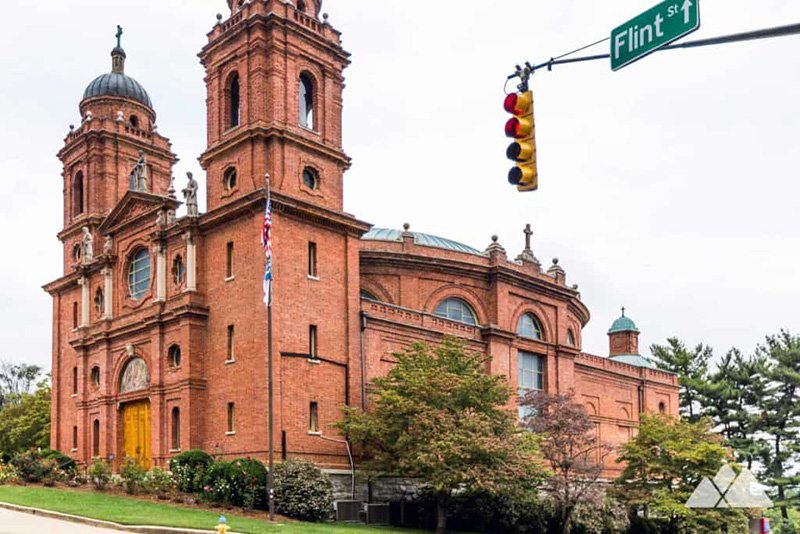
The 30 public art stations are on downtown sidewalks. No general admission ticket or reservation is needed.
Free access and extras →Pick a short scavenger walk. The complete 1.7-mile route usually takes about 2 hours or longer with children.
Children who enjoy searching for sculptures can join in; toddlers may prefer a stroller-based, abbreviated version.
Free access and flexible stops help, but downtown crossings, hills, summer sun and limited public restrooms add effort.
See the full Family Friction score →Look for top hats, giant tools and Asheville stories hidden in the sidewalks
The Asheville Urban Trail is an outdoor history museum spread across downtown Asheville, North Carolina. Its 30 stations combine sculptures, bronze plaques and pieces of streetscape art that introduce the people, architecture and events shaping the city. The official route begins at Pack Square, where the Walk Into History marker stands by the Asheville Art Museum. Instead of explaining every historic figure before the walk, invite children to find the next artwork and guess what it represents. A bronze top hat, a giant flat iron and a cat on a wall are far more memorable to younger visitors than a long historical lecture. The accompanying plaques give older children and teenagers something concrete to read and discuss.
For a manageable first outing, start at the Pack Square marker, look for Crossroads and Stepping Out, and continue only while attention and energy last. The nearby stations provide a sequence of discoveries without requiring a family to complete all 30. Give children a small mission: find a sculpture that looks useful, spot an animal, identify an unusual building shape, or photograph three different materials used in public art. The official downloadable scavenger hunt and map offer a more structured activity for school-age children. If a station is being repaired, relocated or changed, treat the search as flexible rather than insisting on completing a checklist. Public artwork and downtown street layouts evolve, so consult the current interactive map before setting out.
The complete Asheville Urban Trail walking tour runs approximately 1.7 miles through a working downtown with traffic signals, shops, restaurants, sidewalks and slopes. Explore Asheville suggests around two hours for the full route, but with snacks, photographs and historical stops a family can easily take longer. There is no admission gate and no reason to push through tired feet. Parents can combine a 30-60 minute section with a stop for lunch, or add the Asheville Museum of Science or Asheville Art Museum as an indoor option nearby. The route is best understood as a walking activity with stories and sculptures, not an enclosed playground: keep small children close near intersections, avoid climbing on artwork and prepare for changing mountain weather.
Discover Asheville beyond its downtown sculptures. Explore museums, parks and age-friendly day plans in our guide to Asheville with kids.
From toddler spotting games to teen photography - who enjoys the Urban Trail?
Infant
Babies can come along on a short stroller outing around Pack Square, but the artwork is primarily for the caregiver. Prioritize a smooth route and a predictable feeding break.
Toddler
Toddlers may enjoy spotting an animal sculpture or an oversized object. Keep the walk brief, use a stroller when needed and hold hands at every crossing.
Little Kids
An excellent age to play an informal find-it game: look for a hat, a cat, a shape and a surprising detail. A few stops are more rewarding than all 30.
Big Kids
Strong fit for the official scavenger-hunt idea. Kids can read short plaque descriptions, track stations on a map and decide which piece of art is most interesting.
Tweens
Tweens can compare Asheville buildings with sculptural references, photograph favorite details and investigate why local history is presented through public art.
Teen
Teens interested in design, photography or history may enjoy the entire route. Others will prefer a shorter loop paired with coffee, shopping or another downtown stop.
Family Friction: downtown crossings, open-air walking and flexible stops
KidWaypoint’s eight-part framework compares practical family demands - arrival, lines, weather, distance, mobility, care facilities, sensory load and schedule freedom - so families can assess the effort of a visit, not simply its ticket price.
The Asheville Urban Trail requires little financial or booking effort, and families can abandon the route whenever a child tires. The difficulties are practical: parking near Pack Square, navigating busy intersections, coping with the hills and uneven pavement of a real downtown, and finding convenient restroom stops. The full course may be too much for young walkers. Keeping the route to a few central stations reduces the burden substantially, while summer heat or a crowded festival can make it less pleasant.
| Factor | Score | Why |
|---|---|---|
| Parking & Arrival | 2/5 | The official beginning is at Pack Square in downtown Asheville. There is no dedicated trail lot, so families generally use a city garage or a time-limited street meter and walk to the first station. |
| Queue & Wait Time | 1/5 | No ticket counter, timed entry or attraction queue exists. Busy sidewalks, traffic lights and occasional clusters around public artwork can slow the walk. |
| Heat & Weather Exposure | 3/5 | Every station is outdoors. Mountain weather changes quickly; rain makes street crossings less pleasant, and warm afternoons can be tiring on exposed stretches. |
| Walking Distance & Terrain | 3/5 | The official route covers about 1.7 miles. Sidewalk grades, curb ramps, frequent crossings and the need to backtrack are more consequential than the mileage alone. |
| Stroller & Mobility Access | 2/5 | The city marks the urban trail as wheelchair accessible and lists paved walking paths. Individual sidewalk slopes, construction detours, curb transitions and crowds may still complicate a stroller outing. |
| Restroom & Baby-Care Access | N/A | The trail is public streetscape, not a staffed attraction. The city publishes a separate downtown public-restroom map, but specific changing facilities along the complete route are not confirmed. |
| Sensory & Crowd Load | 3/5 | Vehicles, signals, street performers and busy shopping blocks may overwhelm noise-sensitive children. Families can pause in a quieter area or cut the route short. |
| Schedule Flexibility | 2/5 | The public art can be viewed without a ticket or arranged tour, but daylight, weather, roadwork and normal downtown activity shape the most comfortable walking hours. |
| Scored total | 16/35 | Medium Friction |
Strollers work on many sidewalks, but this is not a level park loop
Pack Square is a practical place to test whether the terrain works for your stroller before committing to the full downtown route. Paved sidewalks help, but the walk includes grades, curb cuts, vehicle crossings and pedestrian traffic.
Start beside Asheville Art Museum and try nearby art stops before deciding whether to continue. Turn back when the route becomes too steep or crowded.
Use marked crosswalks and pedestrian signals. Keep young children within reach even when a sculpture is visible across the road.
Older paving, utility work and curb ramps can create bumps. A stroller with sturdy wheels may be more comfortable than a lightweight travel model.
Use restrooms before starting and bring water and diapers. There is no staffed trail visitor center with guaranteed baby-care facilities at each station.
Asheville Urban Trail tickets cost $0 - budget for parking instead
The self-guided Asheville Urban Trail requires no ticket, admission reservation or guide. Downtown garage charges, metered parking, cafes and optional paid walking tours are separate choices.
| Activity or service | Cost | What to know |
|---|---|---|
| Self-guided Urban Trail walk | Free | Public artworks and interpretive stations can be visited independently. |
| 30-station route | Free | Approximately 1.7 miles; completing every station is optional. |
| Official trail map and scavenger hunt | Free to access | Use the Explore Asheville map, audio guide and printable family scavenger materials. |
| City parking garage - stay under 1 hour | $0 | Only when you exit before 60 minutes. |
| City parking garage - longer stay | $2 per hour or part | First hour becomes chargeable when the visit exceeds 60 minutes; daily maximum normally $15. |
| On-street metered parking | $2.50 per hour | Typically two-hour limit, charged Monday-Saturday 8 a.m.-6 p.m.; posted exceptions apply. |
| Guided downtown tour | Varies | Commercial tours are separate, optional products. |
| Snacks, lunch or nearby museums | Varies | No purchase is required for the public art walk. |
Family cost example: Two adults and two children can visit five or six Urban Trail stations for $0 in admission. A two-hour stay in a city garage typically costs $4, while buying food or entering a nearby museum is optional. Garage special-event fees can change that calculation.
When can families follow the Asheville Urban Trail?
- Outdoor public-art stations have no formal attraction ticketing window.
- Daylight is the simplest choice for reading plaques and navigating crossings with children.
- Plan about 45-90 minutes for a selected section or roughly 2 hours and more for the full 1.7-mile route.
- Use the current official interactive route map to identify stations affected by relocation, maintenance or street work.
The Urban Trail does not operate like a museum with opening and closing admission times. Specific adjacent businesses, restrooms and guided tours follow their own schedules. Start in daylight and leave buffer time for stops rather than treating the route as a race.
Make the art hunt feel like a game, not a history lesson
The best family version gives children control over what to notice and when to stop.
- Print or save the map first.Explore Asheville provides the official 30-station interactive map, printable version and scavenger materials; save them before you leave reliable Wi-Fi.
- Start with a five-stop goal.A short Pack Square-area outing builds excitement without forcing toddlers or reluctant walkers to complete 1.7 miles.
- Let each child choose a clue.Ask one child to find an animal, another to find an oversized object, and an older sibling to identify the historical subject on a plaque.
- Pause before reading every plaque.Invite guesses about an artwork first. Then share one memorable fact instead of a long uninterrupted history explanation.
- Watch crosswalks rather than sculptures.The art sits among busy downtown streets; stop safely before pointing across traffic or photographing an object.
- Bring a weather backup.If storms or heat spoil the walk, nearby indoor options include Asheville Museum of Science and Asheville Art Museum; their admission is separate.
Asheville Urban Trail questions parents ask before setting out
Route length, map, admission, the best stations for kids and the practical details of walking downtown.
What is the Asheville Urban Trail walking tour, and is it suitable for children?
The Asheville Urban Trail is a free, self-guided public art and history route connecting 30 sculptural stations in downtown Asheville. It is not a nature path or a fenced attraction: the artworks are embedded in the city streetscape, so the experience includes regular sidewalks, traffic signals and crossings. Families with children ages 4-12 often get the most from turning the outing into a scavenger hunt rather than a formal historical tour. Start at the Walk Into History marker in front of Asheville Art Museum on Pack Square and look for the next unexpected object. Young children might spot the bronze top hat or an animal without understanding every plaque. Older children can read the descriptions, compare architectural styles and learn why certain figures or episodes matter to Asheville. There is no need to complete the full route for the visit to be worthwhile.
How long is the downtown Asheville Urban Trail, and how many stops should we do with kids?
Explore Asheville lists approximately 1.7 miles and 30 stations for the complete Asheville Urban Trail, with about two hours as a typical general walking estimate. Families often need longer if they read every marker, take photos, stop for food or negotiate the route with a stroller. For children ages 4-6, consider a first section of four to six stations and allow 30-60 minutes. School-age children who enjoy looking for clues may manage a 60-90 minute outing, while teenagers interested in history or photography may prefer the complete course. The most helpful approach is to decide on a time limit, not a mandatory station count. The route can be shortened at nearly any point because the stations are spread through a functioning downtown. Bring a map so you can return directly to your garage instead of retracing every station.
Where can I find a map of the Asheville Urban Trail and a scavenger hunt?
The official Asheville Urban Trail page and Explore Asheville provide links to an interactive map of all 30 stations, a printable map, individual station descriptions and an audio experience. Explore Asheville also publishes scavenger-hunt materials for teachers and students, which families can adapt for a casual visit. Download the map to a phone or print it before arriving, and mark a few stations close to Pack Square instead of expecting younger children to navigate the entire route. The city identifies 2 South Pack Square, Asheville, NC 28801 as the starting location, beside the Asheville Art Museum. The Urban Trail is a living public art collection, and individual stations may be restored, moved or reinterpreted. Refer to the live map if an older printed guide does not match what you see on the sidewalk.
Do we need Asheville Urban Trail tickets, reservations or a guide?
No. Asheville Urban Trail tickets are not required for the self-guided walk. The 30 public art stations occupy publicly accessible downtown spaces and can be explored independently without purchasing a museum pass, registering for a group or hiring a guide. Families can arrive when it suits their schedule and decide how long to stay. A private guided walking tour is a separate optional service and may charge its own fee; likewise, food, shops and indoor museums encountered along the route are not included in a public-art walk. The main predictable cost for drivers is downtown parking. If you intend to combine the walk with a paid museum visit, check that attraction’s individual opening hours and ticket requirements rather than assuming it follows the Urban Trail’s open-air format.
Can we take a stroller on the downtown Asheville Urban Trail?
A stroller is possible along many sections because the city describes the route as paved and wheelchair accessible, but conditions are different from a flat recreational greenway. The trail crosses downtown blocks with slopes, curb transitions, pedestrians, occasional construction and traffic lights. Families pushing heavy double strollers may find the complete 1.7-mile route tiring, especially if they need to backtrack to the car. Start near Pack Square and evaluate the first few blocks before committing. Hold children’s hands near roads, stop safely when consulting the map and avoid expecting a bathroom or changing station at every sculpture. The city has a downtown public-restroom map, but exact baby-changing amenities along the route are not confirmed. A short loop and planned indoor restroom break are more reliable than an ambitious full route with a sleepy toddler.
Where is downtown Asheville Urban Trail parking, and when is the best time to visit?
The official starting area is Pack Square at 2 South Pack Square, Asheville, NC 28801. There is no exclusive Asheville Urban Trail parking lot. Drivers can use city garages or metered street spaces and walk to the first station. Current city garage rates are generally $2 for every hour or partial hour, capped at $15 per day, with a free stay only when a vehicle exits within the first 60 minutes. A two-hour garage visit therefore usually costs $4. Metered street parking is generally $2.50 per hour with a two-hour maximum, enforced Monday-Saturday from 8:00 a.m. to 6:00 p.m.; event fees and signs can override the standard arrangement. For children, a morning or mild-weather afternoon is preferable to a hot midday walk. Good daylight helps with reading plaques and crossing streets, while weekends, festivals and nearby events can make sidewalks and parking busier. If the weather looks unstable, select a short route that can end quickly near your parked car.