Folk Art Center with Kids - Asheville, NC
At the Folk Art Center on the Blue Ridge Parkway, children can discover how a lump of clay becomes pottery, how threads become woven cloth and why handmade objects tell stories about Appalachian life. Admission is free, the galleries are indoors, and seasonal artisan demonstrations can turn a short museum stop into an engaging family experience. Check the demonstration calendar before promising children a chance to watch someone work.
No general admission ticket is required for the galleries, craft shop and normally scheduled demonstrations. Purchases and certain special events may cost extra.
Free access and extras →Most families can explore the exhibits in 45-90 minutes; allow longer for an artisan demonstration or a short outdoor walk.
School-age children who enjoy making things get the most from this quiet, look-dont-touch setting. Toddlers need closer supervision.
Free parking and indoor galleries make arrival simple. The main challenges are fragile displays, keeping little children engaged and seasonal demonstration schedules.
See the full Family Friction score →Watch craft traditions come alive at the Folk Art Center in Asheville
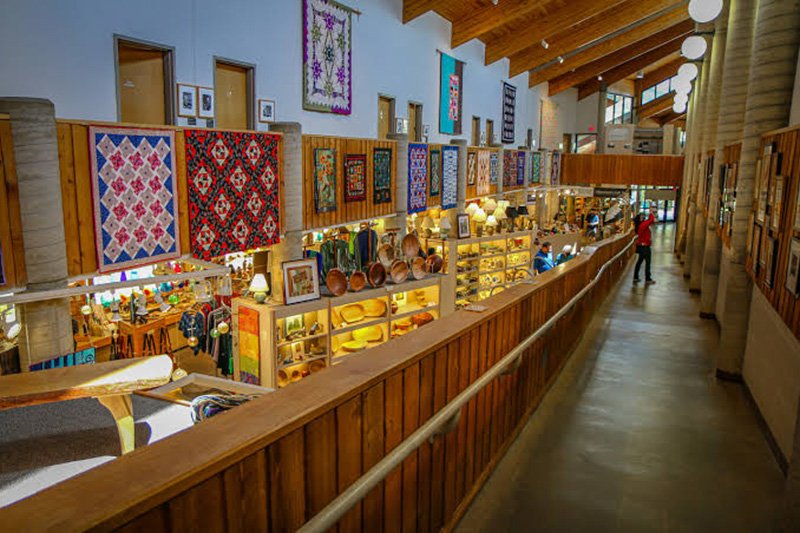
The Folk Art Center in Asheville, North Carolina, sits at milepost 382 of the Blue Ridge Parkway and brings together the work of Southern Appalachian craftspeople under one roof. The Southern Highland Craft Guild manages the galleries and Allanstand Craft Shop, while the National Park Service provides information about the Parkway. On a family visit, begin with the galleries rather than rushing straight into the gift shop. Invite children to compare objects made from wood, clay, glass, metal and fiber, then look for the details that reveal hours of handwork: basket patterns, carved edges, quilt stitching and the glaze on a bowl. Unlike a childrens discovery museum, most artworks are meant to be viewed rather than handled, so the visit works best when children know the rules before entering.
The biggest reason to time a visit carefully is the chance to meet an actual maker. During the demonstration season, Guild artisans may show techniques such as weaving, woodturning, jewelry making or pottery. The particular craft and artist change with the schedule, and a demonstration is not guaranteed on every family visit. When one is available, encourage children to watch how the process changes from raw material to finished object. Questions such as What tool is that? and How long does one piece take? help turn observation into conversation. Keep a respectful distance from tools and worktables, especially when artists are using sharp equipment or machinery. These are working demonstrations, not automatically hands-on childrens workshops.
The building also contains a Parkway information area, a bookstore and three exhibition galleries, with rotating displays as well as craft traditions represented in the Guild collection. The Allanstand Craft Shop showcases objects made by regional artists, so families can see how everyday items such as bowls, baskets and textiles become works of art. Some children will enjoy a quiet 30-minute look; others may spend more than an hour comparing forms and materials. Outside, the Mountains-to-Sea Trail connects to the area, but hiking should be treated as a separate outdoor activity rather than a required part of the indoor museum visit. There is no on-site restaurant, which matters for families arriving near lunch or snack time.
Keep exploring the Blue Ridge mountains together. Pair a free craft stop with more museums, gardens and outdoor activities in our guide to Asheville with kids.
Older children can follow the makers process; younger visitors need shorter gallery loops
Infant
A brief stroller visit works if baby is comfortable with a quiet indoor environment. Plan feeding and changing needs before arriving since dedicated baby-care facilities are not confirmed.
Toddler
Toddlers may notice colorful pottery and textured objects but will need constant help with no-touch gallery rules. Make this a quick stop rather than a long art lesson.
Little Kids
Preschoolers can hunt visually for birds, animals, circles and bright colors in handmade objects. A live demonstration may hold attention for a few minutes at a time.
Big Kids
Children can compare weaving patterns, ask an artist about tools and discuss why handcrafted objects look different from factory-made items. A strong age for a short guided family conversation.
Tweens
Tweens who enjoy drawing, design or building may get absorbed in technique, craftsmanship and the links between Appalachian history and practical objects.
Teen
Teens interested in visual art, culture, textiles or design can appreciate advanced techniques and changing exhibitions. Others may prefer a shorter visit paired with an outdoor Parkway stop.
Family Friction: a calm, free visit with a few gallery rules
KidWaypoint’s eight-part framework compares practical family demands - arrival, lines, weather, distance, mobility, care facilities, sensory load and schedule freedom - so families can assess the effort of a visit, not simply its ticket price.
A free indoor visit at the Folk Art Center usually takes little logistical effort: visitors can drive to the Parkway location, park near the building and choose how long to browse. There is no standard admission line, and the exhibits and restrooms are reported as accessible. The key friction for families is behavioral rather than physical. Young children must avoid touching delicate work, a demonstration can depend on the season, and the nearby mountain trails require separate weather planning. The overall score reflects seven rated factors; baby-changing arrangements remain unverified.
| Factor | Score | Why |
|---|---|---|
| Parking & Arrival | 1/5 | The Folk Art Center has a dedicated parking area by its Blue Ridge Parkway entrance at milepost 382. Follow the Guilds Parkway directions rather than a mailing address, and verify roadway access if storms or maintenance have affected nearby sections. |
| Queue & Wait Time | 1/5 | There is no general ticket to buy for an ordinary gallery visit, so the family usually avoids an admission queue. Special events or very popular demonstration days can bring additional visitors. |
| Heat & Weather Exposure | 1/5 | The main galleries are indoors, making a visit comfortable in ordinary rain or summer heat. Parking-to-door movement and optional outdoor trails still expose families to mountain weather. |
| Walking Distance & Terrain | 1/5 | A family can choose a compact indoor gallery circuit with frequent breaks instead of committing to a long trail. The nearby Mountains-to-Sea Trail is optional and varies in terrain. |
| Stroller & Mobility Access | 1/5 | The Parkway visitor guide lists accessible visitor facilities, exhibitions and restrooms. A stroller is practical for the galleries, but parents should stay mindful of crowded display spaces and delicate art. |
| Restroom & Baby-Care Access | N/A | Accessible restrooms are confirmed, but public visitor information does not clearly document changing stations or a private feeding area, so a reliable baby-care score cannot be assigned. |
| Sensory & Crowd Load | 3/5 | Quiet exhibitions, fragile objects and occasional tool noise during a demonstration can be challenging for energetic or sound-sensitive children. Families can shorten their visit or move to another gallery. |
| Schedule Flexibility | 2/5 | The galleries have regular daytime hours and require no standard advance reservation, but specific demonstrations and seasonal programming vary. A family hoping to meet an artist should verify the calendar first. |
| Scored total | 10/35 | Low Friction |
Easy indoor browsing with a stroller, but keep hands away from displays
Accessible galleries and restrooms make this a manageable stop with a stroller. The more important preparation is setting boundaries around fragile crafts, tools and any working demonstration.
The Blue Ridge Parkway visitor directory lists accessible exhibition areas and restrooms. Ask staff for the easiest path if a display or event changes circulation.
Park the stroller away from tools, active work areas and narrow gathering points. Let older children approach only when invited by the artist.
The Mountains-to-Sea Trail is not part of the accessible indoor gallery circuit. Its surface and weather exposure should be assessed separately.
Accessible restrooms are documented, but changing tables and dedicated nursing rooms are not confirmed. Pack necessary supplies and plan an alternate changing option.
Folk Art Center hours, free tickets and Blue Ridge Parkway parking
There is no standard admission charge for the galleries or craft demonstrations. The Southern Highland Craft Guild currently lists daily hours of 10:00 a.m.-5:00 p.m.; closures and demonstrations can vary.
| Activity or service | Cost | What to know |
|---|---|---|
| General gallery admission | Free | No per-person ticket is needed for ordinary exhibition visits. |
| Seasonal craft demonstrations | Free when offered | Check which artist and technique are scheduled for your date. |
| Allanstand Craft Shop browsing | Free | Purchases from regional makers are optional. |
| Parkway information and bookstore | Free to browse | Books, souvenirs and other items are individually priced. |
| On-site parking | Free standard visitor parking | Use the designated lot near milepost 382; verify the approach if roadway closures are posted. |
| Special workshops or events | Varies | Confirm whether a particular program requires registration or payment. |
| Nearby hiking | Free trail access | Footwear, weather and trail conditions matter; no hiking is necessary to visit the galleries. |
| Food and refreshments | Budget separately | No restaurant or food service is listed at the center. |
Family cost example: Two adults and two children can spend an hour in the galleries and watch an available free demonstration for $0 in admission. Budget only for travel, optional purchases or separately priced activities.
What are Folk Art Center hours and demonstration times?
- Current Guild hours: daily, 10:00 a.m.-5:00 p.m.
- The center operates year-round, with traditional closures on Thanksgiving Day, Christmas Day and New Years Day.
- Craft demonstrations are seasonal; specific techniques and makers depend on the posted schedule.
- Check both current Guild information and National Park Service Parkway road alerts before driving.
A regular gallery visit can be planned at almost any point during open hours, but live craft demonstrations should be treated as scheduled extras rather than an automatic part of every visit. If watching an artist is the main reason your child wants to go, check the demonstrations listing shortly before your visit and leave room for a schedule change.
Make Appalachian crafts interesting without turning the gallery into a playground
A few specific prompts and a flexible schedule will do more for children here than trying to see every object.
- Look up the demonstration first.An artist at work can be the highlight for children. Check the Guild calendar and avoid promising a particular craft without confirmation.
- Give each child one material to spot.Ask one child to find woven fiber and another to look for carved wood or painted pottery. It adds purpose without touching the pieces.
- Explain the rules before entering.Galleries and the shop contain delicate handmade objects. Practice looking closely with eyes, not fingers, and keep smaller children within reach.
- Try a makers question.When an artisan is taking questions, children can ask where the raw material comes from, how tools work or what the hardest step is.
- Plan lunch somewhere else.The National Park Service lists no food service on the property. Eat before arriving or choose a nearby stop afterward.
- Treat the trail as a separate decision.If the weather is good, consider a short outdoor look around, but do not assume the Mountains-to-Sea Trail is suitable for strollers or young walkers.
Folk Art Center Asheville: family visiting questions
Detailed answers about admission, artisan demonstrations, hours, directions and visiting with young children.
Is the Folk Art Center in Asheville free, and do children need tickets?
Yes. Standard admission to the Folk Art Center galleries is free for adults and children, so families do not need to purchase general-entry tickets or reserve a basic gallery visit. Visitors can explore traditional and contemporary Appalachian craft exhibitions, browse the Allanstand Craft Shop and watch scheduled public craft demonstrations without a standard admission fee. Items for sale in the shop are optional purchases, and certain classes, workshops or special programs may set their own prices and registration requirements. For example, two adults with two children can spend an ordinary afternoon visit here for $0 in admission. This makes the center a useful choice for families who want a cultural activity without paying per person, especially when combining it with several stops along the Blue Ridge Parkway. If you see a third-party listing advertising tours and tickets to experience Folk Art Center, distinguish an optional commercial tour from the free public admission offered at the site itself.
What are Folk Art Center hours in Asheville, NC?
The Southern Highland Craft Guild currently lists Folk Art Center hours as 10:00 a.m. to 5:00 p.m., Monday through Sunday. The facility operates year-round, although it traditionally closes on Thanksgiving Day, Christmas Day and New Years Day. Most families should budget 45-90 minutes to see the exhibits at a comfortable pace; an interested school-age child may stay longer for a live demonstration or rotating exhibition. The most important distinction is between opening hours and demonstration times. The building may be open even when a particular craftsperson is not scheduled to work, so confirm that activity separately. Because the location is reached from the Blue Ridge Parkway, also check National Park Service road advisories after winter weather, severe storms or maintenance. Road access may affect a trip even when the attraction itself is normally open.
Where is Folk Art Center Asheville, and how do we get there?
The Folk Art Center is at 382 Blue Ridge Parkway near milepost 382 in east Asheville, North Carolina. It is not located among the downtown Asheville galleries, so families should plan to drive rather than assume they can walk there from downtown restaurants or museums. The Southern Highland Craft Guild recommends using the Blue Ridge Parkway entrance and directs drivers coming from I-40 to take exit 55 and follow Folk Art Center signs. The location coordinates are approximately 35.59272 latitude and -82.48187 longitude. The site has a dedicated visitor parking lot and standard parking is free. Use the entrance and road signs rather than routing yourself toward the National Park Service mailing address at Hemphill Knob. If you are visiting during the colder months or after heavy rainfall, check current Parkway closures first, since access routes can change.
What can kids see during a Folk Art Center craft demonstration?
Craft demonstrations give families an opportunity to see an experienced Southern Appalachian artisan making something, rather than simply looking at a finished object in a case. Depending on the date, an artist may demonstrate weaving, pottery, woodwork, jewelry or another craft technique; the participating artists and materials vary by schedule. School-age children often enjoy following the stages of a process: selecting material, using specialized tools, repeating a pattern and finishing the object. For younger children, pick one simple thing to notice, such as how threads cross or how a shape changes in the makers hands. These are demonstrations, not guaranteed hands-on workshops, so children should never touch tools, materials or finished pieces unless specifically invited. The National Park Service notes that in-season demonstrations are offered, but families should check the Guild schedule for the particular visit day and should not count on a certain artist being present.
Is Folk Art Center stroller-friendly, and are there restrooms?
Blue Ridge Parkway visitor information lists the Folk Art Center exhibits, visitor facilities and restrooms as wheelchair accessible, which makes the indoor galleries a practical choice for caregivers with a stroller. Plan to move slowly in the shop and around displays, especially if a craft demonstration attracts a crowd. Children should remain within reach because displayed objects can be fragile and some artists work with tools that require extra space. Accessible restrooms are reported, but the publicly available information does not confirm a changing table or a dedicated private nursing room. Parents needing these facilities should call the center ahead of time or prepare an alternative. The hiking trails outside are a separate experience; their natural terrain should not be assumed stroller accessible just because the building is. For babies, the most reliable plan is a short indoor visit with essential supplies packed.
Is Folk Art Center worth visiting with kids on a rainy day?
Yes, for families who enjoy arts, history and watching how things are made, the Folk Art Center can be a worthwhile indoor stop during ordinary rain or on a very hot day in Asheville. Its main attractions are indoor galleries, changing exhibitions, a craft shop and seasonal demonstrations. However, this is not a childrens play center, and a toddler who wants to run or handle objects may lose interest quickly. A 30-45 minute look can be more successful for preschoolers, while older children can spend an hour or longer exploring craft traditions and comparing techniques. The National Park Service lists no restaurant at the site, so plan snack and meal times elsewhere. Do not add the adjacent Mountains-to-Sea Trail in storms or unsafe weather, and check Parkway travel conditions before driving. If a specific live demonstration is essential to your visit, consult the schedule even if the building is open.