American Museum of Natural History with Kids - New York, NY
Meet the Tyrannosaurus rex, stand beneath a 94-foot blue whale, and discover the stories hidden inside meteorites, mammals and ancient fossils. The American Museum of Natural History in New York is enormous: the secret to a good family visit is choosing a handful of memorable halls, not trying to conquer the entire museum in one afternoon.
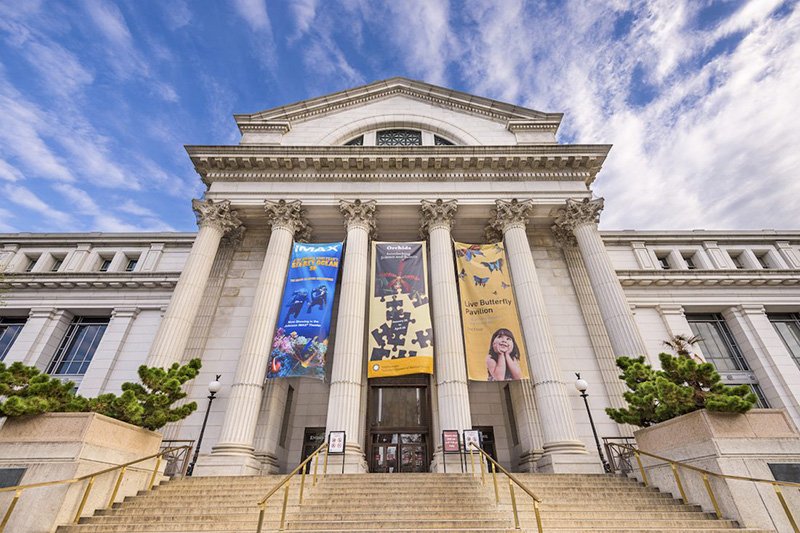
Standard general admission covers more than 40 permanent halls. Under 3s enter free; special exhibitions cost more.
Free access and extras →A focused dinosaur-and-whale route takes around three hours; exploring additional halls can easily fill most of a day.
Dinosaur lovers from preschool age, curious schoolchildren and science-minded teenagers will find different highlights.
Easy indoor access and helpful family facilities, but long distances, crowds, timed add-ons and high parking prices demand planning.
See the full Family Friction score →From fossil giants to the blue whale: the museum halls kids remember
The fourth-floor dinosaur halls are the natural starting point for many families. The Hall of Saurischian Dinosaurs is home to the museum’s famous Tyrannosaurus rex fossil mount, while the Hall of Ornithischian Dinosaurs introduces armored and horned dinosaurs and the extraordinary variety of creatures that once lived on Earth. Instead of rushing from skeleton to skeleton, invite children to compare teeth, feet and body shape: Which dinosaur hunted? Which was built for defense? For a four- or five-year-old, three unforgettable fossils can be more rewarding than a dozen display cases. Older children can investigate how fossil bones are assembled and why scientists sometimes change their interpretations.
Then move from prehistoric land animals to one of the museum’s most spectacular sights: the life-size, 94-foot blue whale suspended in the Milstein Hall of Ocean Life. Children often stop underneath it simply to understand its scale; nearby ocean-life dioramas put other marine creatures into context. The Hall of Biodiversity and the mammal halls reward slower looking, while the Ross Hall of Meteorites introduces visitors to objects that traveled through space before reaching Earth. The Rose Center for Earth and Space adds a dramatic change of scale, from the history of our planet to the universe. Each of these experiences works with ordinary general admission, but a timed Hayden Planetarium show requires a ticket that includes that add-on.
For families who love interactive experiences, the Richard Gilder Center adds another dimension to a visit. Its winding interior is striking on its own; the Davis Family Butterfly Vivarium offers close views of living butterflies, and Invisible Worlds surrounds visitors with an immersive presentation of connections in nature. Both are separately ticketed experiences. The museum also lists rotating exhibitions, including Impact: The End of the Age of Dinosaurs through January 18, 2027, so check what will be open on your date. With more than 40 permanent halls, the American Museum of Natural History is not a checklist activity: choose two or three themes, schedule snack and restroom breaks, and leave room for the unexpected discovery your child wants to investigate.
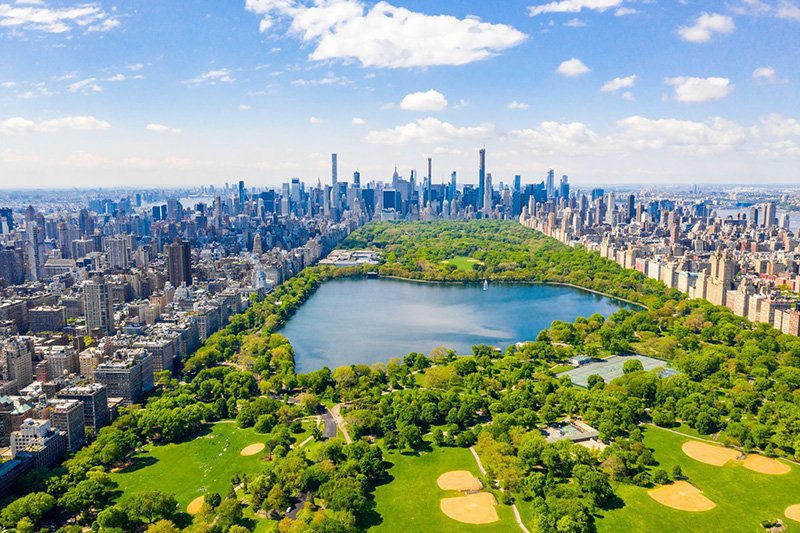
Dinosaurs are only one chapter of a New York family adventure. Pair the museum with nearby Central Park or discover other hands-on museums, parks and memorable activities in our New York City with kids guide.
Dinosaur awe starts young, but school-age explorers get the most from the exhibits
Infant
Babies can accompany adults in strollers, but a huge, crowded museum offers limited age-specific value; use short routes and flexible breaks.
Toddler
Toddlers may enjoy animal models and the blue whale for a brief visit, but dense crowds, dim halls and extensive walking can overwhelm them.
Little Kids
Excellent for budding dinosaur fans: focus on big fossils, animal dioramas and a few simple observations rather than lengthy labels.
Big Kids
A particularly strong match for comparing skeletons, exploring the ocean hall and connecting exhibits with school science topics.
Tweens
Tweens can follow evolution, geology and astronomy in greater depth, and choose a ticketed immersive exhibition that fits their interests.
Teen
Science-interested teens can spend hours investigating specimens, research stories and current exhibitions instead of following a child-focused route.
Family Friction: the practical challenge of an enormous Manhattan museum
KidWaypoint’s eight-part framework compares practical family demands - arrival, lines, weather, distance, mobility, care facilities, sensory load and schedule freedom - so families can assess the effort of a visit, not simply its ticket price.
The galleries are indoors, stroller-friendly routes exist, and museum dining and restrooms reduce the need to leave for basics. The harder part is navigating a huge complex with children: paid parking is expensive, popular dinosaur halls attract crowds, exhibition times constrain the day, and a trip between floors can feel long when small legs tire. Choose your entrance and top exhibits in advance, then allow time for breaks rather than trying to cover every hall.
| Factor | Score | Why |
|---|---|---|
| Parking & Arrival | 4/5 | The museum garage at 56 West 81st Street charges $33 for up to two hours and $40 for two to five hours; subway and buses avoid driving costs, but the 81st Street B/C station is not wheelchair accessible. |
| Queue & Wait Time | 3/5 | Advance tickets can shorten ticket-buying delays, but visitors still pass security and major fossil halls or timed exhibitions may become busy, especially on weekends and school holidays. |
| Heat & Weather Exposure | 0/5 | Exhibits are indoors and climate-controlled; only travel to the museum and any walk in Central Park exposes families to the weather. |
| Walking Distance & Terrain | 4/5 | More than 40 halls across multiple floors make it easy to log significant walking. A focused route is essential for families with children who tire quickly. |
| Stroller & Mobility Access | 1/5 | Accessible entrances, elevators and Explorer app routing help. Strollers cannot enter theaters, and double strollers are typically restricted in ticketed exhibition galleries. |
| Restroom & Baby-Care Access | 1/5 | The museum provides restrooms and on-site dining; consult the Explorer app for the nearest facilities and check at guest services for specific baby-care options. |
| Sensory & Crowd Load | 3/5 | Echoing spaces, busy dinosaur galleries, dim displays and immersive sound or projection can be intense. Choose quieter halls and avoid stacking multiple timed attractions. |
| Schedule Flexibility | 1/5 | The museum is normally open daily 10 am-5:30 pm. General admission allows self-paced exploration, although special exhibitions and planetarium shows require timed entry. |
| Scored total | 17/40 | Medium Friction |
Elevators, accessible entrances and stroller parking: navigating four floors
Strollers are generally welcome in permanent galleries, but entrances and ticketed experiences have different rules. Pick an accessible entrance, save an elevator-friendly route in the Explorer app and plan for stroller parking before theater shows.
The Rose Center entrance at West 81st Street and the Gilder entrance at 415 Columbus Avenue avoid the steps at the ceremonial Central Park West entrance.
The museum’s free app can build elevator-based directions to exhibits, dining areas and restrooms across the sprawling complex.
Stroller parking is provided for theaters; double strollers are generally not allowed inside ticketed exhibition galleries because of limited space.
The museum is much larger than it first appears. Use a stroller for younger siblings and prioritize only the floors that matter most to your family.
American Museum of Natural History tickets, hours and parking costs
Standard visitor prices apply to travelers from outside New York State. General admission includes permanent collections; the butterfly vivarium, planetarium and other ticketed exhibitions cost more. Eligible New York State residents have different pricing.
| Activity or service | Cost | What to know |
|---|---|---|
| General admission - adult (13-59) | $37 | More than 40 permanent halls; standard nonresident price. |
| General admission - senior 60+ / student with ID | $30 | Valid ID required for concession. |
| General admission - child (3-12) | $22 | Includes permanent halls, not ticketed exhibitions. |
| Children under 3 | Free | A ticket may still be required; select correct admission category. |
| Admission + one ticketed exhibition - adult / senior-student / child | $43 / $35 / $26 | Choose one timed premium exhibition during checkout. |
| Admission + all ticketed exhibitions - adult / senior-student / child | $48 / $39 / $30 | Timed reservations may still be required for individual attractions. |
| New York State resident general admission | Pay what you wish | Only with eligible residency evidence; ticketed exhibitions excluded from pay-what-you-wish admission. |
| Museum garage | $33-$55 | Up to 2h $33; 2-5h $40; 5-10h $50; up to closing $55. Oversize +$20. |
Family cost example: Two nonresident adults and two children ages 3-12 pay $118 for general admission, or $138 with one ticketed exhibition for each person. A three-to-four-hour stay in the museum garage adds $40, bringing those totals to $158 or $178 before meals, tax on additional purchases or souvenirs.
What time does the American Museum of Natural History open?
- Museum hours: daily 10:00 am-5:30 pm, except Thanksgiving and Christmas Day.
- General admission covers the permanent halls and selected non-ticketed exhibitions.
- Timed add-ons include the Butterfly Vivarium, Invisible Worlds and the Hayden Planetarium Space Show.
- Check the temporary hall-closure calendar: scientific work, maintenance and special events can affect specific rooms.
Arrive close to opening if your children are excited about popular dinosaurs or the blue whale. Before buying premium tickets, select a showtime that does not split your family’s main route into awkward pieces. The museum updates temporary closures regularly, so do not promise a particular hall without checking.
A dinosaur-first route that keeps children curious, not exhausted
A little planning turns an immense collection into a rewarding visit rather than a race between galleries.
- Start upstairs with the fossil halls.Make the T. rex and other favorite skeletons your first priority before crowds and fatigue build.
- Save the blue whale for a change of pace.The enormous model in the ocean hall feels completely different from fossil displays and offers an easy family photo moment.
- Choose one premium extra, not every extra.A timed planetarium show or butterfly visit can be wonderful, but too many reservations fragment a family visit.
- Download the free Explorer app.Use it for elevator routes, the nearest restroom and a direct path to the next must-see hall.
- Use an accessible entrance with a stroller.Choose West 81st Street or 415 Columbus Avenue rather than carrying a stroller up the Central Park West staircase.
- Consider transit before paying for parking.The in-house garage is expensive; allow for the fact that the 81st Street B/C station itself is not wheelchair accessible.
American Museum of Natural History: detailed family planning questions
Practical answers on location, admission, dinosaurs, timing, opening hours and getting there with children.
Where is the American Museum of Natural History in New York?
The American Museum of Natural History is at 200 Central Park West on Manhattan’s Upper West Side, across the street from Central Park, near 79th Street. The grand Central Park West entrance has steps; families with strollers may find the accessible Rose Center entrance on West 81st Street or the Gilder Center entrance at 415 Columbus Avenue easier. The 81st Street-Museum of Natural History B/C subway stop is very close, while the 1 train stops near 79th Street and Broadway. The museum is large enough that choosing the right entrance saves both walking and energy before you have seen your first exhibit.
Is the American Museum of Natural History free for children or New York residents?
It is not generally free for tourists. Standard general admission is $37 for adults, $30 for students with valid ID or seniors 60+, and $22 for ages 3-12; children under three enter free. Eligible New York State residents with proof of residency may pay what they wish for general admission, but that option does not include ticketed attractions such as the planetarium or Butterfly Vivarium. The museum also publishes free-admission eligibility for certain members, military visitors and other groups, as well as admission during the final hour of the day. These exceptions have conditions, so check the official admissions page instead of assuming that all NYC museums are free.
How long should families spend at the American Museum of Natural History?
Plan around three hours if your priorities are the dinosaur halls, blue whale and one or two additional permanent exhibits. Four to five hours gives time for a meal, bathroom breaks and a slower look at fossils, mammals, meteorites or the Rose Center. A full-day visit can work with enthusiastic older children, but it is usually too much for younger ones without substantial breaks. The strongest strategy is to choose three must-see stops before arriving and treat anything else as a bonus. Timed ticketed exhibitions can add to the visit, but they also require you to be in the right place at the right time.
What should kids see first at the American Museum of Natural History?
For dinosaur fans, the fourth-floor fossil halls are a compelling first stop, including the famous Tyrannosaurus rex mount and other prehistoric animals. Next, visit the Milstein Hall of Ocean Life and stand beneath its 94-foot blue whale model. Children interested in space may prefer the Ross Hall of Meteorites and the Rose Center for Earth and Space; animal lovers can spend time comparing dioramas and biodiversity displays. If you buy a premium ticket, the Davis Family Butterfly Vivarium or an immersive experience at the Gilder Center can round out the route. The best order depends on your child’s interests and any temporary gallery closures.
What are the American Museum of Natural History hours?
The museum’s published regular hours are 10:00 am to 5:30 pm daily, with closures on Thanksgiving Day and Christmas Day. Specific galleries may close temporarily for conservation work, educational events or maintenance, so check the museum’s current hall-closure page if one particular exhibit is essential to your trip. Ticketed experiences such as the Hayden Planetarium Space Show have separate timed entries. Aim for opening time when possible, especially on weekends and school holidays, and leave time to pass through security before the exhibition you have reserved.
How much does American Museum of Natural History parking cost?
The official parking garage is on West 81st Street between Central Park West and Columbus Avenue; the GPS address is 56 West 81st Street. The published rates are $33 for up to two hours, $40 for two to five hours, $50 for five to ten hours and $55 until garage closing. Vehicles taller than 6 feet 5 inches pay an additional $20. The garage is open 6 am-11 pm on weekdays and 8 am-11 pm on weekends. Nearby street parking is often difficult and subject to restrictions, so public transit can be more practical for visitors without heavy family equipment.