Family Travel Guide · New York City
What to Do in New York City with Kids
New York City is a transit-and-walking trip, and that shapes everything for families. Distances between family stops are short on a map but long with a stroller, a tired six-year-old and a flight of subway stairs. This guide covers things to do in New York with kids by age and weather, free places to visit, and the transit rules that save the most time and money.

Overview
New York is dense, vertical and tiring, and kids feel all three
The day is measured in subway stops, not miles. Family destinations are spread across five boroughs, so a workable day usually combines one or two stops in the same area and leaves the rest to walking, snacks and a park. Itineraries that cross the city twice tend to end early, regardless of how short the ride looks on the map.
Transit decides how far a day can go. Every option below has a different rule for kids, and the free-ride rule is based on height, not age.
| Option | Cost | Kid rule | Planning note |
|---|---|---|---|
| Subway | $3.00 per ride; weekly cap of $35 after 12 paid trips | Up to three children 44" or under ride free per paying adult | Stairs at many stations; check elevators |
| Local bus | $3.00 per ride | Same free rule | No stairs, but street traffic sets the pace |
| Roosevelt Island Tram | Free transfers to and from subways and buses | Up to three children 44" or under ride free | Runs seven days a week |
| Metro-North, LIRR, NJ Transit, PATH | Separate fares, not covered by OMNY | Check each operator | Used for day trips beyond the city |
Fares and rules per MTA tariff effective January 4, 2026, and NYC Tourism. Check the MTA fare page before travel.
Strollers and stairs are the main practical limit. Only a minority of the system's 472 subway stations have elevators or ramps, and elevators go out of service. MTA announcements in 2023 put accessible stations at 135 of 472. Plan routes through elevator stations and check the MTA's accessibility map and elevator status before leaving.
The weather swings more than in most U.S. cities. According to Booking.com's seasonal guide, New York has hot, humid summers with frequent late-day thunderstorms and cold, windy winters. Peak tourist season runs through summer and from Thanksgiving to New Year's Day, and the same guide points to January through May and early autumn as quieter windows. Families with young children usually handle spring and fall best.
One quiet stop between two busy ones keeps a day on track. Parks and playgrounds work as pressure valves for young kids, while older kids can handle a longer chain of stops.
Why families love it
- A very wide range of museums, parks and large sights inside one transit network.
- Transit rules that favor small kids, with up to three children 44 inches or shorter riding free per adult.
- Four distinct seasons, so the same city offers different outings in spring, summer, fall and winter.
- Most days run without a car, which removes parking and driving from the plan.
Best time with kids
April-June and September-October generally give the best mix of manageable weather and lighter crowds. Summer works well for families who plan around the heat and afternoon storms. Winter is cold but shorter lines are common outside the holiday weeks. Check school-break calendars before choosing dates.
Skip New York City if
- Your family struggles with long days of crowds, noise and walking.
- You need stair-free transit for a stroller and cannot plan around station elevators.
- You want a warm-weather, mostly outdoor trip in winter, or a cool, dry one in July.
Zoom in for a more accurate location, then click a marker to learn more about the attraction and get directions via Google Maps.
Plan by age
Where to go in New York with kids, sorted by age
A toddler and a twelve-year-old need different cities. Young children do best with short outings, open space and few transfers, while older kids can take on longer chains of stops and learn the subway as part of the trip. The tabs below sort places by the age group that usually gets the most from each one, from infants through teens. No place repeats in the weather or free sections that follow.
Babies are easiest to manage in New York City with short outings, because stairs at many subway stations make stroller transfers tiring. Plan routes through elevator stations and keep each day to one neighborhood.
 Outdoor
Central Park offers free playgrounds, leafy walks, open lawns, storybook sculptures and iconic Bethesda-area landmarks; families can choose a short neighborhood section rather than crossing the entire park.
Attraction guide →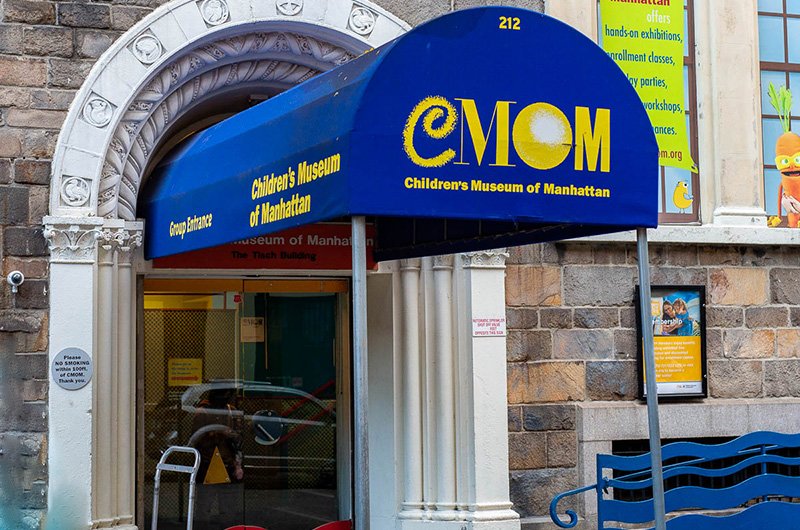 Indoor
Children's Museum of Manhattan
On Manhattan's Upper West Side, CMOM turns four floors into hands-on learning spaces, with PlayWorks for babies and toddlers, Dora and Diego adventures and art-making for preschoolers.
Attraction guide →Toddlers do well when a busy stop alternates with open space to move, which the city's parks and playgrounds supply. Short hops and nap-friendly timing matter more than the length of the list.
 Outdoor
Brooklyn Bridge Park combines free waterfront walks and postcard skyline views with Pier 1, Pier 5 and Pier 6 playgrounds, including seasonal water play and easy family routes through DUMBO.
Attraction guide → Outdoor
The free Staten Island Ferry crosses New York Harbor in about 25 minutes, with family-friendly skyline, harbor and distant Statue of Liberty views between Lower Manhattan and St. George.
Attraction guide →OutdoorCentral Park offers free playgrounds, leafy walks, open lawns, storybook sculptures and iconic Bethesda-area landmarks; families can choose a short neighborhood section rather than crossing the entire park.
Attraction guide →IndoorChildren's Museum of Manhattan
On Manhattan's Upper West Side, CMOM turns four floors into hands-on learning spaces, with PlayWorks for babies and toddlers, Dora and Diego adventures and art-making for preschoolers.
Attraction guide →Ages 3 to 6 respond to hands-on and animal-focused stops, and New York has many places built for that age. Height rules and ticket timing are worth checking before the day.
 Indoor
Grand Central Terminal turns a Midtown transportation hub into a free architecture-and-sound adventure, from its celestial ceiling to the Whispering Gallery.
Attraction guide →OutdoorBrooklyn Bridge Park combines free waterfront walks and postcard skyline views with Pier 1, Pier 5 and Pier 6 playgrounds, including seasonal water play and easy family routes through DUMBO.
Attraction guide →OutdoorThe free Staten Island Ferry crosses New York Harbor in about 25 minutes, with family-friendly skyline, harbor and distant Statue of Liberty views between Lower Manhattan and St. George.
Attraction guide →OutdoorCentral Park offers free playgrounds, leafy walks, open lawns, storybook sculptures and iconic Bethesda-area landmarks; families can choose a short neighborhood section rather than crossing the entire park.
Attraction guide →School-age kids can handle longer days of walking and subway rides, and they get the most from places with real scale, such as science, history and big sights. Leave one rest block in the middle of the day.
IndoorGrand Central Terminal turns a Midtown transportation hub into a free architecture-and-sound adventure, from its celestial ceiling to the Whispering Gallery.
Attraction guide →OutdoorBrooklyn Bridge Park combines free waterfront walks and postcard skyline views with Pier 1, Pier 5 and Pier 6 playgrounds, including seasonal water play and easy family routes through DUMBO.
Attraction guide →OutdoorThe free Staten Island Ferry crosses New York Harbor in about 25 minutes, with family-friendly skyline, harbor and distant Statue of Liberty views between Lower Manhattan and St. George.
Attraction guide →OutdoorCentral Park offers free playgrounds, leafy walks, open lawns, storybook sculptures and iconic Bethesda-area landmarks; families can choose a short neighborhood section rather than crossing the entire park.
Attraction guide →Tweens usually enjoy the city's energy and can start reading the subway map with an adult nearby. Choose stops with something to do, not only something to look at.
IndoorGrand Central Terminal turns a Midtown transportation hub into a free architecture-and-sound adventure, from its celestial ceiling to the Whispering Gallery.
Attraction guide →OutdoorBrooklyn Bridge Park combines free waterfront walks and postcard skyline views with Pier 1, Pier 5 and Pier 6 playgrounds, including seasonal water play and easy family routes through DUMBO.
Attraction guide →OutdoorThe free Staten Island Ferry crosses New York Harbor in about 25 minutes, with family-friendly skyline, harbor and distant Statue of Liberty views between Lower Manhattan and St. George.
Attraction guide →OutdoorCentral Park offers free playgrounds, leafy walks, open lawns, storybook sculptures and iconic Bethesda-area landmarks; families can choose a short neighborhood section rather than crossing the entire park.
Attraction guide →Teens tend to prefer neighborhoods, views, food and culture they can explore at their own pace. Hand them the route for part of a day.
IndoorGrand Central Terminal turns a Midtown transportation hub into a free architecture-and-sound adventure, from its celestial ceiling to the Whispering Gallery.
Attraction guide →OutdoorThe free Staten Island Ferry crosses New York Harbor in about 25 minutes, with family-friendly skyline, harbor and distant Statue of Liberty views between Lower Manhattan and St. George.
Attraction guide →OutdoorCentral Park offers free playgrounds, leafy walks, open lawns, storybook sculptures and iconic Bethesda-area landmarks; families can choose a short neighborhood section rather than crossing the entire park.
Attraction guide → Outdoor
At Pier 86, the Intrepid Museum combines a WWII aircraft carrier's flight deck, NASA's space shuttle Enterprise, interactive Exploreum Hall and a Cold War submarine.
Attraction guide →Plan by weather
Fun things to do in New York with kids, in any weather
There is no real off-season in New York, so weather planning is a year-round task. Summer heat and late-day storms push families indoors, winter cold shortens outdoor time, and spring rain is common. The tabs below separate genuinely indoor options from outdoor ones, so a plan can switch with the forecast the same morning.
Grand Central Terminal
The Metropolitan Museum of Art
Children's Museum of Manhattan
American Museum of Natural History
New York Transit Museum
Free attractions
Places to visit in New York with kids that cost $0 to enter
Free here means admission itself costs nothing. Transit, food and any optional extras are separate, so each card flags the extras that apply. These stops fit between paid days and work well when kids need space more than a schedule.
Public concourses and the Whispering Gallery are free to explore without a train ticket.
Free entry, waterfront paths, lawns and public playgrounds; carousel, skating and some concessions cost extra.
Free year-round ferry service for all ages; no ticket purchase required.
Free public admission, playgrounds and self-guided walks; zoo, carousel and rentals cost extra.
Download Our Free Family Travel New York Guide
New York City is full of unforgettable experiences, but exploring it with children takes more than a list of famous landmarks. Busy sidewalks, crowded subway stations, long museum visits, and distances between neighborhoods can quickly turn an exciting day into an exhausting one. Our free New York family travel guide helps you navigate the city with confidence, discover places your kids will genuinely enjoy, and make better use of every day.
What is the ultimate New York travel guide? For families, it's a resource that goes beyond Times Square and the Statue of Liberty. This downloadable PDF introduces you to different parts of the city, highlights attractions for younger and older children, and shows how to combine memorable sightseeing with playground stops, waterfront walks, and quieter experiences. You'll find ideas for everything from dinosaur exhibits and historic subway cars to scenic ferry rides and afternoons in Central Park.
Unlike a typical New York guide for tourists focused on checking landmarks off a list, this guide considers the realities of traveling with kids. Learn why exploring one neighborhood at a time makes sense, where to find enjoyable activities that cost little or nothing, and how to prepare for unexpected rain or tired feet. Save the PDF to your phone and use it as a convenient reference while building a New York adventure that works for your family.
Download Free PDF GuideSee the best of New York without exhausting the whole family
A compact collection of New York experiences, neighborhood suggestions, and practical advice for parents who want to enjoy the city without constantly rushing from one attraction to another.
- 20 must-visit attractions for families Discover the American Museum of Natural History, the Statue of Liberty, the Intrepid Museum, Central Park, observation decks, and other memorable experiences across the city.
- 10 free and budget-friendly places Enjoy Brooklyn Bridge Park, the Staten Island Ferry, Riverside Park, Bryant Park, and other places where families can experience New York without buying expensive attraction tickets.
- 10 local favorites and lesser-known stops Look beyond the headline attractions with Jane's Carousel, Little Island, Chelsea Market, Socrates Sculpture Park, and peaceful gardens in different boroughs.
- Rainy-day museums and indoor experiences Find ideas for curious children, little explorers, and transit enthusiasts, including interactive museums, indoor activities, and short weather-friendly breaks.
- Transportation tips and common mistakes Understand the importance of subway accessibility, ferry boarding times, stroller-friendly routes, museum reservations, and realistic walking distances when planning a trip with children.
Recommendations for families
What to see in New York with kids starts with a map, not a list
Group each day by area
Pick one cluster of stops per day and add a park, snack or playground between them. A route that stays in one neighborhood leaves room for naps and unplanned detours, while a route that crosses the city usually costs a stop.
Plan the subway around the stroller
Stairs are the real obstacle, not fares. Check which stations have elevators or ramps, since the elevator entrance can sit on a different corner from the regular one. Elevators can also be out of service, so look at the live status before heading out. Families with a folding stroller and one parent per child often find stairs easier than parents with a large stroller.
Use the free-ride rule correctly
According to the MTA tariff, up to three children 44 inches or shorter ride free with a fare-paying adult. The rule is about height, not age, so measure before assuming a six-year-old qualifies. Taller children pay the full $3.00, and the $35 weekly cap applies after 12 paid trips with the same payment method.
Choose a base by station, not by neighborhood name
A hotel near a station with an elevator on a line that serves your main priorities saves more time than a lower price in a hard-to-reach area. Check the walk from the platform to the door, not only the distance on the map.
Crowds and stations
Agree on a meeting spot and a phone plan before entering busy stations, keep young children by the hand near platform edges, and keep older kids within sight on crowded trains. This takes seconds and avoids the most common stress points.
Day trips from New York City
Three easy places to visit outside the city with kids
Long Beach, NY
According to I LOVE NY, the Long Island Rail Road reaches Long Beach in about an hour from Penn Station, with a short walk to the beach from the station. It suits a summer beach day without a car, and pairs well with families who want a change from city pace.
Hoboken, NJ
Hoboken sits just across the Hudson from Manhattan and connects by PATH train. It offers waterfront views of the Manhattan skyline and works as a short, low-effort break from the city's pace. PATH is a separate system from the subway and does not accept OMNY, according to NYC Tourism.
Cold Spring, NY
Metro-North's Hudson Line reaches Cold Spring in about 70 to 75 minutes from Grand Central Terminal. Lonely Planet describes the village as compact, a few minutes' walk from the station, and the area also leads into Hudson Highlands State Park. It suits families with school-age kids who can handle trails and a longer train ride.
City with kids: common questions
Questions parents ask about things to do in New York with kids
How many days do families need in New York City with kids?
Five to seven days is a practical range for families who want to see several areas without rushing every day. A shorter trip of three or four days works if the family has a few clear priorities and stays in one part of the city. These are editorial planning ranges, not official minimums. Families with infants or toddlers often need slower pacing, which means fewer stops per day rather than fewer days overall. Adding one day trip outside the city usually fits in a six or seven day plan.
Is the subway manageable with kids and a stroller?
It is manageable but requires planning. According to the MTA, up to three children 44 inches or shorter ride free with a fare-paying adult. The harder part is stairs, since only a minority of subway stations have elevators or ramps and elevators can be out of service. Parents with strollers usually check the MTA accessibility map before leaving, choose routes through elevator stations, and keep a light folding stroller as backup. Local buses avoid stairs entirely but move at the pace of street traffic.
What is the best time to visit New York with kids?
April through June and September through October are generally the most comfortable. Booking.com's seasonal guide describes hot, humid summers with frequent late-day thunderstorms and cold, windy winters, and points to January through May and early autumn as quieter windows. Summer and the weeks from Thanksgiving to New Year's Day are the busiest. A family tied to school breaks can still manage summer with morning outings and indoor afternoons.
What to see in New York with kids if the family has only two or three days?
Pick one area per day and match it to the age of the youngest child. Day one can focus on a hands-on or learning stop plus a park, day two on a landmark or viewpoint, and day three on a neighborhood walk with food and a playground. The age and weather sections above sort options by who gets the most from each stop. Short stays work best when they avoid cross-city transfers, since each transfer takes more time with kids than the map suggests.
Do families need a car in New York City?
Most itineraries inside the five boroughs run on subway, bus and walking, so a car is rarely needed. For day trips, Metro-North, the LIRR and PATH reach Long Beach, Cold Spring and Hoboken without driving. A car becomes useful for places beyond rail lines or when carrying a lot of gear.
Which airport is best for a family trip to New York City?
JFK and LaGuardia are in the city, and Newark is in New Jersey. The best choice depends on where the family is staying and how the ground transfer works with kids and luggage. Compare total transfer time, not only airfare, since a long ride after a flight is harder with small children.
Traveled New York City with kids?
Parents planning a trip find the most useful notes in recent experiences: which subway stations worked with a stroller, how long lines ran, and which stops suited which ages. Leave your experience under the specific attraction you visited so the next family can plan around it.