Brooklyn Bridge Park with Kids: Waterfront Play, Skyline Views and DUMBO Walks
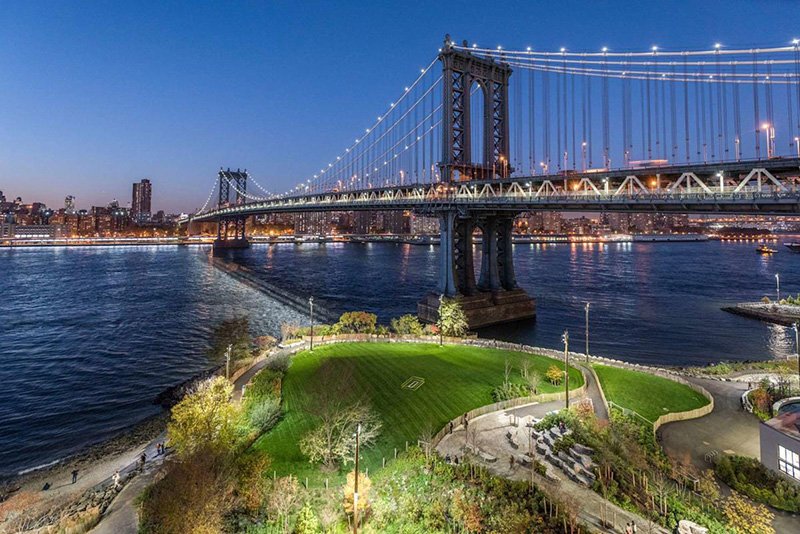
At Brooklyn Bridge Park, children can climb, swing and explore within sight of the Brooklyn Bridge while grown-ups enjoy some of New York’s best Manhattan views. This is not one compact playground: the park runs along multiple East River piers, with quieter toddler play at Pier 5, bigger adventures at Pier 6 and an easy sightseeing loop around Pier 1 and DUMBO. Admission is free, but choose your starting pier carefully to avoid an unnecessarily long walk.
No ticket is required for paths, public lawns, playgrounds or skyline viewpoints. Jane’s Carousel, roller skating and other extras are charged separately.
Free access and extras →Allow 60–90 minutes for one play area or two to three hours for Pier 1, DUMBO and a nearby playground. Pier 6 requires a different starting point or a longer walk.
Toddlers benefit from Pier 5 and shaded sand play; older kids can tackle the larger Pier 6 structures. Teens may come mainly for photographs and the waterfront.
Straightforward free admission and accessible paths help, but limited parking, exposed weather, waterfront distances and seasonal water-play schedules require planning.
See the full Family Friction score →From ship-spotting to Slide Mountain: a city playground with a skyline
Brooklyn Bridge Park is one of the rare New York outings where children can spend an hour playing without parents sacrificing the famous skyline they came to see. Along Pier 1, broad lawns open toward the East River, granite steps and the promenade give families changing views of Lower Manhattan, and passing ferries and working boats create an effortless game of “spot the next vessel.” Walk north toward Fulton Ferry Landing and the DUMBO waterfront and the Brooklyn Bridge becomes part of the scenery rather than a distant landmark. Young visitors may care less about the bridge’s history than the fact that it seems enormous from below; older children often enjoy the perspective, photographs and watching the ferry traffic. Pier 1 also has a playground, and its pavilion offers restrooms and water-filling facilities, a welcome convenience when a short sightseeing stop turns into a longer one.
The play spaces differ enough that choosing the right pier genuinely changes the outing. Pier 5 Playground, at the Picnic Peninsula, is a manageable choice for toddlers and younger school-age children, with lower-key climbing and play areas close to space for a snack. Continue south to Pier 6 for a more adventurous afternoon: Sandbox Village encourages digging and building; Slide Mountain gives confident climbers a reason to race back up; Swing Valley adds a different kind of movement; and the seasonal Water Lab invites splash play when it is open. Those attractions are grouped around Pier 6, so a family with a stroller and a child who wants a full playground session may prefer to arrive near Atlantic Avenue rather than start in northern DUMBO. Water Lab is not a year-round amenity and may close for weather or maintenance. Bring a dry change of clothes if water play is part of the plan, and choose equipment according to your child’s abilities rather than treating all of Pier 6 as suitable for every toddler.
For a lighter visit, the DUMBO end offers its own pleasures. Main Street Playground has nautical-themed elements, and nearby paths lead toward Pebble Beach and dramatic views framed by the bridges. Jane’s Carousel, enclosed within a glass pavilion, is a photogenic optional paid stop, not part of free park admission. Pier 3’s labyrinth, waterfront benches and green areas also make useful pauses between playgrounds. The most successful family route usually includes one main goal: either skyline photos and a short play stop around Pier 1 / DUMBO, or a playground-centered visit to Pier 5 and Pier 6. The full waterfront is long enough that combining both ends with tired preschoolers can become more of a march than an adventure. When parents ask how to get to Brooklyn Bridge Park, the better question is which part their children will enjoy most.
Brooklyn’s waterfront is a wonderful change of pace from Manhattan museums and sightseeing. Pair bridge views with another neighborhood discovery, or build a weather-proof backup plan with our guide to New York City with kids.
Where young explorers actually have fun: choosing a pier by age
Infant
A waterfront stroller walk and occasional boat-watching stop can suit infants, but this is not an infant-centered attraction. Prioritize shaded pauses, sun protection and a short route near an accessible restroom.
Toddler
Pier 5’s smaller playground and Pier 6’s Sandbox Village are particularly appealing for toddlers who prefer sand, modest climbs and repetition. Stay close near waterfront paths, and do not attempt a full-park walk at nap time.
Little Kids
One of the strongest ages for visiting. Children can dig, climb and slide at Pier 6, then look for tugboats and ferries along the promenade. Water Lab, when operating, adds a reason to pack towels and spare clothing.
Big Kids
Confident climbers will likely be happiest around Slide Mountain, Swing Valley and other Pier 6 structures. A Brooklyn Bridge photo stop or short DUMBO walk can round out the trip without making play feel secondary.
Tweens
Tweens can appreciate longer walking loops, bridge architecture, photography, sports courts and the Pier 6 play spaces when interested. Give them a say in choosing a route rather than assuming every playground remains exciting.
Teen
Teens may enjoy the skyline and photography more than the smaller playgrounds. This is a useful free waterfront stop while exploring DUMBO, but not necessarily a full afternoon destination designed specifically for teenagers.
Family Friction: easy admission, more complicated distances and parking
KidWaypoint’s eight-part framework compares practical family demands - arrival, lines, weather, distance, mobility, care facilities, sensory load and schedule freedom - so families can assess the effort of a visit, not simply its ticket price.
Brooklyn Bridge Park is forgiving once you have reached the right entrance: no admission queue, plenty of self-directed play and broad accessible waterfront routes. Most of the effort happens before or around the visit. Parking near the piers is limited and paid garages can be costly; getting to Pier 6 when you thought you were heading to DUMBO adds a substantial walk. Sun, wind and rain are unavoidable along exposed water, and popular weekend playgrounds can become busy. Restrooms and water fountains exist across the park but should be located before setting out with younger children. Choose a specific pier, travel by subway or ferry if practical and carry layers even on a mild day.
| Factor | Score | Why |
|---|---|---|
| Parking & Arrival | 3/5 | Only a small metered lot near Pier 2 and paid garages near Pier 1 and Pier 6 are identified by the park. The Loop Road between Piers 5 and 6 is for drop-off, not parking. Subway and ferry approaches are easier for many families. |
| Queue & Wait Time | 0/5 | There is no park admission queue and free playground use requires no timed booking. Jane’s Carousel, ferries, food stands and seasonal activities may have their own queues. |
| Heat & Weather Exposure | 3/5 | Nearly everything families come for is outdoors and waterfront gusts can be strong. Sun, summer humidity, rain and cold winds may shorten a visit; Water Lab closes for unsuitable weather. |
| Walking Distance & Terrain | 3/5 | The park covers a long shoreline with multiple piers. Pier 1 / DUMBO and Pier 6 are not a compact loop. Most main routes are paved, but distances and playground detours add up for small children. |
| Stroller & Mobility Access | 1/5 | The park states that its grounds are ADA accessible, with useful paved waterfront paths and signed accessible approaches. Some individual play equipment may not be usable by every child. |
| Restroom & Baby-Care Access | 1/5 | Public restrooms and bottle-filling fountains are listed at Pier 1 Pavilion, Pier 2, Pier 5 and Pier 6 areas. Baby-changing amenities vary by facility and should be checked onsite. |
| Sensory & Crowd Load | 2/5 | DUMBO viewpoints and playgrounds can become noisy and crowded on sunny weekends, with nearby traffic, ferries and sports activity. Families can retreat toward lawns and quieter pier sections. |
| Schedule Flexibility | 1/5 | The main park is open 6 a.m.–1 a.m. and free entry needs no booking, but playgrounds are sunrise-to-sunset and Water Lab, carousel and sports facilities have separate operating hours. |
| Scored total | 14/40 | Medium Friction |
Stroller-friendly waterfront paths, but choose the right entrance first
Most main paths are smooth and the park identifies accessible routes, yet the long distance between the DUMBO end and Pier 6 matters more than the stroller itself. Plan around your chosen playground, restroom and transit stop.
For Pier 1 and DUMBO, the accessible approach is around 1 Water Street. For Pier 6, the southern route at 360 Furman Street puts you nearer the large playground cluster.
Broad paved paths work well for strollers and many mobility devices; allow time for detours, crossings and breaks between separated piers.
The waterfront is not a substitute for a contained toddler playground. Supervise children closely near railings, bicycle routes and busy approaches.
Seasonal Water Lab can turn a dry outing into a wet one. A towel and sealed bag are more useful than carrying a full beach setup.
What is free at Brooklyn Bridge Park - and what costs extra?
Entry, public playgrounds, the promenade and open skyline viewpoints are free. Paid extras are entirely optional; most families will spend more on getting there, food or parking than on the park itself.
| Activity or service | Price | What families should know |
|---|---|---|
| Park entry and Manhattan views | Free | Walk along Pier 1, DUMBO and other public waterfront areas without a ticket. |
| Pier 1, Pier 5 and Pier 6 playgrounds | Free | Public play areas generally open sunrise to sunset; individual areas may close. |
| Pier 6 Water Lab | Free when open | Seasonal water-play attraction with weather-dependent availability. |
| Pier 3 labyrinth and park lawns | Free | Self-directed exploration and permitted picnicking on open lawns. |
| Jane’s Carousel | Ticket required | Privately operated and not included in free park entry; check the operator’s current price and hours. |
| Pier 2 roller rink / optional recreation | Varies | Skating sessions and some commercial activities have their own admission or rental fees. |
| Metered parking near Pier 2 | Paid; limited | Spaces may be restricted to three hours; check posted rates and conditions. |
| Garages near Pier 1 and Pier 6 | Paid; variable | Third-party operators set rates, which can change with demand. |
| Food, NYC Ferry and transit | Separate costs | Bring a picnic for a low-cost visit; subway, bus and ferries have their own fares. |
Family cost example: Two adults and two children can visit Pier 1, see the skyline, use a public playground and eat a packed picnic for $0 in park admission. Add transportation, paid parking, carousel tickets or meals only if you choose them.
When are the playgrounds, piers and seasonal water areas open?
- The park generally opens daily at 6:00 a.m. and closes at 1:00 a.m.; specific zones follow other schedules.
- Public playgrounds open from sunrise to sunset, which matters especially on winter afternoons.
- Pier 6 Water Lab is seasonal and weather-dependent; its dedicated page lists 10:00 a.m.–7:00 p.m. during its operating season.
- Check official park alerts for playground closures, changes and special events.
Do not assume that the main park’s 1:00 a.m. closing time applies to playgrounds. Pier-specific activities, concession stands and the carousel have their own calendars. Water Lab is generally a warm-weather option, not something to promise on a cool fall or winter visit.
Two Brooklyn Bridge Park adventures work better than one exhausting marathon
First decide whether the priority is the famous waterfront view or a long playground session. Then make the route short enough to leave time for surprise discoveries.
- Choose the DUMBO-and-Pier-1 loop for photos.Arrive around Fulton Ferry Landing or 1 Water Street, see the Brooklyn Bridge from below, walk Pier 1 and use the nearby play area; Jane’s Carousel is an optional add-on.
- Choose Pier 6 for children who need serious playtime.Sandbox Village, Slide Mountain and Swing Valley reward an unhurried visit. Begin near Atlantic Avenue rather than walking all the way from northern DUMBO.
- Let toddlers spend time at Pier 5.The smaller playground at Picnic Peninsula is less overwhelming than a nonstop tour of the largest Pier 6 structures and offers space for picnic breaks.
- Do not count on Water Lab year-round.The water features operate seasonally and can close during heavy rain, lightning or maintenance. Check the latest status and bring towels only when a splash session is realistic.
- Use transit unless parking is central to your plan.For the north end, look at High Street, Clark Street or York Street. For Pier 6, Borough Hall and Atlantic Avenue connections may be more convenient depending on your starting point.
- Locate a bathroom before a long stroller walk.The Pier 1 Pavilion and facilities at Pier 2, Pier 5 and Pier 6 are useful landmarks. Waterfront breezes also justify an extra layer, even on sunny days.
Brooklyn Bridge Park with kids: eight answers for a smoother waterfront day
Straight answers about DUMBO entrances, subway and ferry routes, the best playgrounds, free activities, parking, stroller access and time needed.
Where is Brooklyn Bridge Park, and is it the same as the Brooklyn Bridge walkway?
Brooklyn Bridge Park is a public waterfront park on the Brooklyn side of the East River, extending from the DUMBO and Fulton Ferry Landing area south toward the piers near Brooklyn Heights and Atlantic Avenue. It is not the elevated pedestrian path across Brooklyn Bridge, although the two can easily be combined. The park includes multiple distinct areas, so “Brooklyn Bridge Park” on a navigation app may not take you to the playground you want. For waterfront views and the bridge, start near Pier 1 and 1 Water Street. For larger play zones such as Sandbox Village, Slide Mountain and Swing Valley, head toward Pier 6 near Atlantic Avenue and 360 Furman Street. If you also want to walk across the bridge, the pedestrian entrance on the Brooklyn side is around Washington Street and Prospect Street or Adams Street; it is not directly on the river-level park promenade. Families with younger children should choose one park area first and treat the bridge walk as a separate activity.
How to get to Brooklyn Bridge Park with kids by subway, ferry or stroller?
The best route depends on which part of the waterfront you are visiting. For northern Pier 1 and DUMBO, the A/C trains to High Street, 2/3 to Clark Street and F to York Street are commonly useful, though the final walk and station elevator availability differ. NYC Ferry serves DUMBO/Fulton Ferry Landing, which puts families directly near the northern waterfront; there is also a Pier 6/Atlantic Avenue ferry landing for the southern end. The park identifies bus routes B25, B61, B63 and B67 as nearby options. Families using strollers or wheelchairs should check the MTA elevator status before setting off rather than assuming every nearby subway station has step-free access. For accessible vehicle arrival, the official directions give 1 Water Street for Pier 1 and 360 Furman Street for the southern entrance. The park’s main paths are accessible, but you will save significant time by arriving close to the play area your children are actually going to use.
Does Brooklyn Bridge Park have parking, and how much should families expect to pay?
Parking near Brooklyn Bridge Park is limited, and the park recommends public transportation rather than driving. There is a small metered parking area on Furman Street near Pier 2, where spaces may be subject to three-hour limits. The park also identifies a paid LAZ garage by Pier 1, approached from the south side of 90 Furman Street, and a City Parking garage near Pier 6, approached from the south side of 360 Furman Street. Other commercial garages exist outside the park, but prices vary by day, time and event demand, and no reliable flat rate applies to every family visit. The Loop Road between Piers 5 and 6 is explicitly for passenger drop-off, not parking. When comparing garages, consider the distance to your chosen playground: a slightly cheaper space near DUMBO may not be worth it if small children are expecting Pier 6. Check the operator’s current rate before departure and follow posted street restrictions.
Where to park for a Brooklyn Bridge walk, and can we combine it with the park?
If your main plan is to walk over Brooklyn Bridge, first understand that the pedestrian approach is inland and elevated, rather than immediately beside Pier 1. On the Brooklyn side, pedestrians reach the walkway from around Washington Street and Prospect Street or Adams Street near Cadman Plaza. Brooklyn Bridge Park, by contrast, is down at river level; Pier 1 and Emily Warren Roebling Plaza are best for admiring the bridge from below. For a family arriving by car, the paid Pier 1 garage at 90 Furman Street or another DUMBO garage may be more suitable for an afternoon that combines the riverside park with nearby bridge access, but you still need to allow for walking and elevation changes. There is no free official parking zone reserved for bridge walkers. With toddlers, it is often more pleasant to choose either a modest bridge walk followed by one playground or a short waterfront photo outing, not a complete bridge crossing plus a tour of every pier.
Which Brooklyn Bridge Park playground is best for toddlers versus older kids?
The park has several playgrounds that serve different purposes. Pier 5 Playground, located by Picnic Peninsula, is a relatively easy-going option for toddlers and younger school-age children; its play areas are close to space where families can take a food break. At Pier 6, Sandbox Village is a strong destination for children who love digging and building, while Slide Mountain and Swing Valley tend to be most rewarding for more confident climbers and active school-age children. Pier 1 offers another playground close to the skyline promenade, useful when the family wants a short DUMBO sightseeing walk rather than a full playground day. At the northern end, Main Street Playground has a nautical theme. Water Lab at Pier 6 is a seasonal splash-play space, not an all-year destination. Choose equipment by each child’s physical ability and posted guidance; smaller children need close supervision, particularly in mixed-age areas and on busy summer weekends.
Is Brooklyn Bridge Park free, and do we need tickets for Jane’s Carousel?
Admission to Brooklyn Bridge Park itself is free, and families do not need to book tickets to walk the waterfront paths, enjoy views of Manhattan, picnic in permitted areas or use ordinary public playgrounds. Pier 1, Pier 5, Pier 6 play areas and the park’s open spaces can all anchor a $0-admission outing. However, not every activity inside or near the park is run as a free public facility. Jane’s Carousel is a separately operated attraction with its own ticket prices and opening schedule; roller-skating sessions, concessions, rentals and occasional commercial activities can also have charges. Transportation to the park, paid parking, and meals are additional costs. Families who want an inexpensive afternoon can pack water and snacks, spend an hour at one playground and take skyline photographs without buying an attraction ticket. For carousel rides or other paid extras, check the operator’s website for current prices and seasonal hours rather than assuming the park’s long opening hours apply to them.
How long should we spend at Brooklyn Bridge Park, and what is an easy DUMBO family route?
For a simple introduction to Brooklyn Bridge Park, 90 minutes to two hours is a realistic starting point. From Fulton Ferry Landing, explore the waterfront under the Brooklyn Bridge, enjoy views around Emily Warren Roebling Plaza and Pier 1, let children play in the nearby playground, then return through DUMBO for a snack. That is a more manageable plan for a young family than trying to cover all the piers. If the priority is playground time, spend two to three hours at Pier 6: begin near Atlantic Avenue, allow an unhurried session at Sandbox Village, Slide Mountain or Swing Valley, and add Water Lab only if operating. Pier 5 can provide a gentler alternative for toddlers. Older children may enjoy a longer waterfront walk, Pier 3 labyrinth and viewpoints at multiple piers. Include extra time for bathrooms, feeding, crowds and photo stops, and remember that attractions at opposite ends of the park are separated by a substantial walk.
What are Brooklyn Bridge Park hours, and is it suitable for rain or strollers?
Brooklyn Bridge Park is normally open every day from 6:00 a.m. until 1:00 a.m., but playgrounds operate only from sunrise to sunset. Other facilities, including Pier 2 recreation areas, Water Lab, Jane’s Carousel, restrooms and concession stands, have separate or seasonal hours. Pier 6 Water Lab is weather-dependent and not open during heavy rain or thunderstorms, and individual play areas can close temporarily for maintenance. This is primarily an outdoor attraction: even with some sheltered places to pause, it is not a good heavy-rain plan. The principal park routes are described as ADA accessible, and paved promenades are generally stroller-friendly, though distances between piers can feel long with tired children. Public bathrooms and bottle-filling fountains are distributed across several locations, including Pier 1 Pavilion, Pier 5 and Pier 6. Carry a rain layer or windbreaker, and check official park alerts before promising a specific playground or splash feature.