Central Park with Kids: Playgrounds, Storybook Stops and Easy NYC Walks
Looking for what to do in Central Park with kids? Resist the urge to cover all 843 acres. Pick a playground, one or two memorable landmarks and a place for a snack. Younger children can climb and splash at Heckscher Playground; school-age kids may love the Alice in Wonderland statue, the Mall and Bethesda Terrace. The park itself is free, while the zoo, carousel and boat rentals are optional additions.
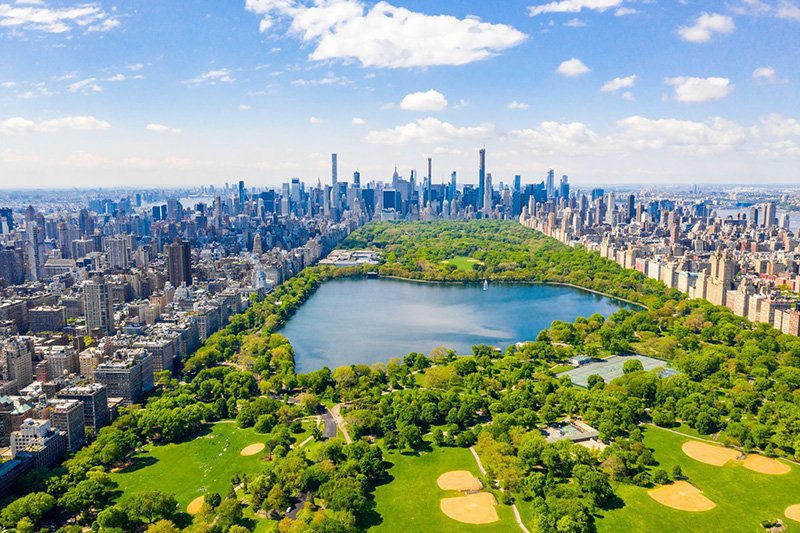
Walk the paths, enjoy public lawns and use the playgrounds without a ticket. The zoo, carousel, rowboats, tours and some events charge separately.
Free access and extras →Plan 60-90 minutes for one playground or two to four hours for a short landmark-and-play route. Crossing the whole park is not a toddler-friendly goal.
Infants can enjoy stroller walks; toddlers and grade-school children get the most from playgrounds, while older visitors may favor landmarks, biking or longer routes.
Admission is simple, but the enormous distances, unpredictable weather, crowded highlights and varying accessible routes can make a family day more demanding.
See the full Family Friction score →The city disappears: climbing rocks, famous sculptures and room to run
Central Park is not one attraction with a single recommended circuit. It is a series of different experiences hidden between Manhattan streets: wooded slopes, broad lawns, ponds, bridges and 21 playgrounds, each with its own character. For children, that variety is the point. One family may spend an entire morning at Heckscher Playground near West 61st-63rd Streets, the park’s oldest and largest playground, where maze-like climbers, slides, swings and a seasonal spray feature turn sightseeing into actual play. Another may start at Ancient Playground near East 85th Street, inspired by the Egyptian galleries at The Met, and pretend the pyramids, obelisk and sandbox are part of a lost city. Choosing one destination gives children space to invent their own adventure rather than simply keeping up with adults on a long walk.
For a more storybook outing, head to the eastern side around 74th-75th Streets. The Alice in Wonderland bronze sculpture gathers Alice, the Mad Hatter and other characters on an oversized mushroom and is a far more engaging photo stop for children than an ordinary monument. Close by, Conservatory Water is known as the Model Boat Pond; families can watch miniature sailboats when boating is operating, and the Hans Christian Andersen statue adds another recognizable figure for children who know The Ugly Duckling. The nearby paths and benches make this a natural place for a pause. Not every water feature operates throughout the year: Conservatory Water is undergoing restoration work in 2026, so check the current notices before planning a trip specifically for model boats.
For those who want the familiar postcard version of New York, a shorter central route is often the best way to see Central Park with kids. Walk part of the Mall under its tall elms, continue to Bethesda Terrace and enjoy the Lake views; then decide whether little legs have enough energy for a bridge, a picnic or a playground detour. Bethesda Fountain has been turned off for a restoration project beginning in 2026, although the surrounding terrace remains open, so frame this as a visit for architecture and scenery rather than a promise of flowing water. Older children can enjoy the balance between city skyline and woodland; toddlers may care more about an interesting staircase, a squirrel and the next playground. The best family day is often the one where you stop early enough that everyone is still having fun.
A great New York family itinerary needs breathing room as well as big-ticket sights. After a picnic, playground or walk through Central Park, discover rainy-day museums and other age-friendly places in our guide to New York City with kids.
From stroller naps to skyline walks: the best Central Park experiences by age
Infant
Infants benefit from a gentle stroller walk, tree shade and a quiet picnic stop; choose a path near an entrance and accessible restroom. Keep the outing short in summer heat and carry feeding supplies, as services are spread far apart.
Toddler
Toddlers often prefer a single playground with swings, smaller structures and nearby seating to an ambitious sightseeing loop. Heckscher or another age-appropriate play area can anchor a visit, with stroller time and snack stops built in.
Little Kids
An excellent age for Alice in Wonderland, the carousel if operating, sandy play, slides and water features in warm weather. Mix just one famous landmark with playground time rather than asking children to walk from south to north.
Big Kids
School-age children can enjoy bigger climbing structures, themed spaces such as Ancient Playground, statue spotting and a short route from the Mall to Bethesda Terrace. A simple scavenger hunt turns walking into a challenge.
Tweens
Tweens may prefer looking for film locations, photographing Bow Bridge or exploring farther on foot. They can also appreciate the layout and history of the park; leave time for a stop they choose themselves.
Teen
Teens can enjoy longer walks, skyline photography, running or permitted bike routes, park history and low-cost time outdoors with family. The day is more compelling when they help choose destinations rather than following only playground stops.
Family Friction: why a free park can still take planning
KidWaypoint’s eight-part framework compares practical family demands - arrival, lines, weather, distance, mobility, care facilities, sensory load and schedule freedom - so families can assess the effort of a visit, not simply its ticket price.
Central Park offers enormous freedom: no timed entry, no admission queue and countless ways to shorten or extend a visit. But its scale makes route choice critical. A walk from one landmark to another can involve slopes or stairs, playgrounds follow their own schedules and restrooms may be a surprising distance away. Exposure to heat, rain and winter cold is the main unavoidable drawback. Crowds gather at famous viewpoints and popular playgrounds, especially on sunny weekends. Enter close to the specific stop you want, check current alerts and treat one playground plus two sights as a full and successful family outing.
| Factor | Score | Why |
|---|---|---|
| Parking & Arrival | 3/5 | Central Park has entrances along four long boundaries but no general visitor parking within the park. Manhattan street parking is limited, garages are paid and cross-city traffic is unpredictable; subway or bus is usually easier. |
| Queue & Wait Time | 0/5 | The park and public playgrounds do not require an admission queue. Paid attractions such as the carousel or zoo may have lines, but they are optional. |
| Heat & Weather Exposure | 4/5 | Most play, lawns, viewpoints and walks are outdoors. Summer heat, winter cold, thunderstorms, icy surfaces and seasonal fountain operation can alter a visit. |
| Walking Distance & Terrain | 3/5 | The park runs from 59th to 110th Street. Paved routes exist, but slopes, stairs, rocky areas and widely spaced landmarks make an overambitious itinerary tiring. |
| Stroller & Mobility Access | 2/5 | Many main routes and several playgrounds have accessible surfaces, but access varies: some trails are steep or rough, and stairs around scenic landmarks may require a detour. |
| Restroom & Baby-Care Access | 1/5 | Public restrooms are distributed around the park, with varying opening seasons and accessibility. Dedicated baby-care features are not consistent from one facility to another. |
| Sensory & Crowd Load | 1/5 | Busy destinations such as Bethesda Terrace and flagship playgrounds can be loud on weekends, but side paths and quieter lawns often provide a practical reset. |
| Schedule Flexibility | 0/5 | Park entry is free without reservations, and families can leave at any time. Seasonal playground hours and optional paid activities add limited restrictions. |
| Scored total | 14/40 | Medium Friction |
A stroller-friendly Central Park day begins with the right entrance
Central Park has plenty of paved walks, but there is no single level route through every viewpoint and playground. Pick a compact section and consult the official accessibility map before setting off.
For Heckscher Playground, enter near West 61st-63rd Streets; for Alice in Wonderland, look toward East 75th Street. This avoids crossing the park before play begins.
The Conservancy identifies gentle paths, slopes, stairs and accessible trails. A longer paved route may be easier than carrying a stroller up scenic steps.
Carry water, wipes, snacks, sunscreen and spare clothes for seasonal splash play. A restroom may be much farther away than it looks on a map.
Check the Conservancy restroom map for current openings, accessible facilities and seasonal closures; do not assume every nearby building has a public bathroom.
Central Park tickets, opening hours and parking: what actually costs money?
You never need a ticket to enter Central Park or visit a public playground. Charges apply only if you choose a separate attraction, rental, concession, tour or paid event.
| Activity or service | Cost | What to know |
|---|---|---|
| Central Park admission | Free | Self-guided walks and ordinary park access; no reservation required. |
| Public playgrounds | Free | Use is subject to posted age guidance, daylight hours, repairs and seasonal water features. |
| Lawns and picnics | Free | Follow lawn openings and park rules; bring your own food or buy it separately. |
| Bethesda Terrace and outdoor monuments | Free | The terrace is open, although Bethesda Fountain is turned off during its 2026 restoration. |
| Central Park Zoo | Ticket required | Separate ticketed attraction; not part of general park admission. |
| Central Park Carousel | Paid ride | Ticket purchased separately; usually 10 a.m. to dusk when operating, weather permitting. |
| Rowboat / model sailboat rentals | Additional rental fee | Seasonal services and availability vary; Conservatory Water is affected by restoration work. |
| Walking tours / special activities | Varies | Independent exploring is free; guided tours and some organized activities may charge. |
Family cost example: Two adults and two children can spend an afternoon visiting Heckscher Playground, enjoying a packed picnic and walking to Bethesda Terrace for $0 in admission fees. Public transport, food purchases, a zoo visit, carousel rides, rentals and paid parking are separate.
When does Central Park close, and when can children use playgrounds?
- General park hours: 6:00 a.m.-1:00 a.m., daily, year-round.
- Playgrounds generally open in the morning and close at dusk; hours vary by location.
- Heckscher Playground lists 6:30 a.m.-9:00 p.m. daily, year-round; check individual playground pages.
- Splash features, lawn access, concessions and seasonal attractions may change with weather or restoration work.
The park may be open late, but that does not mean every playground, restroom or attraction is open at the same time. For a family visit, daylight hours are usually more practical; consult the official alerts page before planning around a particular fountain, path or play area.
Build a mini-adventure, not a marathon across Manhattan’s backyard
The easiest family routes pair one playground with one iconic sight, leaving a little time for unexpected discoveries and a snack on a bench.
- For younger kids, start with the playground.Heckscher has extensive climbing and nearby restrooms. Spend energy on play first, then add the carousel or a short southern-park walk if everyone wants more.
- Choose a storybook east-side route.Start at Alice in Wonderland near East 75th Street, look toward Conservatory Water and Hans Christian Andersen, then check whether model boating is available.
- Keep the classic sights in one cluster.The Mall, Bethesda Terrace and nearby Lake views fit better together than trying to include distant Harlem Meer in the same short outing.
- Check current restoration alerts.Bethesda Fountain is turned off for restoration, and Conservatory Water has 2026 improvement work. Do not promise a running fountain or boat sailing without checking.
- Know your next restroom before leaving one.Heckscher and some visitor centers have facilities; elsewhere opening hours and seasonal access vary. Keep the official restroom map handy.
- Pack for a real outdoor day.Bring water, sunscreen, layers and a change of clothes for seasonal sprays. Weather can shift quickly between a shady path and a hot open lawn.
Central Park with kids: eight questions that shape a better visit
Practical answers about free activities, where to go with different ages, the best route, playgrounds, bathrooms, weather and how much to plan in one day.
What to do in Central Park with kids without buying any tickets?
There is plenty to do without paying for an attraction. Choose one of the park’s public playgrounds, such as Heckscher near West 61st-63rd Streets, which has climbing equipment, slides, swings and a water feature during suitable conditions. On the east side, families can look for Alice in Wonderland near 75th Street, explore the landscaped area around Conservatory Water and visit the Hans Christian Andersen monument. The Mall and Bethesda Terrace offer a famous New York walk with changing scenery, while park lawns can provide space for a picnic when open. Free does not mean you must complete all of these: choose one playground and one nearby landmark so children spend the visit playing rather than walking continuously. Bring snacks and water to avoid concession costs, and check the current playground and restoration notices before heading out.
Where to go in Central Park with kids who are two to six years old?
The strongest plan for most younger children is a playground-focused visit close to a convenient park entrance. Heckscher Playground in the southern park is a flexible choice because of its large footprint, varied equipment and adjacent restrooms; caregivers can stay as long as children remain engaged. Ancient Playground on the East Side at 85th Street offers a different kind of outing, with Egyptian-inspired structures, sand, swings and water play when available. If a child enjoys picture books or character sculptures, Alice in Wonderland near East 75th Street makes a memorable shorter stop, especially paired with the pond area and a snack. Strollers are useful between locations, but toddlers usually need fewer landmarks, not more. For a two-hour outing, allow plenty of time in one play area and perhaps one 15-20-minute walk rather than arranging an ambitious loop.
What are the best things to do in Central Park with kids ages seven to twelve?
School-age children can combine a more challenging playground with a little exploration. Heckscher has larger climbing structures, while Ancient Playground’s pyramids and obelisk can spark conversations about the nearby Metropolitan Museum of Art. From the Mall, walk toward Bethesda Terrace and the Lake; older children can look at the arches, tiled arcade and changing views before deciding whether to continue farther. The Alice in Wonderland sculpture and Conservatory Water give families an easy themed challenge: identify the storybook characters and spot the model sailboats if that activity is operating. Another option is to plan a short scavenger hunt for a bridge, a statue, a bird, an interesting tree and a view of the skyline. These choices work especially well when the child helps select two stops in advance, making the visit feel like their own adventure rather than an adult sightseeing checklist.
What is the best way to see Central Park with kids in two or three hours?
Choose a geographically compact route. For an iconic central-park walk, enter around 72nd Street, visit the Mall and Bethesda Terrace, stop for a snack and continue only if the children still have energy. To prioritize active play instead, enter from the south near West 61st-63rd Streets and spend the first hour at Heckscher Playground; after that, add one nearby attraction or a short stroll rather than crossing the entire park. If your family prefers stories and sculptures, enter from the East Side around 75th Street and focus on Alice in Wonderland, Conservatory Water and Hans Christian Andersen. Central Park stretches over 50 blocks from south to north, so the best family plan is not a full circuit. Choose the nearest subway or bus stop to your chosen start, mark your exit in advance and leave room for restroom breaks and unexpected stops.
Is Central Park free, and what attractions need separate tickets?
General entry to Central Park is free every day, and ordinary visits to public playgrounds, open lawns, paths, the Mall, Bethesda Terrace and many monuments do not require admission tickets. Families may still choose to spend money. Central Park Zoo is a separate ticketed attraction; the historic carousel charges per ride; rowboats, miniature sailboats when available, guided tours, snacks and selected special events may also have fees. None of these purchases is necessary for a satisfying outing. A family of four can visit a playground, walk to a landmark and enjoy a packed picnic with no park admission charge. Budget separately for subway or bus fares, any vehicle parking and anything you choose to buy inside or near the park. Check availability and operating dates before treating a paid add-on as a guaranteed part of your itinerary.
What are Central Park hours, and are all playgrounds open until the park closes?
Central Park itself is open from 6:00 a.m. to 1:00 a.m. year-round. Playgrounds are different: many follow morning-to-dusk schedules, and individual locations have their own published operating hours. For example, the Conservancy lists Heckscher Playground as open from 6:30 a.m. to 9:00 p.m. daily, while Ancient Playground lists 6:30 a.m. to dusk. Water spray features are seasonal and dependent on conditions, and lawns or paths can close temporarily for maintenance, weather or events. Restrooms also have separate hours; some close seasonally. The late park closing time should therefore not be used to plan a nighttime playground outing. Families will generally have an easier experience in daylight, particularly when navigating paths with children and strollers. Always check the specific playground page and current park alerts before your visit.
Can we bring a stroller, and where are the bathrooms in Central Park?
Yes, strollers are common in Central Park, and many principal paths and entrances have paved or relatively gentle routes. Accessibility is not uniform, however. Scenic stairs, hillside paths, rough bridle surfaces and steep woodland routes can interrupt the easiest path on a map; the official Conservancy accessibility map distinguishes gentle slopes from more difficult sections. For a stroller-heavy outing, identify the exact playground or sight you want to reach and enter from the closest park edge. Public restrooms are available throughout the park, but hours, seasonal status and wheelchair accessibility differ by location. Heckscher Playground has a particularly practical restroom facility in its entrance building. The Conservancy publishes a restroom map, which is more dependable than assuming the nearest café or historic building has a public bathroom. Bring a portable changing mat and keep baby-care supplies with you.
Does Central Park have parking, and is it good for a rainy day?
Central Park has no general visitor parking lot for an ordinary family outing. Street parking along surrounding Manhattan blocks can be scarce and regulated, while private garages nearby charge their own rates and may be several blocks from your planned entrance. Public transit is often easier: take the subway or a bus to the side of the park closest to the playground or landmark you want to visit. Rain is the bigger constraint. Central Park’s signature family activities - climbing, picnicking, paths, lawns and most monuments - are outdoors, so heavy rain or thunderstorms are a poor match. After rain, some equipment and paths may remain wet, and seasonal water play or lawn access may be restricted. If the weather is uncertain, keep a nearby indoor museum as a backup instead of relying on Central Park as an all-weather activity.