Ballard Locks with Kids: Boats, Salmon and Seattle Engineering
At Ballard Locks, children can watch a sailboat enter a chamber, see the water level change and follow the boat as enormous gates open again. A separate fish ladder gives migrating salmon a route around the barrier, while the neighboring botanical garden offers a quieter place to walk. The visit is free, but the boats and fish follow their own schedules.
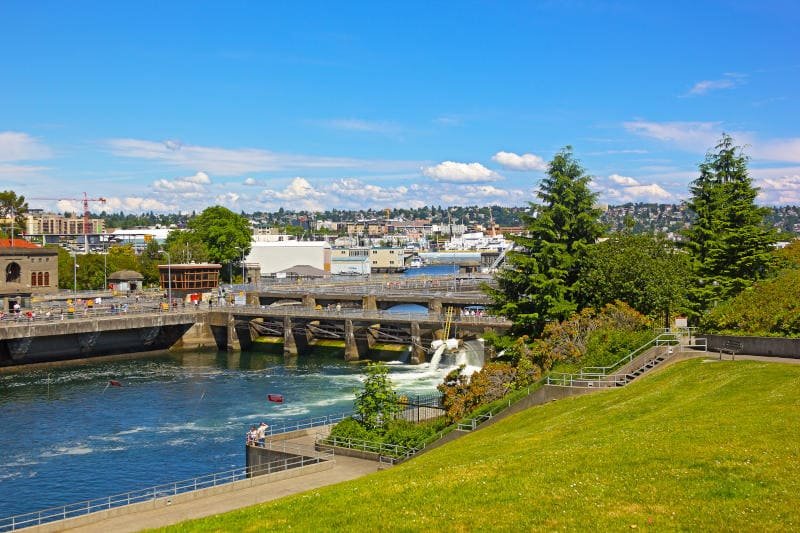
No admission charge to walk the grounds, watch vessels pass and visit the fish-ladder viewing room when it is open. Nearby parking and commercial cruises are separate expenses.
Free access and extra costs →A short boat-watching stop can take 30-45 minutes. Add more time for a lockage, fish-viewing room and botanical garden; the pace depends on actual boat movement.
Young children enjoy watching gates and boats; older kids can explore water levels, fish migration and the engineering behind Seattle's ship canal.
Free entry and paved public grounds help, but active lock crossings, variable boat timing, outdoor weather and limited paid parking require a little planning.
See the full Family Friction score →Wait for the gates to open: the most interesting show in Ballard
Watch the boats first. At Hiram M. Chittenden Locks, better known as Ballard Locks, a small pleasure craft might arrive beside a working vessel, and both have to negotiate a difference in water level. Visitors can see gates close behind a boat, water drain or enter the chamber, and the vessel slowly settle or rise before it continues. For children who understand elevators, it helps to describe the lock as a water elevator for boats. There are two chambers of different sizes, so the activity changes according to vessel traffic. The U.S. Army Corps of Engineers operates this working part of Seattle's Lake Washington Ship Canal, connecting the freshwater lake system with the saltwater side toward Puget Sound. A lockage is not a staged demonstration. Some visits have plenty of movement and others involve waiting, which makes this an especially good stop for patient observers.
The salmon ladder gives the site a second, very different story. Migrating fish must make their way inland, and the ladder creates a series of manageable steps beside the dam rather than forcing the fish through a closed shipping gate. In the underwater viewing room, families can look through windows into the flowing water and identify fish when they are present. The ladder has 21 steps, and its displays help older children understand why salmon return to freshwater streams. Sockeye are generally most noticeable in early summer, Chinook later in summer and coho in fall, but the exact run varies considerably. Even during the usual migration windows, a child may see only moving water. The best approach is to treat a salmon sighting as a possible bonus, not the single reason for visiting.
Between the lock chambers and the fish ladder, the grounds offer several ways to adjust the pace. Carl S. English Jr. Botanical Garden has lawns, planted beds and quieter paths where siblings can take a break from observing machinery. The visitor center, when open, adds context about canal operations and local ecology; its schedule is not the same as the grounds. Families coming with a stroller can choose a shorter north-side route rather than crossing the locks. For school-age children, a simple challenge works well: find the large and small chambers, watch for changes in the waterline, then look for a clue that the next boat is ready to leave. Seattle's engineering becomes visible in a way that is hard to recreate in a classroom.
Use the locks as one chapter in a Seattle family trip. For waterfront museums, parks and other age-friendly stops, explore our Seattle with kids guide and build a route around the neighborhoods that work for your family.
Watching boats is universal; understanding the locks comes with age
Infant
A short stroller walk through the grounds can work when caregivers or older siblings want to see the locks. Keep the trip flexible around feeding, naps and outdoor weather. There is no dedicated infant play experience.
Toddler
A toddler may enjoy pointing to boats and watching gates move, but the process can feel slow between arrivals. Stay well back from railings and choose one safe viewing area rather than moving repeatedly across the complex.
Little Kids
A strong match for children who like boats and big moving machinery. Explain each change in the water level using simple comparisons, then add a brief garden walk when attention fades.
Big Kids
Children can follow the entire lockage from entry to departure and compare the two chambers. Fish-ladder windows and seasonal salmon add a second question: how do animals travel through a man-made waterway?
Tweens
Tweens can begin connecting the locking system with freshwater protection, shipping and the needs of migrating fish. Encourage them to compare the challenges facing a boat and a salmon traveling through the same canal.
Teen
A worthwhile stop for teens who enjoy practical engineering, ecology, photography or maritime activity. The changing mix of boats is interesting, but this works best as an exploratory visit rather than an all-day attraction.
Family Friction: free entry, but the waterway sets the pace
Ballard Locks is easier to visit than a ticketed attraction, yet it remains a working canal rather than a controlled exhibit. Arrival, outdoor exposure, walking routes and uncertain timing matter more than admission.
There is no admission line or timed ticket, and families can watch from public areas without committing to a full route. The trade-off is unpredictability: vessels may take time to arrive, salmon are seasonal, and crossing paths can temporarily pause while the gates are operating. The north lot is paid and limited, while much of the experience is exposed to Seattle weather. Families with a stroller can still have a rewarding visit by staying on accessible ground-level routes and not relying on every gate crossing.
| Factor | Score | Why |
|---|---|---|
| Parking & Arrival | 2/5 | The north-side city lot has limited spaces and a published pay-station rate. Arriving on foot or by transit avoids a parking search, but the site is outside the main downtown visitor cluster. |
| Queue & Wait Time | 2/5 | There is no ticket queue, but boat passage runs on real vessel traffic. Waiting for a full lockage or for fish to appear may take longer than children expect. |
| Heat & Weather Exposure | 3/5 | Boat viewing and most connecting routes are outdoors, with rain, wind or direct sun changing how long families comfortably remain. |
| Walking Distance & Terrain | 2/5 | The grounds and gardens support a short visit, but reaching the fish ladder from the north side adds distance and may require waiting at working crossings. |
| Stroller & Mobility Access | 2/5 | Official visitor information describes the grounds and fish ladder as wheelchair accessible. Active gate crossings can interrupt a direct route and call for an alternate plan. |
| Restroom & Baby-Care Access | 1/5 | Public visitor facilities serve the site; specialized baby-care arrangements should not be assumed from the existence of restrooms alone. |
| Sensory & Crowd Load | 1/5 | Engines, water movement and visitor groups may be loud near the chambers, but families can shift to the open garden areas for a calmer pause. |
| Schedule Flexibility | 1/5 | Families may come and leave within public grounds hours without booking. Only the timing of boat movement, fish sightings and separate visitor programs is unpredictable. |
| Scored total | 14/40 | Medium Friction |
Strollers can use the grounds, but working crossings change the route
The Ballard Locks grounds and fish ladder are described as wheelchair accessible, making a stroller visit practical. The important distinction is between a path to a viewing point and a crossing over active lock gates, which may require waiting or choosing another route.
The north entrance at NW 54th Street leads into the garden and visitor areas. It is a practical starting point for a family that wants to watch boats without immediately attempting to cross the chambers.
Pedestrian crossings operate around boat traffic and can be closed while locks are in use. Do not try to rush a stroller onto a bridge before a gate changes; follow staff directions and use established paths.
The fish-ladder viewing area is listed as accessible, but reaching it from the north side depends on the crossings and the family's route. Leave enough time and be willing to skip the room if the route becomes inconvenient.
There are deep chambers, boat lines and working equipment. Park the stroller away from moving pedestrians, keep children close and avoid leaning over barriers to look for fish or boats.
Ballard Locks hours, free admission and north-lot parking
A self-guided visit to the locks, fish ladder and public gardens is free. There is no charge to watch boats from the public walkways; paid boat cruises are separate businesses and are not required for this experience.
| Activity or service | Cost | What to know |
|---|---|---|
| Public grounds and boat viewing | Free | No admission ticket or reservation for a self-guided visit. |
| Fish ladder viewing room | Free | Open during its published hours, subject to maintenance or operational changes. |
| Carl S. English Jr. Botanical Garden | Free | Public garden paths within the locks grounds. |
| Visitor Center exhibits | Free | Check its separate, more limited opening schedule. |
| Ranger-led public tour | Free when offered | Published seasonal offerings may change with staffing. |
| North parking lot | $2/hour | City-owned lot; three-hour limit, paid during posted enforcement hours. |
| Commercial sightseeing cruise | Separate ticket | A boat tour is not included in the free pedestrian experience. |
| Food and personal purchases | Varies | Bring snacks and water or buy refreshments off site. |
Family cost example: A family of four can watch boats, walk the gardens and visit the available fish-viewing area for $0 in admission. Two hours in the published north parking lot would add $4; food and optional commercial excursions cost extra.
When are Ballard Locks and the salmon viewing windows open?
- Public grounds: 7:00 a.m.-9:00 p.m. daily according to the U.S. Army Corps of Engineers.
- Fish-ladder viewing room: 7:00 a.m.-8:45 p.m. on the official visitor page.
- Boat operations: the locks serve vessel traffic around the clock, but public grounds are not open around the clock.
- Visitor Center and guided tours: shorter schedules apply; check current staffing, seasonal tours and closure notices.
These hours describe different parts of the complex. A family arriving after the visitor center closes may still be able to watch boats from the grounds during public opening hours. Salmon visibility and the arrival of vessels are never scheduled attractions; ongoing maintenance can also change access to specific areas.
A successful visit starts with a boat, not a timetable
Use the working canal as the main attraction and keep the rest of the walk adjustable.
- Watch one complete lockage.Choose a safe viewing spot where children can see the entry gate, waterline and exit. Rather than changing locations repeatedly, let them work out why the boat rises or falls.
- Keep salmon expectations realistic.The best windows vary by species: sockeye are often more visible around early summer, Chinook later in summer and coho in fall. A fish sighting is never guaranteed.
- Check fish ladder updates.Fish-ladder maintenance and viewing-room access can change. Look at the official locks page before making the salmon windows the main reason for a visit.
- Do not rush across moving gates.Keep children beside you, obey signals and staff instructions and wait if a pedestrian bridge is closed while a boat passes.
- Bring a light layer and a snack.Even on a sunny Seattle day, wind and waterfront exposure can make stationary boat watching chilly. Plan a garden break if children get restless.
- Separate a pedestrian visit from a cruise.Watching locks from land is free. A commercial boat tour through the lock chambers is an entirely different outing with its own fare and departure location.
Questions about visiting Seattle's Ballard Locks with children
Boat operations, fish migration and practical choices for a self-guided family visit.
What are the Ballard Locks, and where are they in Seattle?
The Ballard Locks are a working set of navigation chambers on the Lake Washington Ship Canal in the Ballard neighborhood of Seattle. Their formal name is Hiram M. Chittenden Locks, honoring an engineer associated with the project. They stand between the freshwater system of Lake Union and Lake Washington and the saltwater route toward Puget Sound. The main visitor address is 3015 NW 54th Street on the north side of the canal. Families can come here to watch the water level change, see boats of different sizes and visit the adjacent botanical gardens and fish ladder. It is an active piece of transportation infrastructure, not a themed replica or a museum where boats run a demonstration on demand. The varying traffic is part of the experience: one visit may feature small sailboats and another may include larger working vessels.
How do the Ballard Locks work?
A vessel enters one of the two lock chambers, and gates close to isolate it from the water on either side. The operators then let water flow into or out of the chamber until its level matches the waterway where the boat is headed. Only then do the other gates open and the boat move on. This allows boats to travel between waterways at different elevations without being lifted by cranes or towed around a dam. The locks also help maintain freshwater levels and reduce the mixing of saltwater into the inland lake system. Children can often follow the mechanism from the sidelines by watching a boat's position relative to the chamber walls. A useful question is: 'Is the boat rising, or is the water around it falling?' The time required varies with traffic and operating conditions, so there is no reliable countdown for the next complete cycle.
What can families do at Ballard Locks besides watching boats?
Beyond the two lock chambers, the most distinctive stop is the fish ladder, where underwater windows may reveal salmon swimming upstream. Interpretive displays explain how fish reach freshwater spawning habitats despite the man-made water barrier. The north-side Carl S. English Jr. Botanical Garden offers a very different atmosphere: landscaped paths, seasonal planting and places to slow down after standing beside the canal. A visitor center adds more information about the locks when it is open, and ranger-led tours sometimes provide a closer explanation of the site. Families who prefer a short outing can choose just one lock viewpoint and the garden, while children with a strong interest in wildlife may want to include the fish-viewing room. These activities do not depend on buying a boat cruise or tickets for a separate waterfront attraction.
When can you see salmon at Ballard Locks?
Salmon runs follow natural migration patterns rather than a daily show schedule. Sockeye typically have a stronger viewing period around mid-June through July, Chinook around late summer and coho around September, although the precise timing and number of fish differ from one season to the next. The fish ladder has 21 steps that help migrating salmon move past the water-control barrier. Even during a typical peak, the windows may show only moving water, so it is worth checking recent fish counts and official operational notices. Children may be disappointed if a visit has been presented as a guaranteed encounter with a salmon. Instead, explain that the windows let visitors see part of a real migration when fish happen to be passing. Watching the waterway and learning what the ladder does are worthwhile whether fish appear or not.
Are Ballard Locks free, and do families need a tour ticket?
A self-guided pedestrian visit is free. Visitors do not pay to enter the public grounds, watch boats from the designated areas or use the fish-ladder viewing room during its opening hours. The botanical garden is also part of the free site experience. No guided-tour ticket is necessary for families who simply want to explore on their own. The U.S. Army Corps of Engineers has offered free public ranger tours on selected days during part of the warmer season, although availability changes with staffing. Organized group tours have separate reservation procedures. A commercial sightseeing cruise is not the same as the free pedestrian visit: it has its own operator, departure location and price. Parking, snacks and optional purchases are also separate. This makes Ballard Locks especially practical for families who want a Seattle activity without committing to a paid attraction.
Is the fish ladder a salmon hatchery?
No. The fish ladder is a passage around a water-control barrier, not a facility that raises salmon in tanks. Salmon returning from saltwater have to reach the freshwater rivers and streams where they reproduce. The series of steps in the ladder gives them a route to swim upstream as water flows through it. The public viewing windows let people see this movement when fish are present, while educational displays explain parts of the salmon life cycle. A hatchery, by contrast, is a place where people manage the breeding or early development of fish. That difference offers a useful lesson for older children: the locks were built for boats and water management, while the fish ladder addresses some of the problems that such structures create for migrating wildlife. Seeing the two systems beside each other makes the engineering and conservation questions easier to understand.