MOHAI with Kids in Seattle
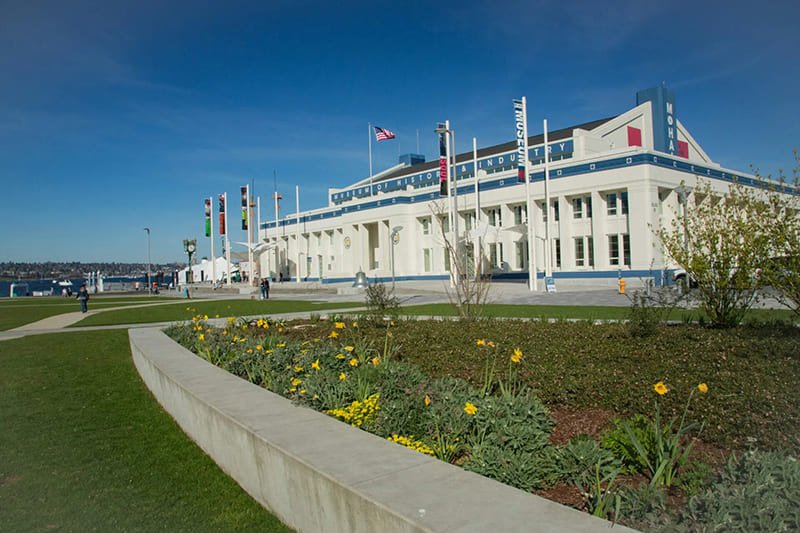
There is more to Seattle's history than airplanes and coffee. At MOHAI, children can look through a submarine periscope, try a ship's wheel, build in a dedicated play space and discover why the city grew around water, trade and new ideas. The museum overlooks Lake Union, making a thoughtful indoor stop that can turn into a short waterfront walk afterward.
Youth ages 14 and younger receive free admission with an adult; adults pay $25, with published senior, military and student rates. Special free evening hours have separate terms.
MOHAI admission and discounts →Younger children can focus on the Kid-Struction Zone and one gallery. Allow longer if school-age kids are reading the stories, using the maritime exhibits and exploring innovation.
Hands-on building suits preschoolers; older children gain more from the objects, inventions and layered history of Seattle and the Pacific Northwest.
Indoor access, free admission for young visitors and elevators reduce effort. Paid nearby parking, a multi-floor layout and some exhibit noise add modest challenges.
See the full Family Friction score →One museum, several Seattles: boats, builders and bold ideas
Begin in the Grand Atrium, where an early Boeing B-1 mailplane is displayed overhead and the museum's larger story becomes apparent: Seattle was built through movement, imagination and risk. The True Northwest: The Seattle Journey exhibition follows the region across generations rather than treating the city as a parade of famous companies. Children can look for everyday objects that seem ordinary now but once changed how people lived. The story includes Indigenous communities and the region's connections to migration, industry and social change. For a child who usually finds dates on a wall uninteresting, asking 'Who used this, and why?' can make a more rewarding route than trying to read every label.
Head toward Maritime Seattle for exhibits that connect directly to the lake outside. The gallery is in the historic building's bridge room and includes a working ship's wheel and a submarine periscope that turns to give a full view of the surroundings. A lighthouse lens shows the engineering behind helping vessels navigate; its glass surfaces also give families something striking to examine up close. These objects make good conversation starters about the working waterfront, the region's many waterways and the people whose livelihoods depended on them. Younger children tend to grasp the wheel first. Older visitors may spend more time comparing maritime navigation with today's digital screens and GPS.
The Bezos Center for Innovation shifts the focus from the past to the process of solving problems. Instead of presenting invention as a single brilliant moment, it invites visitors to consider experiments, failures and the people behind Seattle's innovations. Preschoolers have a more immediate entry point in the Kid-Struction Zone, a dedicated hands-on construction area designed for young children and caregivers. Its activities are a welcome contrast to galleries that demand reading or patient observation. The best family route depends on the children: a first-grader might move between building and boats, while a teenager could spend longer considering how local ideas became industries. MOHAI is a history museum with genuine interactive moments, not an all-day indoor playground.
Seattle becomes easier to understand when its neighborhoods connect. After MOHAI, families can explore Lake Union Park and plan other nearby stops using our guide to Seattle with kids.
The right MOHAI visit changes as children grow
Infant
A baby can accompany a caregiver through the museum in a stroller, with lifts between floors and a possible lakefront break afterward. This age gains little from the exhibits themselves, so the visit should follow an older sibling or adult interest.
Toddler
A toddler can enjoy identifying large objects, watching boats through the windows and taking a brief turn in the younger-child activity zone with close supervision. Long galleries and detailed written histories will hold limited attention.
Little Kids
Kid-Struction provides a more active reason to visit, while the ship wheel and unusual objects invite simple questions. Choose two or three memorable stops and save the denser historical sections for another day.
Big Kids
A good match for children who like building, machines and local stories. They can connect a real periscope and maritime navigation tools with broader questions about how Seattle worked before modern technology.
Tweens
Tweens can move between the city's maritime history and innovation exhibits while questioning which developments benefited communities and which created new challenges. Encourage them to compare objects with the tools they use now.
Teen
Teens interested in technology, urban change, migration or social history can make connections across galleries. The city-specific focus rewards visitors who like asking how a place became what it is, rather than collecting famous photo stops.
Family Friction: a manageable museum with a few planning choices
The museum is indoors and easy to navigate by lift. The more noticeable effort comes from finding parking near busy South Lake Union and keeping children engaged across a collection that ranges from playful to text-heavy.
MOHAI is a comparatively low-stress cultural stop for families who plan a selective route. Admission is free for children 14 and younger, floors are connected by elevator, and a dedicated young-child area gives caregivers a useful change of pace. The principal friction is arriving by car, because the public lot is paid and separate from accessible parking beside the building. Some interactive displays and school groups can also make sections busier or louder, but families can slow down, change galleries or finish the visit at any point.
| Factor | Score | Why |
|---|---|---|
| Parking & Arrival | 2/5 | The nearest standard public parking lot is paid and sits at the south end of Lake Union Park; the museum-adjacent lot is reserved for accessible parking and drop-off. |
| Queue & Wait Time | 1/5 | Ordinary admission is offered onsite and online, with no fixed guided-tour start for a regular visit. School groups and busy exhibit areas can occasionally create short bottlenecks. |
| Heat & Weather Exposure | 0/5 | Core museum galleries and activity areas are indoors. Only the approach and optional lakefront walk expose families to rain or cold. |
| Walking Distance & Terrain | 1/5 | Three main exhibit levels involve walking but are connected by elevators, letting families shorten the route without a long outdoor transfer. |
| Stroller & Mobility Access | 1/5 | The building is fully ADA accessible with elevator access. A stroller works in the museum, though adults still need to supervise children at hands-on displays. |
| Restroom & Baby-Care Access | 1/5 | Visitor restrooms and baby-changing facilities are reported; the museum does not identify every infant-care amenity as a dedicated room. |
| Sensory & Crowd Load | 3/5 | Interactive zones, large objects and visiting groups can raise noise and crowd levels. A sensory map helps families anticipate less comfortable spaces. |
| Schedule Flexibility | 2/5 | A self-guided visit is flexible and can end early. Temporary displays and occasional special programs follow their own schedules. |
| Scored total | 11/40 | Low Friction |
MOHAI with a stroller: easy floors, careful choices at play areas
The museum confirms full ADA access and an elevator to upper floors. A stroller is practical for the galleries, but caregivers should still plan where to pause when children want to use the hands-on exhibits.
The museum is in the historic Naval Reserve Building at Lake Union Park, but its visitor facilities are accessible. If arriving from the paid parking lot, allow a short outdoor approach across the park rather than expecting to park immediately at the front door.
Stairs are optional for visitors using a stroller. The museum confirms elevator access to its upper floors, so families can explore the large atrium, history galleries and maritime displays without carrying a stroller upstairs.
Kid-Struction is designed for young children to build and investigate materials. The stroller makes the journey to that area easier, but hands-on play calls for adult supervision and space to move independently. Do not assume every exhibit is meant to be used from the stroller seat.
A short walk around Lake Union Park can give children a break from museum displays. The outside path is weather-dependent, so on a rainy day a shorter indoor-only visit may be the more comfortable plan.
MOHAI tickets, First Thursday hours and parking at Lake Union Park
General museum admission is paid for most adults, but children 14 and younger enter free when accompanied by an adult. First Thursday evening admission to core exhibits is a distinct free offer, not the standard daily ticket.
| Ticket or rental | Price |
|---|---|
| Adult admission | $25 |
| Senior admission, ages 65+ | $20 |
| Military admission | $20 |
| Student admission | $19 |
| Youth ages 14 and younger with adult | Free |
| MOHAI members | Free |
| First Thursday evening, core exhibits only | Free |
| Museum-adjacent accessible parking / drop-off | Access controlled; ask staff |
| Public lot at Valley Street and Terry Avenue N | Paid; rate varies |
Family cost example: Two adults with two children ages 14 or younger pay $50 in regular admission. A student, senior or military-eligible adult may qualify for the listed reduced rate. Parking, café purchases and any separately priced special programs are additional.
MOHAI hours and free First Thursday admission
- MOHAI normally opens daily at 10:00 a.m. and closes at 5:00 p.m.; special schedules can shorten some visits.
- On the first Thursday of each month, the museum offers free admission to core exhibits from 5:00 p.m. to 8:00 p.m.
- The First Thursday evening offer does not automatically include every separately ticketed temporary exhibition.
- Youth 14 and younger must be accompanied by an adult; large groups should check group-reservation rules.
A focused visit can take 90 minutes, while families with older children may stay two or three hours to read displays and try interactive activities. MOHAI also operates during many school-break periods, but special events and exhibit changes can affect what is available. Review the museum calendar before traveling.
Turn Seattle history into a child-led investigation
Six small choices make a museum of regional history easier to enjoy across age groups.
- Start with the largest object.Look up at the aircraft in the atrium and ask your child how something so large fits into the story of a city. A single concrete object can make the later galleries easier to understand.
- Give young builders a real stop.Plan time for Kid-Struction rather than treating it as a quick diversion on the way to adult-oriented displays.
- Try the maritime tools.The ship wheel and submarine periscope offer a hands-on way to discuss navigation, observation and the jobs involved in maritime Seattle.
- Choose one question about innovation.Older kids can examine an invention and consider what problem it was designed to solve and what its drawbacks may have been.
- Check the newest exhibition lineup.Traveling shows and special installations change; do not build a visit around an object seen in an old photograph.
- Plan your snack stop.Use the café or designated eating areas rather than gallery spaces, and leave time for a short waterfront pause if weather permits.
Questions families ask about MOHAI, Seattle
What the museum preserves, why its location matters and how to turn historical objects into a better family visit.
What is MOHAI in Seattle, and what makes it different from other local museums?
MOHAI is the Museum of History & Industry, a museum devoted to Seattle and the wider Puget Sound region. It tells the story of how people lived, worked, moved, organized and invented here. Unlike a general science museum, MOHAI uses authentic objects and local narratives to explain how a city changes. A ship wheel and submarine periscope help explain the waterfront; aircraft and innovation exhibits reveal how engineering influenced the region. The museum also addresses communities whose histories can be overlooked when Seattle is described only through its famous companies. For school-age children, a useful question is how each object connects to their own lives. A young visitor might enjoy turning a wheel, while a teenager may be more interested in migration, urban change or the social consequences of technology.
Why is the museum housed at Lake Union Park rather than in downtown Seattle?
MOHAI occupies the historic Naval Reserve Building at the south end of Lake Union, a setting that reinforces its maritime material. From the museum, families can look at the lake and consider how boats, trade and industrial waterfront activity shaped the city. The location also lets a visit connect directly to the surrounding park without arranging a separate transfer. The museum building itself is part of the experience: its former institutional purpose contrasts with the galleries now used to interpret local history. Children who enjoy noticing buildings may like comparing the older structure with the rapidly changing South Lake Union neighborhood around it. The park setting is pleasant in dry weather, although the museum stands on its own as an indoor attraction.
What can children learn from the ship wheel and submarine periscope?
The maritime objects are especially effective because they turn unfamiliar jobs into physical actions. At Maritime Seattle, visitors can try a working ship wheel and look through a submarine periscope that provides views in different directions. Those tools give parents a chance to explain how crews needed to steer, navigate and watch their surroundings before computers became commonplace. A lighthouse lens adds another piece of the puzzle: guiding vessels safely near coasts and waterways. These are not props invented solely for a children play area, so caregivers should encourage careful use and follow gallery instructions. For an older child, the objects can lead to deeper questions about Seattle as a port, the people who worked on its waterfront and the ways shipping connects a city to distant places.
Does MOHAI have activities that work for a child who cannot read long museum labels?
Yes, provided the visit is built around the right sections. Kid-Struction is a dedicated activity zone designed for young children and caregivers. The large artifacts in the atrium and the interactive maritime tools can also be understood through simple observation and conversation rather than lengthy text. Children can compare sizes, shapes and materials, then ask what each object was used for. The rest of the museum is not a giant children playground, and some history galleries require more reading or background knowledge. Rather than attempt every floor, parents can alternate one hands-on experience with one short story about a real person or invention. This keeps the museum meaningful for younger children without pretending that all displays are designed for toddlers.
How does MOHAI explain Seattle innovation beyond famous technology companies?
The Bezos Center for Innovation focuses on problem-solving and the wider culture of invention. It encourages visitors to consider how new ideas begin, how different people contribute and how experiments can lead to useful changes. This is broader than simply identifying which products became successful or which companies grew large. For tweens and teens, the gallery can prompt conversation about the difference between an inventive idea and a practical solution. It can also raise questions about who gains access to new technology and who may be left out. Those conversations make MOHAI a strong complement to Seattle attractions that show aircraft, computers or engineering hardware without spending as much time on the regional social story.
Can families combine MOHAI with a walk or another attraction without turning it into an exhausting day?
The museum sits directly beside Lake Union Park, making a short outdoor break a natural addition when the weather cooperates. Families can stop by the waterfront to watch boats and connect the harbor views with the maritime gallery they have just explored. The Center for Wooden Boats is nearby, although its activities, schedules and any program fees should be checked separately. A practical day for younger children might consist of MOHAI and a modest lakeside stroll rather than a sequence of several museums. Older children can handle a longer South Lake Union visit if they remain interested. The advantage of this location is that the family can shorten or extend the outdoor portion without losing the main indoor experience.