Children's Museum of Manhattan with Kids (New York, NY)
At the Children's Museum of Manhattan, young visitors do much more than look: they drive a pretend MTA bus, help Dora and Diego rescue animals, and make messy art. Designed around early childhood rather than school-age sightseeing, this four-floor museum is a rewarding Manhattan stop for babies, toddlers and children up to about six. Plan for busy playrooms, a stroller check and a snack break outside.
Online: $17 per adult or child age 1-18; babies under 12 months free. Buying at the museum costs $18 per paying visitor.
Free access and extras →A focused toddler visit may last 90 minutes; preschoolers drawn into art and imaginative play can enjoy two to three hours, with breaks.
PlayWorks accommodates infants and toddlers; Dora and Diego, art spaces and pretend-city adventures especially suit ages 2-6.
Indoor play, baby-care facilities and day-of re-entry help; Manhattan parking, stroller check and lively rooms need extra planning.
See the full Family Friction score →A pint-sized New York: MTA bus rides, art-covered walls and Dora adventures
The museum's greatest strength is that its activities are designed for children to control. In PlayWorks on the third floor, children from birth through age four can explore a pretend neighborhood with a fire truck, an MTA bus and a deli. There is a soft area for crawlers, a sand area and Alphie, the enormous talking dragon that eats letters. A six-foot mural wall gives children permission to experiment with color on a scale that rarely fits into an apartment. For parents, this means the experience can match a child's developing abilities: a baby can investigate textures, while a confident three-year-old can role-play an entire city errand.
Children who know Dora the Explorer or Diego can step into their stories instead of watching them on a screen. Adventures with Dora and Diego, aimed at ages two to six, sends visitors through rainforest and beach environments to help animals, investigate tracks and build a spectacled bear's nest. They can also cross a pretend bridge, climb into Tico's car, play music and pretend to cook. Superpowered Metropolis adds another New York-inspired layer: cartoon pigeons Zip, Zap and Zoom guide young visitors through a bright, playful city built around curiosity and cooperation. The activities ask children to test ideas and tell stories rather than follow a fixed tour route.
Art lovers should leave space in the day for Inside Art: Create, Climb, Collaborate, where installations invite movement, looking and making; its recommended age range extends to ten, although the museum as a whole is strongest for younger children. Staff-led options change by day: PlayWorks commonly lists Circle Time, mural activities, Messy with Art and an afternoon story. Dynamic H2O provides an outdoor, seasonal lesson in how New York City water moves, but should not be counted on during poor weather or seasonal closures. Unlike a conventional art museum, this visit can get hands, clothes and attention spans involved. Check the calendar before visiting and let your child's favorite play space determine the pace.
Small-scale city adventures can be a welcome pause in big-city sightseeing. Pair imaginative play on the Upper West Side with parks, museums and kid-friendly neighborhoods in our guide to New York City with kids.
PlayWorks starts with crawlers; preschoolers get the richest full-museum experience
Infant
Not a sit-and-watch attraction: the soft crawler areas and Baby Steps give mobile infants textures, movement and safe exploration with an adult. Infant admission is free under 12 months, but carry your baby after checking the stroller.
Toddler
An excellent age for PlayWorks: the pretend bus, sand exploration, soft areas, music and short group programs all suit toddlers with frequent changes of pace. Expect close supervision at busy interactive stations.
Little Kids
The museum's sweet spot. Preschoolers can invent stories in Dora and Diego's animal world, try Inside Art and move between pretend city play and hands-on making. Allow time for a messy-art session.
Big Kids
Some seven- to nine-year-olds still enjoy climbing installations and artmaking, but much of the museum is intentionally pitched younger. A better match for children accompanying preschool siblings than for a full-age-group outing.
Tweens
Most tweens will exhaust the preschool-oriented areas quickly. Consider visiting only as an accompanying older sibling or for a particular art or cultural program that genuinely interests them.
Teen
Teenagers are not the intended audience for general admission play exhibits. They may enjoy accompanying a younger sibling, but plan a separate age-appropriate museum or city activity for them.
Family Friction: small-child facilities help, Manhattan arrival is the hard part
KidWaypoint’s eight-part framework compares practical family demands - arrival, lines, weather, distance, mobility, care facilities, sensory load and schedule freedom - so families can assess the effort of a visit, not simply its ticket price.
The Children's Museum of Manhattan is manageable once a family gets inside: exhibits are indoors, elevators and accessible restrooms are available, changing tables are documented and families may leave for food and return the same day. But an easy visit is not automatic. There is no museum parking lot, exhibit rooms are lively, and strollers must be checked at the entrance, leaving parents to carry babies or keep toddlers close. A flexible two-hour plan works better than trying to rush every floor. Indoor galleries also make it useful during rain, though the outdoor Dynamic H2O exhibit depends on weather.
| Factor | Score | Why |
|---|---|---|
| Parking & Arrival | 3/5 | No on-site parking. Upper West Side garages are available at variable city prices, while street parking requires close attention to posted restrictions. Transit is often more predictable. |
| Queue & Wait Time | 1/5 | Admission can be reserved online and walk-up entry exists, but popular weekend arrival times and hands-on stations may produce short waits. |
| Heat & Weather Exposure | 0/5 | Four floors of indoor exhibits support a rainy-day plan; the seasonal outdoor Dynamic H2O area may close or be unpleasant in bad weather. |
| Walking Distance & Terrain | 1/5 | Exhibits span four floors, but families can focus on one or two areas at a time and use elevators instead of committing to a long route. |
| Stroller & Mobility Access | 2/5 | A complimentary stroller-and-coat check is provided, but ordinary strollers are not permitted in exhibits. The building has accessible elevators and restrooms. |
| Restroom & Baby-Care Access | 0/5 | Restrooms on the Lower Level and third floor have changing tables. Third-floor facilities include a fully accessible restroom. |
| Sensory & Crowd Load | 3/5 | Interactive play, music, water activities and group programming can become noisy; staff can suggest quieter spaces and free sensory kits are available. |
| Schedule Flexibility | 1/5 | General admission includes daily programming and same-day re-entry; the museum is generally open Tuesday-Sunday during October-June, with holiday Monday exceptions. |
| Scored total | 11/40 | Low Friction |
Check the stroller at the door; use the baby-friendly rooms as your base
CMOM supplies complimentary digital stroller and coat check; parents cannot roll strollers around active exhibits. Its baby play zones, elevators and changing facilities help compensate, but plan how you will carry an infant.
Use the complimentary Chexology stroller-and-coat check at the entrance. Keep your check details handy rather than leaving valuables or essentials in the stroller.
An infant carrier may be easier than carrying a baby by hand between activities; ordinary strollers are not permitted in exhibit spaces.
The museum provides accessible elevators; the third floor holds PlayWorks and a fully accessible restroom.
Restrooms with infant changing tables are listed on the Lower Level and third floor, so a diaper change does not require leaving the building.
Children's Museum of Manhattan tickets, hours and Upper West Side parking
General admission covers the hands-on galleries and daily public programs. Buying online saves $1 per paying guest; children under 12 months are admitted free, and families can leave for lunch and return with a same-day sticker.
| Activity or service | Cost | What to know |
|---|---|---|
| Adults (online) | $17 | Same general admission as child tickets; advance online purchase saves $1. |
| Adults (at museum) | $18 | Walk-up entry subject to available capacity. |
| Children ages 1-18 (online) | $17 | Children age one and older pay admission; core exhibits focus on ages 0-6. |
| Children ages 1-18 (at museum) | $18 | Same-day purchase at admissions. |
| Babies under 12 months | Free | An admission ticket is still required for entry. |
| Seniors 65+ with ID | $14 online / $15 onsite | Bring proof of age. |
| Visitors with disabilities | $14 online / $15 onsite | Personal care attendants accompanying eligible visitors enter free. |
| Members | Free | Membership card or reservation information may be requested. |
Family cost example: Two adults and two children ages two and five pay $68 online or $72 onsite before transportation and food. With one child under 12 months, two adults and one paying child total $51 online.
When is the Children's Museum of Manhattan open?
- October-June: Tuesday-Sunday, 10 a.m.-5 p.m.; also open on federal-holiday Mondays.
- July-September: Monday-Sunday, 10 a.m.-5 p.m., according to the museum visitor FAQ.
- Check the date-specific calendar for holidays, special programs and any schedule adjustments.
- Online general admission is flexible within the visit day; ask for a return sticker if leaving for a meal.
Families coming with infants often do better with a shorter morning visit than a full-day plan. The third-floor PlayWorks programming schedule includes sessions such as Circle Time and Messy with Art, but activities can change; check the event calendar before promising one particular workshop.
A calmer museum visit starts with one floor, not all four
A flexible plan matters more than ticking off every exhibit: follow your child's attention and leave time for a food break outside.
- Start with your youngest child’s floor.Head to third-floor PlayWorks for infants and toddlers rather than making a restless two-year-old visit every gallery first.
- Check the art and Circle Time calendar.PlayWorks publishes daily sessions, but themes and times can change. Pick one priority program and keep the rest of the visit loose.
- Check the stroller before play begins.The stroller check is free, but exhibit areas do not allow strollers. Take diapers, water and necessary supplies out first.
- Take lunch outside, then return.There is no café or snack area and outside food is prohibited; ask for a return sticker and eat somewhere nearby.
- Bring an extra shirt for messy art.Mural painting, tactile play and seasonal water activities are fun precisely because they are hands-on. A change of clothes can rescue the afternoon.
- Have a sensory escape plan.If busy playrooms overwhelm your child, ask about free sensory kits and quieter exhibits instead of trying to push through another scheduled activity.
Children's Museum of Manhattan: tickets, hours, exhibits and family logistics
Specific answers for a first visit with a baby, toddler or preschooler on New York’s Upper West Side.
How much are Children's Museum of Manhattan tickets?
As of October 2026, admission is $17 online or $18 at the museum for adults and children aged 1-18. Infants younger than 12 months enter free; seniors 65 and older with ID and visitors with disabilities pay $14 online or $15 onsite. Members enter free, and a number of partner access schemes have separate eligibility rules. All guests, including infants, need an entry ticket. General admission includes the exhibition floors and daily public programs, not necessarily separately enrolled classes. A family of two adults and two paying children spends $68 if everyone is booked online. Advance booking saves $1 per paying person and gives more certainty on busy days.
What can families do at the Children's Museum of Manhattan?
The museum concentrates on learning through play for children from birth to six. In third-floor PlayWorks, young visitors can climb into a pretend MTA bus, explore a fire truck or deli, play with sand, paint on an oversized mural and meet Alphie the letter-eating dragon. Dora and Diego's second-floor adventure invites children to help animals in a rainforest and beach setting, build a spectacled bear's nest and invent stories around familiar characters. Superpowered Metropolis uses a cartoon New York City to encourage problem-solving; Inside Art encourages creative exploration and movement. Daily activities may include Circle Time, mural work, messy art and storytime. Seasonal Dynamic H2O is outdoors and should not be assumed available year-round.
What are the Children's Museum of Manhattan hours?
For October through June the museum lists 10 a.m. to 5 p.m. Tuesday through Sunday, plus federal-holiday Mondays. Its visitor FAQ also lists daily opening from 10 a.m. to 5 p.m. during July through September. The museum has occasional holiday exceptions, so confirm the date on the official plan-your-visit page before traveling. Families with toddlers often find an opening-time visit useful because they can prioritize PlayWorks, attend an early program, and leave before nap time. You may return the same day with a return sticker from Guest Services or Security if you want a lunch or rest break outside.
Where can I find parking near Children's Museum of Manhattan?
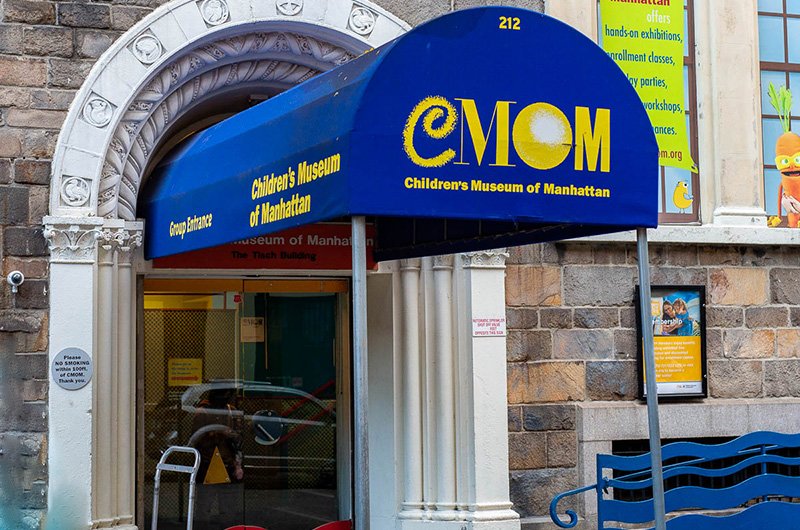
The museum is in the Tisch Building at 212 West 83rd Street on the Upper West Side. There is no dedicated museum parking lot. Private garages on and around West 83rd Street offer paid spaces, including options around 225 West 83rd Street and 153 West 83rd Street; quoted rates change according to the day, stay length and availability, so check before arrival. Street parking is sometimes possible but can be complicated by alternate-side regulations, time limits and metered spaces. If you are already in New York City, public transportation or a taxi often avoids the cost and uncertainty of driving. Allow extra time for unloading younger children and checking their stroller at the museum entrance.
Is the Children's Museum of Manhattan good for a baby or a two-year-old?
Yes-this is one of the reasons to choose CMOM over a traditional museum. PlayWorks is specifically intended for children from birth through age four, with soft areas where crawlers and early walkers can explore and pretend-play features for toddlers. The museum also lists Baby Grand Central and Baby Steps as areas where babies and toddlers may be barefoot, unlike most other exhibit spaces where shoes are required. There are changing tables in the Lower Level and third-floor restrooms. However, you cannot push a stroller through the exhibits; use the complimentary stroller check and bring an infant carrier if that is helpful. A baby may enjoy a shorter outing, while a two-year-old can easily spend much longer repeating favorite activities.
Can families bring strollers, snacks or leave and re-enter?
Strollers are not permitted in exhibit areas, but CMOM offers a free stroller-and-coat check using a digital system at the entrance. Remove diapers, bottles and essentials before checking it. The museum does not operate a café or indoor dining space, and outside food or snacks may not be eaten inside. Water and infant formula are permitted, preferably in spill-proof containers. Fortunately, a general admission ticket allows same-day re-entry: ask for a return sticker at Security or Guest Services before leaving. That makes it practical to eat at a neighborhood restaurant, manage a young child's break, and return for another favorite activity without purchasing a second admission ticket.