The Metropolitan Museum of Art with Kids - New York, NY
The Met can feel impossibly large until you turn it into a few small adventures: stand beside a 2,000-year-old Egyptian temple, compare a knight’s armor with a horse’s, then follow a child’s curiosity into ancient Greece or Asian art. With free admission for children 12 and under, the main challenge is pacing-not finding something extraordinary to see.
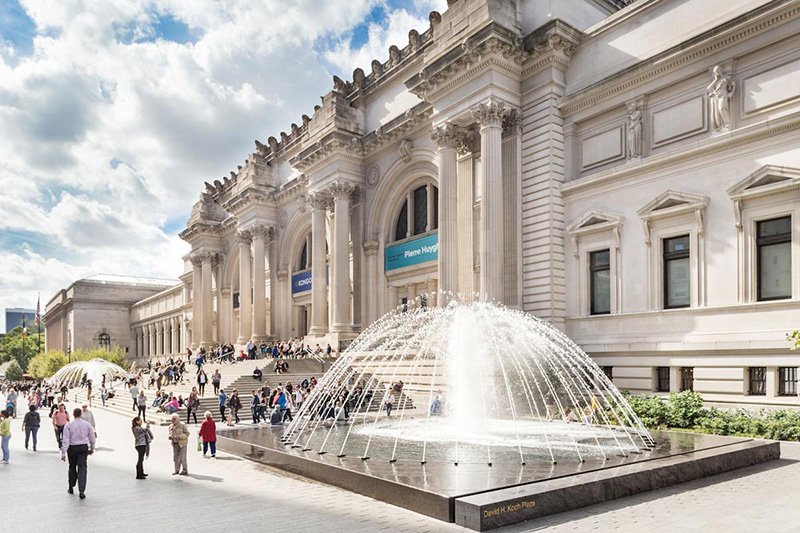
The Met general admission includes exhibitions and same-day access to The Met Fifth Avenue and The Met Cloisters. Local pay-what-you-wish rules differ.
Free access and extras →Choose three or four galleries rather than trying to cover the entire museum; interested teens may want longer.
The Temple of Dendur, armor, history and family guides reward school-age children; younger siblings need shorter visits.
Flexible tickets and good indoor access help; scale, walking distances and expensive or limited garage parking add effort.
See the full Family Friction score →From an Egyptian temple to shining armor: make The Met feel like an adventure
The Temple of Dendur is the kind of discovery that makes children stop in the doorway. In Gallery 131, a complete ancient Egyptian sandstone temple stands inside a huge glass-walled gallery overlooking Central Park. It was built around the reign of Augustus and moved from Nubia when a dam threatened ancient sites. Instead of asking children to admire every object, invite them to find carved figures, identify the gateway and imagine why a real building traveled so far. The museum offers a dedicated family guide and kid-focused audio content, turning the temple into a story to investigate rather than a silent monument to walk past.
Across the museum, the Arms and Armor galleries offer a very different kind of time travel. Children can compare polished helmets, decorated shields, swords and imposing suits of armor for people and horses. This is where questions come naturally: Could someone really move in that suit? Was this equipment made for fighting, ceremony or showing off? The Met’s family guide “Fierce or Fancy?” encourages looking closely, not just rushing toward the next dramatic display. Older children can compare historical cultures and craftsmanship; younger school-age visitors often respond to the scale, shapes and elaborate details.
There is more to explore than the two headline galleries, but restraint makes a better family visit. Greek and Roman sculptures invite animal or mythological-creature spotting; the Astor Chinese Garden Court offers a change in visual rhythm; paintings and decorative rooms let children compare how people lived and dressed. Families can use #MetKids resources or select a current family program, then leave room for a snack and a break. The museum encompasses art from roughly 5,000 years of history and is far too big for one exhaustive visit. For children, three memorable stops and a good conversation are usually more valuable than fifteen exhausted galleries.
One afternoon at The Met is only one chapter of a New York family trip. Pair its ancient treasures with parks, hands-on museums and neighborhood discoveries in our guide to New York City with kids.
Armor, ancient worlds and real discoveries work best from age seven
Infant
A brief stroller visit can work if adults want to see one gallery. This is not a destination designed around infants; plan feeding and rest breaks.
Toddler
Most toddlers will enjoy the impressive scale only briefly. The no-touch environment and extensive walking make a dedicated children’s museum a better choice.
Little Kids
Curious children may love the temple and armor for 30-60 minutes at a time, with adult-led spotting games, but a full art-museum itinerary is demanding.
Big Kids
Excellent age for an Egyptian-quest route, armor comparisons and kid-friendly museum guides. Pick a few objects and invite questions.
Tweens
Strong match for mythology, history, design and how objects were made. Tweens can help choose a route and compare cultures.
Teen
Excellent for teenagers interested in art, history, fashion, architecture or photography. Teens can explore a theme in depth rather than racing the entire collection.
Family Friction: the real challenge is the museum’s scale
The Met is weatherproof and welcoming to families, but its enormous footprint, busy landmark galleries and Manhattan arrival logistics deserve planning.
The Met rewards a well-chosen route but can exhaust families who attempt the whole building. Standard admission does not require an advance time slot, elevators and step-free entrances support families with strollers, and children 12 and under enter free. The harder parts are crossing long stretches of galleries, reaching popular rooms at peak times and arranging transportation: the museum garage does not offer ordinary weekday daytime public parking. Plan a two- to four-hour visit with deliberate breaks rather than treating every gallery as essential.
| Factor | Score | Why |
|---|---|---|
| Parking & Arrival | 4/5 | The Fifth Avenue location is transit-friendly, but driving is expensive. The on-site garage at Fifth Avenue and 80th Street serves the public only weekday evenings and weekends; space is limited. |
| Queue & Wait Time | 2/5 | Online tickets can reduce ticket-purchase time; security and entry areas may still become busy, particularly at opening and during popular exhibitions. |
| Heat & Weather Exposure | 0/5 | Most of the visit is indoors, making The Met a reliable option during rain, cold or extreme summer heat. |
| Walking Distance & Terrain | 4/5 | The building is immense, with galleries spread across floors and long corridors. A focused route and sitting breaks are essential with children. |
| Stroller & Mobility Access | 1/5 | Strollers are generally welcome, accessible routes and elevators are available, and a step-free entrance is at Fifth Avenue and 81st Street. Some special exhibitions may restrict strollers. |
| Restroom & Baby-Care Access | 1/5 | Restrooms, family-friendly dining and a designated lactation room on Floor 4 help with breaks, although reaching them can require crossing galleries. |
| Sensory & Crowd Load | 3/5 | Temple of Dendur and armor areas can be busy, and the museum’s size can become tiring. Sensory-friendly resources and quieter routes can help. |
| Schedule Flexibility | 2/5 | Advance tickets are optional for standard admission, the ticket allows same-day re-entry at both Met locations, and the museum is closed on Wednesdays. |
| Scored total | 17/40 | Medium Friction |
Bring the stroller-but choose the 81st Street step-free entrance
Strollers can be useful over The Met’s long gallery routes. The museum provides elevators and accessible paths, although certain exhibitions have stroller restrictions and jogging strollers or wagons are not allowed.
Use the step-free entrance at Fifth Avenue and 81st Street, or the garage entrance when available.
Check the museum’s interactive map for accessible routes; adjoining galleries may be farther apart than they look.
Regular strollers and front-facing carriers are welcome, but jogging strollers and wagons are prohibited; exhibitions can set extra rules.
The museum lists a dedicated lactation room on Floor 4, accessible by elevator, plus dining facilities and high chairs on request.
The Met tickets, opening hours and the parking problem to plan around
General admission covers The Met Fifth Avenue and The Met Cloisters on the same day, with exhibitions included. Children 12 and under enter free, while pay-what-you-wish admission applies only to qualifying visitors.
| Activity or service | Cost | What to know |
|---|---|---|
| Adults (13-64) | $30 | Standard general admission for most nonresident adults. |
| Seniors 65+ | $22 | Age eligibility applies. |
| Students | $17 | Valid student identification may be required. |
| Visitors with disabilities | $22 | In-person ticket; one care partner admitted free. |
| Children ages 0-12 | Free | No paid child ticket needed. |
| NY State residents | Pay what you wish | Eligible visitors choose their admission amount, minimum $0.01; proof of eligibility. |
| NY, NJ, CT students | Pay what you wish | Student eligibility applies; NJ/CT students purchase in person with valid ID. |
| Museum garage, up to 3 hours | $42 | Only weekday evenings and weekends; parking not guaranteed. |
Family cost example: Two visiting adults with a child age 9 and a teen age 14 pay $90 for admission ($30 + $30 + $0 + $30). For two adults and two children ages 12 or younger, museum admission is $60. Meals and transportation are extra.
The Met hours: which days leave room for an unhurried visit?
- Sunday-Tuesday and Thursday: 10:00 a.m.-5:00 p.m.
- Friday and Saturday: 10:00 a.m.-9:00 p.m.
- Wednesday: closed.
- Also closed Thanksgiving Day, December 25, January 1 and the first Monday in May.
An early start is useful for families who want several major galleries; Friday and Saturday evenings give teenagers an alternative to a crowded midday visit. Confirm special closures or gallery changes on the museum website.
A small treasure hunt beats trying to “finish” The Met
The best family visits begin with a short list of objects, not a demand to see every gallery.
- Start with two irresistible stops.Pick the Temple of Dendur and Arms and Armor, then let children choose one additional room rather than following an adult-length art survey.
- Use family guides, not long lectures.Look for The Met’s Egyptian and armor family guides or #MetKids material; ask children to spot details and propose explanations.
- Save the museum map before arriving.Agree on gallery numbers and a meeting point. The building’s size makes an improvised route surprisingly tiring.
- Make the 81st Street entrance your stroller plan.The step-free entrance is useful when visiting with a stroller; check which special galleries admit it.
- Eat before everyone gets cranky.Use the museum’s dining facilities for meals. Eating is not permitted in galleries; a securely capped water bottle is allowed.
- Skip the car for a weekday daytime visit.The Met garage has limited public hours. The 4/5/6 subway and crosstown or Fifth Avenue buses are practical alternatives.
The Met with kids: practical answers before you enter
Straight answers about its enormous collection, family favorites, free child admission, opening hours and difficult Manhattan parking.
Where is the Metropolitan Museum of Art in New York?
The Met Fifth Avenue is at 1000 Fifth Avenue at East 82nd Street on the eastern edge of Central Park, on Manhattan’s Upper East Side. This is the location with the Temple of Dendur and the Arms and Armor galleries. The museum also operates The Met Cloisters in northern Manhattan; these are separate locations, so do not accidentally navigate to the Cloisters when your children want to see the Egyptian temple. The Fifth Avenue museum is served by nearby public transportation, including the 4, 5 and 6 subway lines with a walk west from Lexington Avenue. Families with strollers can use the step-free entrance at Fifth Avenue and 81st Street.
What should families see at the Metropolitan Museum of Art first?
For school-age children, begin with the Temple of Dendur in Gallery 131, an actual ancient Egyptian temple displayed in a huge light-filled room. Then explore the Arms and Armor galleries, where suits of armor, helmets and horse equipment are visually dramatic even for children who are new to art museums. If energy remains, choose one more theme: Greek and Roman mythology, Asian art, decorative rooms or a painting gallery. The goal is not to see every department. The Met provides family guides, including one focused on the Egyptian temple and another on armor, that offer questions and observation games. Exhibition availability can change, so consult the gallery map on the day.
What is in the Metropolitan Museum of Art, and how big is it?
The Met holds art representing roughly 5,000 years of human creativity, from antiquities and sculptures to paintings, musical instruments, textiles, decorative arts and armor. Its Fifth Avenue building is one of the world’s largest art museums, with many interconnected galleries and multiple floors. That scale is exciting but can also be exhausting: children may become tired from walking long before they lose interest in the objects. Allow about two to four hours for a carefully chosen family visit; a teen who loves art and history may want more time. Avoid promising that you will cover the whole museum in one day.
How much are Metropolitan Museum of Art tickets, and are children free?
Standard general admission is $30 for adults, $22 for seniors 65 and older and qualifying visitors with disabilities, and $17 for students. Children 12 and under are admitted free. Eligible New York State residents and students from New York, New Jersey and Connecticut can pay what they wish, subject to proof of residency or student status; this policy does not mean all tourists can enter for free. General admission includes exhibitions and same-day entry to both The Met Fifth Avenue and The Met Cloisters. Advance online tickets are convenient but not required for ordinary admission. Check the museum’s official ticket page for the latest rates and any event-specific exceptions.
What are the Metropolitan Museum of Art hours?
The Met Fifth Avenue ordinarily opens at 10:00 a.m. It closes at 5:00 p.m. on Sunday, Monday, Tuesday and Thursday; on Friday and Saturday it remains open until 9:00 p.m. The museum is closed on Wednesdays, Thanksgiving Day, December 25, January 1 and the first Monday in May. Hours for special activities or individual galleries can differ. Families visiting with younger children often benefit from arriving near opening, while those traveling with interested teenagers might enjoy the additional Friday or Saturday evening time. Check the official visit page shortly before departure.
Does the Metropolitan Museum of Art have parking near its main entrance?
Yes, The Met has a garage at Fifth Avenue and 80th Street, but it is not an ordinary all-day weekday parking solution. Public parking is available Monday through Friday from 6:00 p.m. to midnight, and around the clock on weekends. Space is limited and cannot be guaranteed. The museum currently posts $25 for up to one hour, $42 for up to three hours, $50 for up to five hours, $55 for up to ten hours and $60 for up to 24 hours. A car taller than 6 feet 6 inches exceeds the posted clearance. On weekday daytime visits, use a separate commercial garage or public transit; never assume the museum garage will be open simply because the galleries are open.
When did the Metropolitan Museum of Art open?
The Metropolitan Museum of Art was founded in 1870 and first opened to the public in 1872 in a different building. It moved to its current Fifth Avenue site in Central Park in 1880. Those dates make an interesting story starter for children: the collection and building grew in stages as New York expanded, so today’s enormous museum is very different from its first exhibition. Families can connect that history to the building itself by noticing how galleries differ in architecture and layout as they walk from one department to another.
Can families bring strollers and snacks into The Met?
Regular strollers and front-facing baby carriers are generally welcome, though some exhibitions may restrict stroller access; jogging strollers and wagons are not allowed. A step-free entrance is at Fifth Avenue and 81st Street, and elevators connect accessible routes. The museum also has a lactation room on Floor 4. For meals, use one of the museum’s dining locations: outside food is not permitted in galleries, and only water in a secure bottle is permitted there. The ticket allows same-day re-entry at both Met locations, which can make a break outside possible if needed.