Seattle Children's Museum with Kids: An Imaginative Stop at Seattle Center
A child can deliver pretend mail, repair a make-believe neighborhood or spend twenty minutes sending a scarf through a twisting air tube at Seattle Children's Museum. This is an activity-led museum beneath Seattle Center's Armory, built for families who want children to do the exploring themselves. The experience is strongest for babies through early elementary ages, with enough different spaces to change pace when play gets noisy or tiring.

Non-Washington visitors ages 1-65 pay $18; babies under one are free. The required 6% revitalization fee is added to paid admission.
See tickets and resident discounts →A younger toddler may settle into just two favorite rooms; active preschoolers can stay longer, take a food break and return to play.
Orca Cove is designed for birth to age three, while pretend shops, building and art are especially rewarding for preschool and younger school-age children.
Indoor play, flexible pacing and stroller routes make this manageable, although parking at Seattle Center and busy pretend-play rooms can add effort.
See the full Family Friction score →Tiny errands, giant ideas and a place where babies can lead
The museum's Neighborhood turns everyday errands into a small world children can control. At the Market, children fill baskets, choose food and invent conversations between shoppers and cashiers. Nearby, the Post Office invites them to match parcels with destinations and deliver mail by following pictures and simple maps. The Community Clinic, fire station, construction area, theater and animal-care play space allow a group of children to build one continuing story. A parent may be the patient, a sibling the veterinarian, and the youngest visitor the person proudly handing over a pretend receipt. The value here is in repetition and child-led decisions, not in completing a worksheet at each station.
For the smallest visitors, Orca Cove has a different rhythm. It is intended for birth through age three, with hands-on play at a much lower intensity than the big Neighborhood. Discovery Dock is planned for children eighteen months and younger: soft movable mats, mirrors, grab bars and tactile activities support early movement and curiosity. Elsewhere in Orca Cove, children can go pretend fishing, sort objects or join the small play cafe. Older siblings may accompany younger children but must let the littlest explorers take priority. This makes the museum more useful for families with a baby than many attractions that simply waive infant admission without giving babies anything designed for them.
The rest of the museum changes the type of play without changing the goal. Amazing Airways lets children test how scarves and lightweight objects travel through air tubes. Corner Workshop provides opportunities for painting, building and making art, with projects that can change with the program calendar. The Mountain creates a child-scale Pacific Northwest adventure, inviting visitors to spot plants and animals and explore a playful landscape. Story times and hands-on science activities are offered on a rotating schedule. Rather than trying to visit every exhibit, families can notice what is holding a child's attention and stay there. A good visit may include a pretend grocery shift, a paint-covered project and one last stop at the air tubes.
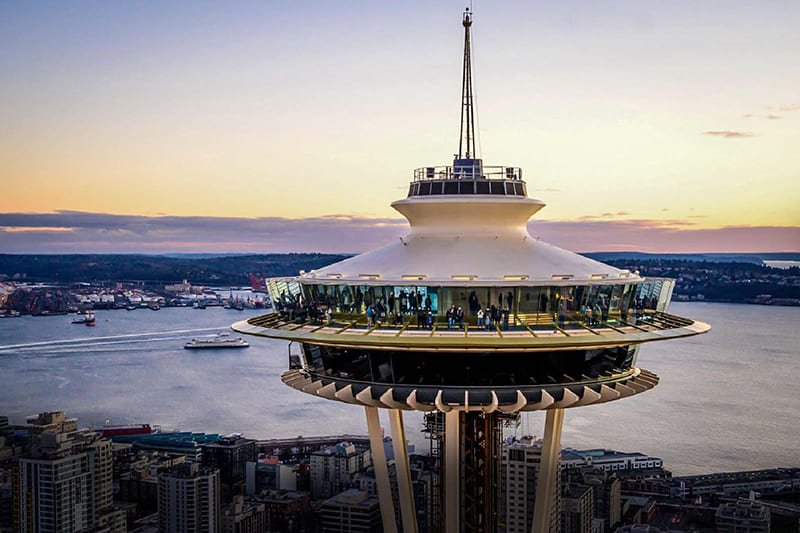
Seattle Center makes a convenient family base. The museum sits a short walk from the Space Needle, with other age-specific stops nearby. For ideas on combining indoor play with a practical day out, explore our guide to Seattle with kids.
Orca Cove for babies, busy neighborhoods for growing imaginations
Infant
The dedicated Discovery Dock inside Orca Cove includes mirrors, movable soft mats, grab bars and sensory exploration for children eighteen months and younger. Keep the outing short and follow the baby's cues.
Toddler
An excellent match for pretend fishing, a child-sized cafe and beginning role-play. Orca Cove prioritizes children under three, giving toddlers a more suitable starting area than the busiest exhibits.
Little Kids
Strongest all-around fit. Preschoolers can become shoppers, post office workers, builders and artists, moving between familiar routines and imaginative challenges.
Big Kids
Children seven to nine can enjoy the maker area, air experiments and increasingly elaborate pretend scenarios. They may use a space differently from preschoolers, so let them choose the more challenging stations.
Tweens
The museum serves children up to about ten; some younger tweens may enjoy building or helping siblings, but the neighborhood environments are likely to feel too young for most.
Teen
Best as a visit accompanying a younger sibling, not a stand-alone destination. Teens who enjoy facilitating imaginative play can participate, but exhibits are not designed for their age group.
Family Friction: easy to stay and play, less simple to park nearby
KidWaypoint measures how much effort families put into arrival, waiting, weather, walking, stroller use, care facilities, sensory demands and scheduling. A lower score means fewer practical obstacles, not a smaller or less worthwhile attraction.
Seattle Children's Museum is compact compared with large multi-building attractions, and almost all of a visit takes place indoors. The most important arrival detail is finding the museum below the Armory, rather than searching for a separate storefront. Once inside, families can move between exhibits freely, stop for food in the designated area and return the same day. Play areas can still become loud and crowded, particularly with energetic preschoolers, and the cost and walk from a Seattle Center garage are worth allowing for.
| Factor | Score | Why |
|---|---|---|
| Parking & Arrival | 2/5 | Seattle Center garages and street parking are paid and may be busy around events. The museum is on the Armory lower level, so visitors need to follow campus signs and select the correct entry. |
| Queue & Wait Time | 1/5 | Ordinary visits do not require advance reservations. A front-desk check-in is expected, but there is no separately timed circuit of exhibits once admitted. |
| Heat & Weather Exposure | 0/5 | The play spaces are indoors; rain or outdoor temperatures matter primarily for the approach from parking, transit or other Seattle Center stops. |
| Walking Distance & Terrain | 1/5 | Play areas cover approximately 14,000 square feet rather than an extensive campus. The building has elevator or ramp access, though some climbing play structures are child-only activities. |
| Stroller & Mobility Access | 1/5 | The museum is reached by ramp or elevator depending on entrance and has designated stroller parking. Moving a stroller directly through crowded pretend-play stations can be less practical than parking it. |
| Restroom & Baby-Care Access | 1/5 | Public restrooms are available within the museum setting and Seattle Center Armory has additional visitor facilities. Parents should ask the desk about a suitable private feeding or changing location rather than assume a dedicated nursery. |
| Sensory & Crowd Load | 3/5 | Multiple small children can play at once around toy-filled stations, with energetic movement and sound from interactive activities. Choosing a quieter room or a break helps. |
| Schedule Flexibility | 1/5 | No standard reservation or fixed exhibit sequence, and admission is valid for re-entry the same day after checking with the front desk. Special takeover events have separate ticketing. |
| Scored total | 10/40 | Low Friction |
A stroller works for arrival; a parked stroller works better for play
Seattle Children's Museum is inside the Armory on its lower level, reached by an elevator or ramp depending on the entrance. The main question is not whether a stroller can reach the museum, but how a family will manage it while children explore child-sized, active spaces.
The Armory has access doors on the main and lower floors. Follow the Seattle Center wayfinding signs and choose a ramp or lift instead of carrying a loaded stroller down a staircase.
The museum identifies stroller parking in its Transit area and also notes movable stroller-storage areas for special events. Ask the front desk where the current parking space is before settling into a busy exhibit.
Pretend shops and making stations are designed around children handling objects and moving freely. Keep immediate necessities with the supervising adult, and do not leave valuables unattended in stroller storage.
Discovery Dock provides floor-level and sensory activities for infants. Older siblings can join carefully, but this zone gives priority to children under three and is not an area for running or rough play.
Seattle Children's Museum tickets, opening hours and Seattle Center parking
General admission gives access to the museum's play environments and ordinary programming. Washington residency changes ticket prices; every paid admission also carries a required 6% revitalization fee. Ticketed takeover events follow different rules.
| Ticket or rental | Price |
|---|---|
| Non-Washington visitor, ages 1-65 | $18 + 6% fee |
| Non-Washington visitor, ages 65+ | $16 + 6% fee |
| Washington resident, ages 1-65 | $16 + 6% fee |
| Washington resident, ages 65+ | $14 + 6% fee |
| Children younger than 1 | Free |
| Museum members | Free |
| Museums for All eligible admission | $5 per person + applicable fee |
| ACM reciprocal admission discount | 50% off for up to six people, when eligible |
| Takeover-event admission | Separate event ticket |
| Seattle Center garage, non-event self-service: up to 1 hour | $6 |
| Seattle Center garage, non-event self-service: 1-2 hours | $13 |
| Seattle Center garage, non-event self-service: 2-12 hours | $15 |
| Seattle Center garage, event rate | $20-$45 |
Family cost example: Two non-Washington adults and two children ages 1-10 have a base admission of $72, plus $4.32 in required revitalization fees, for $76.32 before parking or extras. Two qualifying Washington adults and two qualifying children have a $64 base, plus $3.84 in fees, for $67.84. Museum pricing lists age 65 in both general and senior bands, so visitors at that exact age should confirm the applicable rate before purchase.
What time does Seattle Children's Museum open?
- Regular school-year hours: Wednesday-Monday, 10:00 a.m.-5:00 p.m.
- Closed Tuesdays in the ordinary schedule.
- Members may enter from 9:30 a.m. during published early-access hours.
- No ordinary advance reservation is required; event takeovers require their own admission.
- Special days, holiday closures and seasonal schedules may differ, so review the live calendar.
The museum is a flexible indoor outing rather than a timed guided tour. Its posted school-year schedule is the most useful baseline, but the Seattle Center calendar and museum takeover days can change access. A paid event ticket is not interchangeable with a regular museum ticket.
Let the child choose the first room, then build breaks around their play
A children's museum rewards a different kind of planning: fewer promises about what to finish and more room for a child to get absorbed in one idea.
- Start in Orca Cove with a baby or young toddler.Its smaller-scale activities and Discovery Dock give very young children a more comfortable introduction before older siblings head to the busy neighborhood.
- Offer one pretend-play mission.A simple request such as delivering a parcel or buying ingredients can encourage play across the post office and market without turning it into a checklist.
- Check the day's educator program.Story Time, Creative Corner and Silly Science rotate. A well-timed activity offers variety without pulling a happy child away from their favorite exhibit too often.
- Keep snacks for the approved eating zone.Bring food if needed, but leave it packed away in exhibit areas. Use the museum snack space or the Armory dining area upstairs for a real break.
- Use the re-entry policy when energy dips.Ask the front desk before leaving; same-day admission makes it possible to stop for lunch, stretch outside and return to finish playing.
- Watch Seattle Center event schedules before driving.A concert or arena event can change garage prices and traffic. For a short museum visit, choosing transit or the monorail may be easier than hunting for street parking.
Questions parents ask before a Seattle Center play day
Beyond admission and opening times, these details help families decide how children can use the space and how to fit it into a wider day.
What makes Seattle Children's Museum different from Pacific Science Center?
Seattle Children's Museum is built around imaginative, sensory and social play for children primarily from birth to ten. It does not ask a four-year-old to interpret a large science exhibit or watch an extended presentation before finding something to do. Instead, children become shopkeepers, mail carriers, doctors, builders and artists, working with objects sized for young hands. The museum's Neighborhood spaces encourage language, negotiation and practical problem-solving as children invent a scenario together. Pacific Science Center, also at Seattle Center, has a different emphasis on science demonstrations, installations and exhibits for a wider mix of ages. Neither replaces the other. A family with a baby and a preschooler may find a more directly age-matched experience at the Children's Museum, while an older sibling focused on bigger science concepts may prefer the other institution. Choosing between them depends more on how a child likes to explore than on a ranking of attractions.
Does Seattle Children's Museum require adults to accompany children?
Yes. A child cannot be dropped off to explore independently during ordinary museum admission. The museum's guidance says that children must remain with a supervising caregiver who is at least eighteen years old. That rule is connected to the type of play taking place: a child might move quickly between a play market and a construction area, try an unfamiliar physical challenge or interact with other families. Adults are expected to participate, supervise and help their child use shared play materials considerately. For a family with multiple young children, agreeing on which adult is watching which child before entering the busiest zones is helpful. The museum is not a childcare service or an unattended enrichment class, even though educators sometimes lead scheduled activities. Families planning a birthday party or group visit should read the separate event rules rather than assuming regular admission arrangements automatically apply.
What can children actually learn in the pretend-play Neighborhood?
A make-believe post office or grocery store can look like ordinary play, but children are practicing a surprising range of skills as they use it. At the Post Office, children match locations to parcels, interpret map symbols, sort objects by size or weight and decide how to deliver items. In the Market they negotiate roles, choose products and make simple counting decisions while pretending to shop. The Clinic and animal-care areas can give children a way to rehearse unfamiliar real-world experiences, such as visiting a doctor or helping a pet. These settings invite conversation between children and adults rather than a scripted lesson. A toddler might repeat the same action many times, while an early elementary child creates an entire story connecting several rooms. Both approaches fit the purpose of the museum. Parents do not need to lead every activity; asking a specific question and letting the child respond is often enough.
Can siblings of very different ages enjoy the museum together?
They can, but it helps to set different expectations. Orca Cove is specifically made for children under three, and older siblings are welcome there only when they give younger children priority. A crawling baby may spend meaningful time with mats and mirrors while a seven-year-old quickly wants to move toward building materials, air experiments or the Neighborhood. Families with two adults can take turns exploring adjacent spaces, then regroup for a shared activity such as making art or delivering pretend mail. With one adult, plan a shorter circuit and ask the older child to help the younger one with a simple, gentle task. Children around ten may still enjoy the creative and technical parts of play, whereas most teenagers are likely to be there mainly to accompany siblings. The goal is not to find one room equally challenging for everyone, but to create a visit in which each child gets at least one activity they can genuinely own.
Is Seattle Children's Museum a good stop before or after visiting the Space Needle?
It can be, especially when the youngest traveler needs active, hands-on time after a more structured sightseeing stop. The museum is on the lower level of the Seattle Center Armory, within the same campus as the Space Needle, so no cross-city transfer is necessary. The experiences are quite different: the Space Needle centers on an observation deck and views, while the museum lets children choose where to play and how long to repeat an activity. A family can use the Children's Museum as the main outing and keep the Space Needle as a separate optional stop, rather than treating both as quick items to check off. Remember that each attraction has its own admission rules and opening times. If rain is heavy, the museum itself is indoors, but the short walk between attractions still needs jackets or a stroller rain cover. Families should also account for meal breaks and crowds across Seattle Center.