Library of Congress with Kids in Washington, DC
The Library of Congress is far more than shelves of books: inside the Thomas Jefferson Building, children can spot gilded figures, decode colorful mosaics, look down into the extraordinary Main Reading Room and explore exhibitions about ideas that shaped America. Admission is free, but every visitor, including children, needs a reserved entry time. For families, the best plan is a focused architectural treasure hunt with an optional stop at The Source rather than a lengthy, hushed library tour.
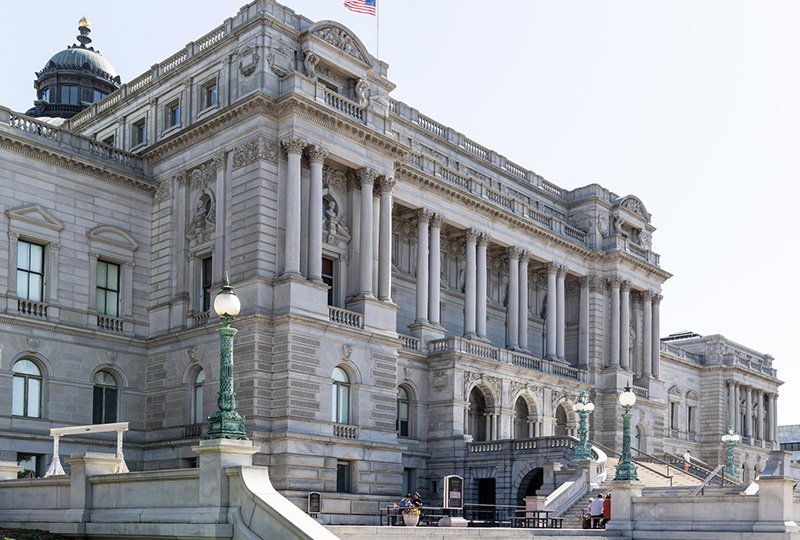
All ages enter at no charge, but each person must hold a free timed-entry reservation; same-day releases are limited.
Admission and visit details →A focused Great Hall, Gutenberg Bible and Reading Room overlook visit takes about an hour; add The Source and changing exhibitions for a longer outing.
School-age children can hunt for architectural symbols and connect the exhibits to history; younger visitors may prefer a very short visit.
No admission cost and indoor galleries help; security checks, reserved time slots, crowds around the overlook and quiet-space expectations require preparation.
See the full Family Friction score →A palace of knowledge: marble staircases, astonishing ceilings and stories behind the books
Start by letting children look up. The Great Hall of the Thomas Jefferson Building is a riot of marble, stained glass, paintings, golden decoration and carefully chosen symbols. Instead of starting with a lecture about Congress, invite children to find an animal, a face, a word carved into stone or a shape that repeats across the hall. This turns the room itself into a discovery game. The library opened this elaborate building in 1897, and it was deliberately designed to celebrate knowledge, reading, science and the arts. Older children can ask why a national library would commission so many artists; younger schoolchildren can simply compare their favorite colors and details. A short stop can be surprisingly memorable because the building makes learning feel physical and enormous.
Head toward the exhibits for a quieter change of pace. The Gutenberg Bible, displayed near the Great Hall, gives families a way to talk about a time when books were painstakingly copied rather than printed at scale. Thomas Jefferson’s Library shows how a private collection helped rebuild the national library after the original holdings were destroyed in 1814. On the upper level, look for the Minerva Mosaic and, when accessible, the Main Reading Room Visitor Gallery: children can see the grand circular reading room from above without treating the research desks as a tourist playground. The Treasures Gallery and temporary exhibitions rotate, so choose one topic that matches your child’s interests instead of trying to inspect every object and label. Children fascinated by maps, music, inventions, history or writing may discover a completely unexpected connection.
For families who want something more participatory, look up The Source on the ground floor before planning your route. This interactive learning experience gives children and adults opportunities to engage with the Library’s collections rather than only view objects behind glass; regular public hours differ from overall building hours. A 60-90-minute family visit might combine the Great Hall, a single exhibit and the overlook, while a longer visit can add The Source. The trade-off is that this is still a working national research institution: lines, security and restricted research spaces are part of the experience. It is a rewarding stop for curious children, particularly when parents frame it as a short adventure into how people preserve stories and ideas, not as a place to run or play loudly.
Washington has more stories than any one building can hold. After hunting for clues in the Library of Congress, explore child-friendly museums, outdoor landmarks and practical family routes in our Washington, DC guide for families.
Best for observant schoolchildren, history lovers and curious teenagers
Infant
The building can be navigated with a baby and a stroller, but security and a timed admission slot add effort to what is mainly a visual stop. Infants will gain little from exhibitions; keep the visit brief.
Toddler
Ornate ceilings may spark momentary delight, but toddlers usually want to touch and explore. The Source may help when age-appropriate and open, although a quiet architectural visit is not a strong primary toddler activity.
Little Kids
Children who enjoy spotting shapes and colors can play a simple “find the owl, book or star” game in the Great Hall. Limit the route to a few eye-catching objects, skip long exhibit labels and plan an outdoor break afterward.
Big Kids
A strong age for an architecture scavenger hunt: look for Minerva, discover the Gutenberg Bible, and compare the reading room to a modern school library. Choose one exhibition so attention does not fade.
Tweens
Tweens can start making connections between printing, Jefferson’s books, historic documents and national memory. The Reading Room overlook, exhibits and audio-guide excerpts offer enough substance for a satisfying history stop.
Teen
Teens interested in art, politics, journalism, history or research may appreciate how the collections support scholarship. Some visitors 16 and older can pursue a Reader Card for actual research, which is different from ordinary sightseeing access.
Family Friction: beautiful indoors, but security and timing still matter
KidWaypoint’s eight-part framework looks beyond ticket price to compare arrival, queues, weather, walking, stroller access, care facilities, sensory load and schedule flexibility.
A free indoor visit makes this a relatively accessible stop, especially for school-age children who can manage an hour of observing architecture and exhibitions. The main friction is logistical rather than physical: reserve a time for everyone, pass airport-style security and allow for crowds at the Main Reading Room overlook. The visit is not built around running or noisy play, so families should plan a short, intentional route.
| Factor | Score | Why |
|---|---|---|
| Parking & Arrival | 2/5 | The Jefferson Building is at 10 First Street SE. Capitol South Metro is about two blocks away; limited metered street parking and distant paid garages make driving less convenient. |
| Queue & Wait Time | 2/5 | Security screening is required for all visitors, and the library warns that March through July can be especially busy. The Main Reading Room overlook may develop a separate line. |
| Heat & Weather Exposure | 0/5 | Most sightseeing is inside the climate-controlled building. Families are exposed to weather mainly while approaching the entrance or waiting outside. |
| Walking Distance & Terrain | 1/5 | The library estimates about half a mile for all self-guided public spaces and roughly 90 minutes to see them comprehensively. A focused family route can be shorter. |
| Stroller & Mobility Access | 1/5 | Accessible ramps and visitor elevators serve public floors and the Reading Room gallery. Free stroller check is available on the ground floor if families prefer not to use a stroller indoors. |
| Restroom & Baby-Care Access | 1/5 | Ground-floor accessible restrooms and a family restroom by The Source are documented. Ask staff about the most convenient changing or private feeding option rather than assuming a dedicated nursing suite. |
| Sensory & Crowd Load | 2/5 | The Great Hall can be busy and echoing, while security and reading-room viewpoints involve standing in groups. Quiet galleries may offer breaks, but a museum-like atmosphere requires self-regulation. |
| Schedule Flexibility | 3/5 | Free timed-entry tickets are compulsory for all ages. Reservations open 30 days out, with limited same-day passes released online at 9 a.m. ET; some spaces have shorter hours. |
| 12/40 | 10/35 | Low Friction |
A stroller-friendly building, but plan around security and crowded viewpoints
The Jefferson Building has accessible visitor routes and elevators. Families can also check strollers at no cost, making it easier to climb to exhibits or manage a curious child on foot.
The public visitor entrance is beneath the monumental stairs facing First Street SE. Ramps approach the screening doors; do not assume the grand exterior staircase is the required route.
Security examines belongings. Bags larger than 18 × 14 × 8.5 inches are prohibited, and every family member needs a timed-entry pass.
Visitor elevators connect the Great Hall, public levels and Main Reading Room Visitor Gallery. Follow posted signs as the gallery may have its own line.
On the ground floor, a complimentary coat-check desk accepts strollers, coats and permitted personal items, useful when you want to navigate exhibits without bulky gear.
Free Library of Congress admission: passes, visitor hours and the best arrival plan
Sightseeing inside the Thomas Jefferson Building costs nothing, but a timed-entry reservation is required for every visitor, including babies. Check The Source and special program hours separately from the main building schedule.
| Activity or service | Cost | What to know |
|---|---|---|
| Thomas Jefferson Building entry | Free | Reserve a timed-entry ticket for each visitor regardless of age. |
| Great Hall, Gutenberg Bible and standard exhibitions | Included | Public spaces and most exhibitions are part of ordinary admission, subject to closures. |
| Main Reading Room Visitor Gallery | Included | View the celebrated reading room from above when the gallery is open; queues can form. |
| Limited Main Reading Room walkthrough | Free; limited availability | Five-minute visitor walkthroughs at specified times, with separate first-come passes distributed in the Great Hall. |
| The Source interactive experience | Included | No additional ticket; capacity is limited, and its public hours are shorter than those of the building. |
| Public audio guide | Free | Short thematic listening stops can help older children understand the art and history. |
| Library Shop | Optional purchase | Books and souvenirs are extra; browsing does not require a paid ticket. |
| Parking and public transportation | Varies | There is no dedicated free tourist parking. Use Metro, street meters or a paid garage. |
Family cost example: Two adults, a 10-year-old and a 14-year-old pay $0 for entry and exhibitions if they reserve four free timed-entry passes. Metro fares, parking, shopping and off-site meals are separate.
When can families visit the Jefferson Building and The Source?
- Tuesday, Wednesday, Friday and Saturday: general visitor hours 10:00 a.m.-5:00 p.m., with last entry 30 minutes before closing.
- Thursday: general visitor hours 10:00 a.m.-8:00 p.m.; evening programs may have additional ticket requirements.
- Monday and Sunday: the visitor experience is closed, along with select federal holidays.
- The Source: Tuesday-Friday 1:00-5:00 p.m.; Saturday 10:00 a.m.-5:00 p.m. Weekday mornings are primarily for booked groups.
- Passes: reserve up to 30 days ahead. Limited same-day passes appear online at 9:00 a.m. Eastern time.
A morning reservation is useful for photographing the Great Hall before the busiest part of the day, but families intending to visit The Source should choose afternoon entry on weekdays. Confirm opening hours, exhibition notices and holiday exceptions immediately before traveling.
Turn the grand library into a child-sized discovery route
These choices help families appreciate the extraordinary interiors without turning the visit into an exhausting museum marathon.
- Reserve a pass for the baby, too.Every visitor needs a free timed-entry ticket, no matter their age. Book the full family together and arrive at the ticket time, not significantly earlier.
- Make the Great Hall a symbol hunt.Ask children to spot carved names, animals, painted figures and the bronze compass rose on the floor; this keeps the first stop active without disturbing others.
- See the Reading Room from the gallery first.The overlook gives families a superb view without needing a researcher card. Separate limited walkthroughs of the room itself are not guaranteed.
- Match The Source to your entry time.On weekdays it opens to regular visitors at 1:00 p.m., and entry is first-come, first-served. Do not choose a morning visit only for this experience.
- Check one exhibition theme before arrival.Pick Jefferson’s Library, the Gutenberg Bible or an exhibition that connects to your child’s interests instead of reading every label.
- Feed everyone before security.There is no general visitor dining on site at present. Bring a realistic snack and bathroom plan, and remember that eating is not allowed in The Source.
- Use Metro to avoid a parking puzzle.Capitol South station is nearby. A predictable arrival helps more than circling Capitol Hill for a meter with impatient children.
- Expect airport-like screening.Check the prohibited-item list and bag-size limit before leaving your hotel; free stroller and coat check is available after arrival.
Library of Congress with kids: detailed answers before your visit
Where to enter, how free reservations work, which rooms children can see and how to plan a satisfying visit without museum fatigue.
What is the Library of Congress, and why is it worth visiting with kids?
The Library of Congress is the national library of the United States and a major research institution that preserves books, photographs, maps, recordings and other cultural materials. For ordinary visitors, the most memorable experience is often the Thomas Jefferson Building, which feels more like a grand art-filled palace than a neighborhood library. Families can explore the elaborate Great Hall, see rare books and rotating exhibitions, and view the famous circular Main Reading Room from a public gallery. Children do not need to know American history in advance: ask them why a library needs a building full of paintings and sculptures, and how preserving books and documents helps people understand the past. This works best as a thoughtful, visually engaging stop for school-age children rather than a quiet-room homework outing.
Where is the Library of Congress in Washington, DC, and which entrance should visitors use?
The main sightseeing destination is the Thomas Jefferson Building at 10 First Street SE, Washington, DC 20540, just east of the U.S. Capitol. The visitor entrance is on the First Street side beneath the large exterior staircase, between Independence Avenue and East Capitol Street. Approach by the accessible ramps and follow posted screening signs; do not mistake the monumental staircase for the required public entrance. Capitol South Metro station on the Orange, Blue and Silver lines is about two blocks away. Union Station is a possible alternative but involves a longer walk. The Library of Congress operates several buildings, so put “Thomas Jefferson Building” into navigation rather than searching for any Library of Congress office.
Is the Library of Congress open to the public, and do families need tickets?
Yes. The Thomas Jefferson Building is open to the public, and standard admission is free. However, all visitors must obtain a free timed-entry pass, including infants and children; a parent’s pass does not cover the rest of the family. Reservations become available 30 days before the visit, and the library releases a limited number of same-day passes online at 9:00 a.m. Eastern time. Book through the official visitor page and keep your passes available on a phone or printed for scanning. Passes are for a specific date and time and cannot be sold or transferred. Large organized groups of 21 or more use a separate booking process. A free attraction can still require advance planning, particularly during school holidays.
What to see at the Library of Congress with children if we have only one hour?
Begin in the Great Hall with its colorful ceiling, grand staircases and marble decorations. Spend ten minutes letting children choose three details to remember rather than explaining every inscription. Next, find the Gutenberg Bible and ask how printing changed the availability of books. If your family likes history, continue toward Thomas Jefferson’s Library; if architecture is the greater attraction, make the Main Reading Room Visitor Gallery your priority. Viewing the reading room from above is often the moment children understand the scale of the building. With additional time, consider the Minerva Mosaic or one rotating gallery. The library estimates that a complete self-guided circuit through public spaces can take about 90 minutes and involve half a mile of walking, so a selective one-hour route is perfectly reasonable.
Can we go inside the Main Reading Room or only look down from above?
Most casual sightseeing visitors see the magnificent Main Reading Room from the designated visitor gallery, reached by stairs or visitor elevator. Entering research areas is not the same as visiting the overlook. The library also currently offers limited approximately five-minute public walkthroughs of the Main Reading Room during designated periods: generally Tuesday through Friday 10:30-11:30 a.m. and 2:00-3:00 p.m., plus Thursday evenings 5:00-7:00 p.m. Separate free first-come passes are distributed shortly before each session, and school groups are excluded. Availability and procedures can change, so do not promise a room walkthrough to your children. Even if those passes run out, the public gallery is an excellent alternative and does not require a researcher card.
Is there anything interactive for children at the Library of Congress?
Yes: The Source, an interactive experience on the ground floor of the Jefferson Building, is designed to help visitors engage more actively with materials from the Library’s collections. It is an especially useful addition for children who may find the upper-floor exhibits too text-heavy. No extra paid ticket is needed, but admission is first-come, first-served and subject to capacity. The published public hours are Tuesday through Friday from 1:00 to 5:00 p.m. and Saturday from 10:00 a.m. to 5:00 p.m.; weekday mornings are typically reserved for booked educational groups. Eating and drinking are not allowed inside The Source. Plan your arrival around these shorter hours rather than assuming every family space opens when the building does.
What are Library of Congress visitor hours, and is it open on weekends?
The Thomas Jefferson Building is generally open Tuesday, Wednesday, Friday and Saturday from 10:00 a.m. to 5:00 p.m., and Thursday from 10:00 a.m. until 8:00 p.m. It is closed to ordinary visitors on Mondays, Sundays and certain federal holidays. Last entry is normally 30 minutes before closing. Thursday evenings may feature Live! at the Library events, and individual performances or programs can require additional reservations. Research reading rooms follow a different schedule; seeing a researcher listed as working on Monday does not mean the public visitor route is open that day. Check the official calendar and your confirmed pass before going, especially if a holiday affects the week.
Does the Library of Congress have parking, and what is the easiest way to arrive?
The Jefferson Building does not provide dedicated general visitor parking. Around Capitol Hill you may find limited metered or two-hour on-street spaces, but restrictions and availability can make driving frustrating, particularly when Congress is in session or major events take place. Public garages near Union Station are another possibility, although they involve a longer walk and extra cost. For most families already sightseeing in central Washington, Capitol South Metro is a more predictable option: use the Orange, Blue or Silver line, then walk about two blocks north along First Street SE. When parking is necessary, choose a garage before leaving rather than counting on a street spot close to security. Allow additional time if you will carry a stroller or have a scheduled entry.
Can I bring a stroller, diaper bag, snacks and water into the Library of Congress?
The Jefferson Building is accessible, with entry ramps and elevators connecting visitor levels, and its ground-floor coat check can store strollers and permitted personal belongings free of charge. Security resembles an airport screening, so staff will examine bags. The library prohibits bags larger than 18 × 14 × 8.5 inches. The published rules allow appropriately packaged food and beverages at entry, but the institution currently does not offer general visitor dining and some spaces, including The Source, forbid eating or drinking. Feed younger children before your reservation and keep bag contents simple. Ground-floor accessible restrooms are documented, and a family restroom is available outside The Source. If you need a specific changing or feeding arrangement, ask staff on arrival.
Is the Library of Congress suitable for young children and toddlers?
A family can bring younger children, but the experience is not mainly designed for them. The Great Hall offers vivid sights, and a brief game of looking for colors or figures can hold a preschooler’s attention. Still, long exhibit captions, line management, security and the expectation to be considerate around visitors and researchers may be difficult for toddlers. Many families with children ages four to six will be happier with a 30-45-minute look at the building than a full multi-gallery circuit. Older children ages seven and up can more easily appreciate rare books, historical displays and the Main Reading Room view. If your priority is hands-on engagement, consult The Source’s hours and capacity rules and plan an outdoor break near the Capitol afterward.
How much time should we allow for the Library of Congress with kids?
Most families can enjoy a focused visit in about 60-90 minutes after entering. That is enough for the Great Hall, the Gutenberg Bible, a stop at the Main Reading Room overlook and one additional exhibition without trying to read everything. Allow up to two hours if a child is especially curious, if you want to visit The Source or if queues around popular viewpoints move slowly. The library itself estimates about 90 minutes and half a mile of walking to experience its self-guided public spaces more fully. Arrive for your reserved time, but also account for travel to Capitol Hill and mandatory security screening. A shorter visit that leaves children wanting more is often more successful than insisting on every room.
Can families take photos inside the Jefferson Building?
Casual sightseeing photographs are generally part of many visits, but you should obey signage and staff directions in sensitive exhibit or research areas. The library has a separate permitting policy for formal photography, including posed or staged portraits, graduation sessions and other planned photo shoots-even when the photos are for personal, noncommercial use. That distinction matters if your family intends to bring professional equipment or stage a dedicated portrait session rather than take ordinary vacation snapshots. Keep children clear of stairways and visitor circulation routes when taking pictures, and avoid flash or photography in any display where it is restricted. Check the posted photography rules and ask visitor staff if an activity seems to fall into a gray area.