US Capitol with Kids - Washington, DC
A visit to the U.S. Capitol is not simply a photo stop outside the dome. Families can enter the underground Capitol Visitor Center, watch a short film about representative government, and join a guide through the Crypt, Rotunda and National Statuary Hall. The tour is free, but it moves as a group and requires screening, so school-age children who can listen and walk for about an hour get the most out of it.

Admission to the Visitor Center and the standard escorted Capitol tour costs $0. A timed tour pass is required; advance reservations are strongly recommended.
Free passes, hours and arrival →The guided program lasts about one hour, including a short orientation film. Add time for security, finding the correct entrance, exploring Exhibition Hall and transit.
The huge dome, sculptures and stories of lawmaking are most meaningful to school-age children and teens. A quiet, moving group tour can be tough for toddlers.
No admission charge, accessible facilities and indoor rooms help; security checks, strictly controlled bags, group pacing and limited tour availability require more preparation.
See the full Family Friction score →The dome is only the beginning: stepping into America’s working Capitol
The first surprise is that families do not start by walking through the famous western staircase. The public entrance is on the eastern side, beneath a broad plaza, where the Capitol Visitor Center spreads below ground. In Emancipation Hall, sunlight filters through large skylights and children can look up toward the dome that dominates the Washington skyline. A full-size plaster model of the Statue of Freedom, whose bronze counterpart stands on the dome, makes a striking first encounter: ask kids to compare the model with the tiny figure they spotted outside. Exhibition Hall provides an accessible way to introduce the building and the work Congress does before the tour begins. Unlike a children’s museum, this is a working government complex, so exhibits are mostly for looking, reading and discussing-not running or touching.
On the guided tour, the scale changes dramatically. In the Rotunda, children can look up at the huge painted ceiling, where Constantino Brumidi’s Apotheosis of Washington sits high above the floor; historic paintings and sculptures surround the circular room. Beneath the Rotunda, the Crypt’s columns and vaulted ceiling feel mysterious to young visitors, though the space is architectural, not an underground tomb tour. National Statuary Hall offers another puzzle: why are there so many statues, and who decides whom a state honors? Parents can make the visit less abstract by inviting a child to choose a sculpture, notice a detail of its clothing, or imagine how lawmakers once gathered in that chamber. These are actual historic spaces, and guides explain their changing uses as the group moves.
The most interesting lesson for tweens and teenagers is that the building is not merely a monument to the past. The U.S. Congress still conducts its work here, and access may change when official events are taking place. The standard tour does not visit the House or Senate Galleries, and it should not be described as an opportunity to watch a live session of Congress. The experience works well when children already know a little about American history, civic decisions or the difference between the House and the Senate. After the tour, families can return to the Visitor Center’s exhibits, browse a bookstore-style gift shop, or plan a meal at Capitol Cafe. A thoughtful one- to two-hour stop here can make nearby monuments and museums feel more connected to the real decisions made in Washington.
Turn the Capitol tour into a bigger Washington history adventure. Pair its soaring Rotunda and stories of Congress with free museums and kid-friendly stops in our Washington, DC family travel guide.
Who will enjoy a guided walk through the Capitol’s history?
Infant
Babies may accompany an adult, but security, long indoor waits and group movement make this primarily a caregiver-led visit. Use the Visitor Center’s family restrooms and lactation room; do not plan around a baby enjoying the historic narration.
Toddler
A toddler might like the giant Statue of Freedom model and high skylights, but a formal tour is usually a poor match for constant motion and unpredictable attention. A short Visitor Center stop may be enough.
Little Kids
Some children enjoy spotting statues and looking up into the dome, but the one-hour tour requires listening, walking together and keeping hands off historic surfaces. It is not a reliable pick for most preschoolers.
Big Kids
This is the first age when the unusual architecture and guided stories can really click. Before arriving, explain what Congress does and let children choose one detail to remember in each chamber.
Tweens
Tweens can follow how the building has changed over time, compare the Rotunda and Statuary Hall, and ask their guide thoughtful questions about symbols, representation and the Capitol’s history.
Teen
Teens interested in politics, art, architecture or American history may find the strongest connection. Encourage them to notice how a working legislature balances ceremony, public access and security.
Family Friction: security and tour structure matter more than ticket cost
KidWaypoint scores eight practical demands-arrival, waiting, weather, walking, mobility, baby care, sensory load and schedule freedom-rather than judging the historic importance of the attraction.
The Capitol costs nothing to tour and has strong accessibility facilities, but it is less spontaneous than a typical free museum. A timed reservation, security screening and restrictions on food, beverages and larger bags all affect families. Visitors must reach the East Front entrance, remain with the tour group and accept occasional room closures. On the plus side, the Visitor Center has elevators, family restrooms, changing tables and a separate lactation room; exhibition areas provide a gentler alternative for children who are not yet ready for the full tour.
| Factor | Score | Why |
|---|---|---|
| Parking & Arrival | 3/5 | The Visitor Center entrance is on the East Front, not the National Mall-facing west side. There is no public parking at the Capitol itself; Metro or walking from nearby transit is usually more practical. |
| Queue & Wait Time | 3/5 | All visitors pass through a security checkpoint, which can slow down arrival on busy days. Timed passes reduce uncertainty about tour places but do not remove screening or waiting. |
| Heat & Weather Exposure | 1/5 | The visitor exhibits and historic tour rooms are indoors, making this a viable rainy-day choice. The approach from Metro and any outdoor security line can still be affected by heat or rain. |
| Walking Distance & Terrain | 2/5 | The route covers several large historic spaces plus the underground Visitor Center. The guide sets the pace; adding Exhibition Hall or sightseeing on Capitol Hill increases the total walking. |
| Stroller & Mobility Access | 1/5 | The Visitor Center and standard tour are accessible; elevators, wheelchairs and mobility assistance are available. Strollers are allowed in the Visitor Center, though families should ask staff about the practical tour route. |
| Restroom & Baby-Care Access | 1/5 | Family restrooms have changing tables and there is a designated lactation room beside Capitol Cafe. Standard food and drink restrictions mean caregivers should prepare carefully for infant feeding and medical needs. |
| Sensory & Crowd Load | 2/5 | Crowded entry areas, security, group narration and expansive echoing rooms can challenge noise-sensitive children. There are quieter spaces in the Visitor Center, but the tour itself is not self-paced. |
| Schedule Flexibility | 2/5 | Advance reservations are advisable, the final tour is at 3:20 p.m. and the route can change for official business. Once the tour begins, visitors are expected to remain together. |
| Scored total | 15/40 | Medium Friction |
Strollers, security screening and the quiet comforts beneath the Capitol
Capitol Visitor Center is designed for public access, with elevators, family restrooms and a dedicated lactation room. The biggest adjustment for caregivers is not a staircase: it is packing for the screening rules and managing a fixed group tour.
The public entrance is below the East Front plaza. If you approach from the Mall, allow extra time to walk around to First Street and East Capitol Street.
Staff can explain wheelchair or stroller routes, and accessible guided tours are offered. For individual mobility arrangements, contact the Office of Congressional Accessibility Services.
Large bags and many everyday family supplies may be refused. Ordinary food and drinks are not allowed through the Capitol security entrance; exceptions can be considered for necessary childcare or medical supplies.
There are family restrooms with changing stations and a separate lactation room near Capitol Cafe on the lower level. Use them before your scheduled tour whenever practical.
Are US Capitol tours free? Passes, opening hours and travel logistics
The Visitor Center is free to enter, but access to the historic Capitol rooms is by guided tour with a free timed pass. Make the reservation before your visit and budget for transit, security and a possible meal-not an admission fee.
| Activity or service | Cost | What to know |
|---|---|---|
| Capitol Visitor Center admission | Free | Exhibition Hall and public Visitor Center spaces; standard security screening applies. |
| Standard guided Capitol tour | Free | Timed pass required; reserve ahead for the Crypt, Rotunda and National Statuary Hall. |
| Same-day tour pass | Free, if available | Limited walk-up passes; arrive early and ask at the Information Desk. |
| House or Senate gallery visit | Separate process | Not part of the regular tour; gallery access has its own rules. |
| Special tours or family programs | Typically free | Availability, age suitability and advance signup vary by program. |
| Capitol Cafe meal | Menu prices vary | Food may be purchased and consumed in the designated café area. |
| Metro or bus travel | Fare varies | Capitol South and Union Station are useful transit approaches. |
| Nearby public parking | Varies | No general public parking at the Capitol; use commercial garages or transit. |
Family cost example: Two adults and two school-age children pay $0 for a standard guided Capitol tour. A timed pass for each traveler is still necessary; transportation, nearby parking, café purchases and souvenirs are separate expenses.
US Capitol Visitor Center hours and the last tour of the day
- Open Monday-Saturday, 8:30 a.m.-4:30 p.m.; closed Sunday.
- Last guided tour begins at 3:20 p.m.; plan enough time for entrance screening.
- Closed on Thanksgiving, Christmas, New Year’s Day and Inauguration Day.
- Route and individual room access can change because Congress is a working institution.
The standard guided visit is approximately one hour, including a 13-minute orientation film. A family should usually allow 1.5-2.5 hours for the combined arrival, screening, tour and a look at the exhibits. Same-day walk-up passes can be limited; the official site recommends that visitors without reservations arrive no later than 2:30 p.m. and ideally earlier.
Six ways to keep a Capitol tour engaging for school-age children
A little preparation turns a formal history tour into a memorable story without running into security or scheduling surprises.
- Reserve a free timed pass as soon as your day is set.Every tour visitor needs a pass, and popular dates fill. Check the exact time, then leave a buffer for the East Front walk and security screening.
- Prepare one big question about Congress.Ask children how a proposal becomes a law, or why there are two chambers. The guide’s narration makes more sense with a simple starting idea.
- Show kids the Rotunda ceiling before you go.Look up an image of the Apotheosis of Washington and ask what they notice. Seeing the enormous original overhead becomes a moment of recognition.
- Keep prohibited items out of your day bag.Do not count on bringing ordinary snacks, bottled drinks or oversized backpacks into the building. Read the current list and contact accessibility staff about essential needs.
- Use the Visitor Center for a rest stop.Family restrooms, changing tables, the lactation room, Exhibit Hall and café can help reset the day before or after the guided portion.
- Allow for history to change the route.This is an active seat of government; a tour may skip or reroute around an area. Build your visit around the experience, not a promise of any single room.
US Capitol tours with kids: the questions that matter before booking
Detailed answers about the building, guided tour length, free passes, security, food, family facilities and travel to the East Front.
What is the US Capitol, and why is it interesting for children?
The U.S. Capitol is the building where the United States Congress meets: the Senate and House of Representatives work here, and it is also home to a remarkable collection of historical art and architecture. On a standard guided visit, families discover how the building developed while passing through the Crypt, the circular Rotunda beneath the dome and National Statuary Hall. Children can look up at enormous paintings, compare statues representing different states and learn that the rooms have served different purposes over time. It helps to explain in advance that this is a working government building, rather than an interactive museum or a tour of the White House. For children aged seven and older, a simple conversation about laws, voting and representation can make the guide’s stories much easier to follow.
Where is the US Capitol building, and where is the visitor entrance?
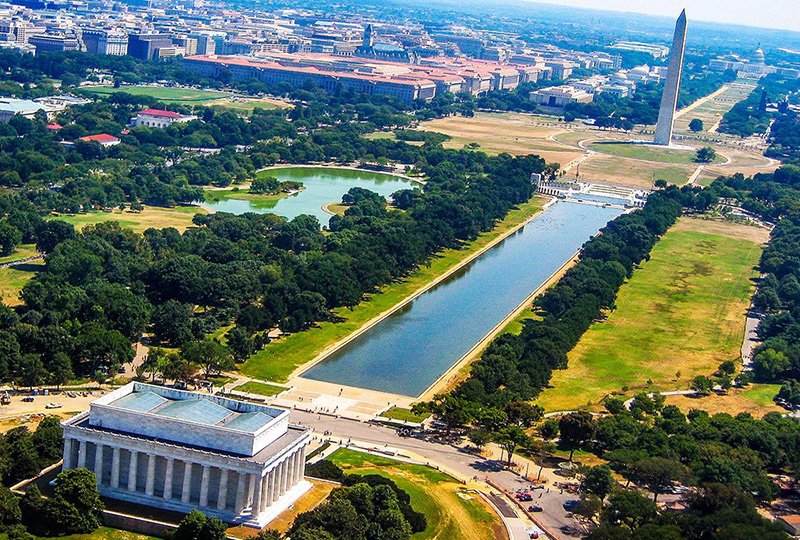
The Capitol stands at the eastern end of the National Mall in Washington, DC, beyond the Capitol Reflecting Pool. However, the actual public tour entrance is not on the western lawn you often see in pictures. Families must go to the underground Capitol Visitor Center on the East Front, at First Street and East Capitol Street. Approaching from Union Station or Capitol South Metrorail station can be straightforward, though both require some walking. Visitors coming from the Smithsonian museums to the west must continue around the large Capitol grounds to reach the eastern entrance. For navigation, search for “U.S. Capitol Visitor Center” rather than simply the Capitol dome; arrive early enough for street crossings and the security line.
How long is the US Capitol tour, and how much total time should families allow?
The official guided program takes about one hour, including a 13-minute orientation film before the historic-room portion of the tour. Families should not schedule the next attraction exactly one hour after the printed tour time, because reaching the Visitor Center and completing the mandatory security screening take additional time. A sensible planning window is 1.5 to 2.5 hours for a guided tour, a short look at Exhibition Hall and necessary restroom breaks. If you want a relaxed meal at Capitol Cafe or extra exhibit time, allow longer. Tour rooms and routes can change when the Capitol is needed for official work; that may also affect pacing. The experience is best treated as a scheduled appointment, not an attraction you can enter and leave at any moment.
Do US Capitol tours cost money, and can you enter without a reservation?
The standard guided Capitol tour is entirely free, and the Capitol Visitor Center does not charge admission. However, to enter the historic Capitol rooms, visitors need a tour pass, which can be booked through the official timed-entry system at visitthecapitol.gov. Advance reservations are recommended, especially during school breaks and busy spring travel dates. A limited number of free same-day passes may be available at the Visitor Center information desk, but families should not rely on obtaining enough places at a convenient time. Officials advise walk-up visitors to arrive as early as possible and no later than 2:30 p.m. A reservation does not bypass security screening. The House and Senate Galleries are not included in the standard guided tour and have separate access procedures.
What will we actually see on the guided tour of the US Capitol?
The standard route usually includes three significant spaces: the Crypt, Rotunda and National Statuary Hall. The Crypt is a column-lined room beneath the center of the Capitol; the Rotunda is the soaring circular hall with paintings, statues and the decorated dome high above; and National Statuary Hall was once the House chamber and now displays sculptures associated with the states. A guide explains the symbolism, building history and important events connected to these rooms. The tour generally begins with a short orientation film. Afterward, visitors can explore Exhibition Hall in the underground Visitor Center at their own pace. Since Congress still uses the building, officials may close or substitute rooms with little notice. A regular ticket does not mean admission to the House or Senate chambers or a chance to see legislators debating.
What are US Capitol tour hours, and is the building open on Sunday?
The U.S. Capitol Visitor Center is normally open Monday through Saturday from 8:30 a.m. to 4:30 p.m., and the last regular guided tour starts at 3:20 p.m. It is closed to ordinary visitors on Sundays, Thanksgiving Day, Christmas Day, New Year’s Day and Inauguration Day. The existence of an open Visitor Center does not mean that every timed tour slot is available or that every room will be on the route. The safest plan is to check the official booking calendar for your specific date and reserve the admission passes shown there. If you are visiting with young children, a morning reservation can leave time for a calmer lunch and a second Washington activity later in the day.
Can I bring a stroller, diaper bag, snacks or water into the Capitol?
Strollers are permitted in the Capitol Visitor Center, and the complex has elevators, accessible restrooms and mobility assistance. However, the U.S. Capitol has strict security screening: ordinary food and drinks, including filled water bottles, may not be brought through the Visitor Center entrance, and there are size restrictions on bags. Empty beverage containers are permitted under the general Visitor Center rules, although other areas, such as the legislative galleries, have stricter policies. Officials can make exceptions for items necessary for childcare, medical conditions or disability-related needs; ask ahead rather than relying on an assumption at the checkpoint. There is no general storage service for rejected items. Families with babies can use the changing tables in family restrooms and the dedicated lactation room near the lower-level café.
Is the Capitol tour worthwhile for children aged four to six?
It depends much more on a child’s temperament than on the impressive appearance of the building. The standard guided tour requires a roughly one-hour commitment, walking in a group, listening to historical explanations and respecting rules against running, touching art or wandering away. Some five- or six-year-olds who are fascinated by enormous rooms, statues and government may love the Rotunda, particularly if an adult prepares them for what to expect. Others may be happier spending a shorter amount of time in the Visitor Center, viewing the Statue of Freedom model and the exhibits without committing to the formal route. The Capitol is generally a stronger destination for children seven and older. There is no need to force a complete tour if a younger child is already tired after a busy Washington morning.
Does the US Capitol have family restrooms, a nursing room and food?
Yes. The Capitol Visitor Center has family restrooms with baby-changing stations, accessible facilities and a separate lactation room near Capitol Cafe on the lower level. Parents can ask the Visitor Services staff in red jackets or vests to locate these spaces. Capitol Cafe serves purchased food and drinks, so it can be a convenient meal stop before or after the guided tour, but food must remain in the restaurant area rather than being carried into the historic rooms. Standard outside food and beverages cannot pass the Visitor Center screening, with possible exceptions for essential childcare and medical needs. Because there is no public luggage or bag-storage service, carrying a smaller day bag and arranging a snack before entering is often the least stressful approach.
Does the US Capitol have parking, and what is the easiest way to arrive with kids?
There is no general visitor parking at the Capitol itself. Streets immediately around the building have security restrictions, so driving up to an imagined parking lot beside the dome is not a reliable plan. Families can use a commercial parking garage elsewhere on Capitol Hill, though rates, distances and availability vary; for most tourists, public transportation is simpler. Capitol South station serves the Orange, Blue and Silver Metrorail lines, and Union Station is another useful arrival point. Both still involve an outdoor walk to the Capitol Visitor Center on the East Front. Families with a mobility-related need can review the designated ADA pickup and drop-off zones on First Street and ask about the available mobility shuttle. If you need a taxi or rideshare, verify the current permitted pickup location instead of assuming every roadway around the Capitol is open.
Can you visit the House or Senate Galleries during the ordinary Capitol tour?
No. This is one of the most common misunderstandings about the U.S. Capitol tour. The standard one-hour guided experience focuses on the building’s historic spaces: the Crypt, Rotunda and National Statuary Hall. It does not enter the House or Senate Galleries, which overlook the legislative chambers and operate under different access and security requirements. Some travelers may be able to arrange gallery passes through congressional offices, subject to current rules and availability, but that is a separate plan and should not be promised as part of a normal family visit. Galleries also prohibit additional items, including strollers. Parents hoping to show teenagers how Congress debates or votes should research that access separately before travel.