National Postal Museum with Kids - Washington, DC
Across the street from Union Station, the National Postal Museum turns a familiar question-what happens after we mail a letter?-into an adventure through vintage postal vehicles, a railway mail car, rare stamps and interactive sorting technology. Admission is free, there is no timed-entry ticket to organize, and the museum is manageable enough for a focused family visit between other Washington, DC sights.
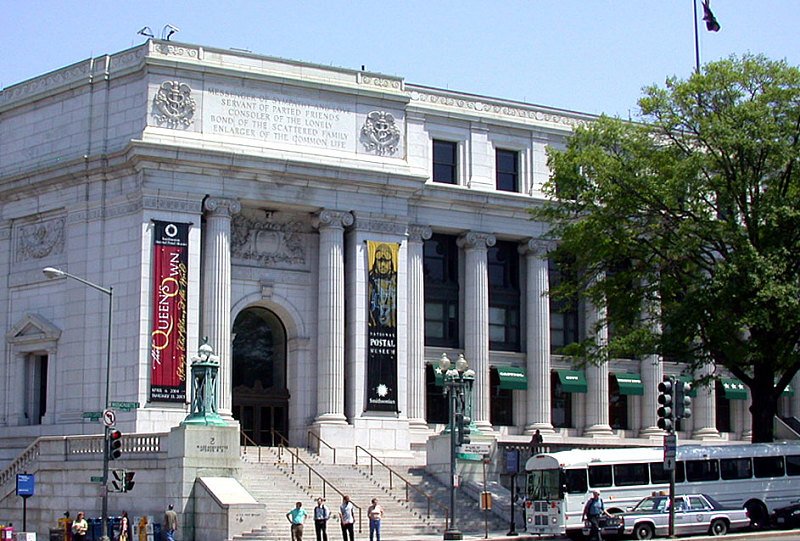
There is no admission charge and no reservation needed for an ordinary self-guided family visit.
Explore free admission and visiting tips →A one-hour highlights circuit works for younger kids; allow longer for stamping, storytelling and the stamp gallery.
Young children enjoy the mail vehicles and hands-on stations; older kids can investigate how delivery systems work.
Free walk-in entry, direct Metro access and good baby-care facilities ease the visit; garage parking and security are the main complications.
See the full Family Friction score →A train car full of letters, an upside-down airplane stamp and a traveling dog
Start downstairs, where the postal story becomes something a child can almost step into. In Moving the Mail, vintage delivery vehicles and the Railway Post Office show that getting a letter across the country once involved coaches, trains, aircraft and people working against a clock. Children can compare the shape and scale of these machines with today's delivery trucks. The railway mail car provides a particularly strong hook: imagine sorting an envelope while the train rattles along, and ask your child to guess how workers knew which sack belonged in which city. Nearby is Owney, the famous traveling postal dog, whose collection of tags makes an unexpectedly memorable story about friendship, journeys and the people who handled the nation's mail. These are exhibits with stories children can retell rather than just objects behind glass.
Upstairs, the William H. Gross Stamp Gallery offers a very different kind of treasure hunt. A stamp may be tiny, but here a mistake can make one internationally famous: look for the Inverted Jenny, with its airplane accidentally printed upside down. In the gallery, families can explore historical messages, identify patterns and try a digital stamp-design activity. Older children who like puzzles can look for the exceptionally rare 1-cent Z-grill and ask why printing methods and reuse prevention mattered. A stamp is a surprisingly accessible doorway into art, geography, technology and history: each little picture invites a question about where it came from and why it was made.
The Systems at Work gallery brings the subject into the present with sorting machines, mail-processing stories and interactive displays. Ask children to imagine mailing a birthday card: how would it move from their mailbox to a sorting center, then into a truck and finally to someone's doorstep? A short family scavenger hunt can turn the museum into a mission: find one object that flew, one that rolled, one that traveled by rail, and one stamp with an unusual image. The museum offers self-guided materials for young learners at its information desk. If your visit coincides with a public story time, that can be a lovely extra; ordinary drop-in visits, however, should not be planned around a school-group program that requires an advance reservation.
Follow a letter into Washington, then explore the city beyond Union Station. Pair this engaging indoor museum with other free Smithsonian experiences, outdoor monuments and family-friendly stops in our Washington, DC guide for families.
Who will enjoy the mail trains, stamp puzzles and postal stories most?
Infant
An infant can join a short indoor outing with a caregiver. This is not a baby-focused play environment, but the lower-level changing facilities and private lactation pod make a brief visit more practical.
Toddler
A curious toddler may enjoy spotting big wheels, a train car and the dog Owney. Keep the itinerary short, hold hands near displays and expect that much of the stamp collection will be too abstract.
Little Kids
Excellent age for finding planes, trucks and trains, playing simple “where does this letter go?” games, and following a three- or four-stop scavenger hunt. Adults help translate the history into concrete stories.
Big Kids
An especially strong fit: compare mail vehicles across decades, try the stamp-design station and connect the sorting exhibit to a birthday card sent to a friend. Allow time for questions and repeat visits to favorite displays.
Tweens
Older children can explore rare printing errors, postal engineering, routing networks and the role of letters during wartime. Encourage them to follow the official one-hour itinerary and choose one object to research afterward.
Teen
Teens who like design, logistics, transportation or unusual historical stories can get a lot from the museum, but it is less of a teen-centered attraction than a science or technology center with extensive digital experiences.
Family Friction: an easy indoor visit with one logistical catch
KidWaypoint scores eight practical factors on a 0-5 scale, where higher values mean more effort for families. Here, the museum is unusually approachable by Metro and provides specific baby-care facilities; parking and arrival screening take more planning.
The National Postal Museum is a low-effort Washington museum stop if you arrive by Metro: Union Station is across the street, admission is free, and there is no timed-entry pass to obtain. The building has accessible routes, changing tables and a private nursing pod. You will still pass security, and those driving should budget for paid parking at Union Station. Some exhibition sound and school-group activity can make individual galleries busier, but the self-guided route is flexible: families can leave after a satisfying hour rather than feeling committed to an all-day visit.
| Factor | Score | Why |
|---|---|---|
| Parking & Arrival | 2/5 | The entrance is at 1st Street NE and Massachusetts Avenue NE, immediately across from Union Station. Metrorail Red Line access is straightforward; drivers must use street parking or paid Union Station garage parking. |
| Queue & Wait Time | 1/5 | No admission ticket or timed reservation is required for general entry, removing a major source of uncertainty. All visitors still undergo security screening, and schools can affect crowd levels. |
| Heat & Weather Exposure | 0/5 | Most of the visit takes place in indoor galleries, so rain or cold weather rarely disrupts the exhibits. Moving between the museum and transit, however, is outside. |
| Walking Distance & Terrain | 1/5 | The museum occupies two public gallery levels rather than sprawling grounds. Families can follow the official 20-minute or one-hour highlights itinerary and choose to skip sections. |
| Stroller & Mobility Access | 1/5 | There is an accessible ramp entrance at 1st Street and Massachusetts Avenue; a wheelchair loan program is available. Families with strollers should use the accessible route between levels. |
| Restroom & Baby-Care Access | 0/5 | Lower-level public restrooms have baby-changing tables, and a Mamava lactation pod is provided in the Franklin Foyer-unusually helpful details for a free museum visit. |
| Sensory & Crowd Load | 2/5 | Multimedia and interactive galleries can be lively, and group visits may produce bursts of noise. Sensory bags with noise-reduction headphones and fidget tools can be requested at the Information Desk. |
| Schedule Flexibility | 2/5 | Open daily 10 a.m.-5:30 p.m. except December 25, and no pass is needed. Families can visit spontaneously, though guided activities and school programs have separate schedules. |
| Scored total | 9/40 | Low Friction |
A museum visit with a stroller: entrance, levels and places to reset
Use the accessible museum entrance at 1st Street NE and Massachusetts Avenue NE. The galleries span two levels, and the lower Franklin Foyer combines family care facilities with a useful stopping point.
The museum identifies the entrance with a ramp at First Street NE and Massachusetts Avenue NE on Level 2. The former Level 1 entrance is not currently available.
Start with large-scale vehicles and Owney downstairs, then visit stamp-design activities upstairs if your child still has energy. Use the museum map to plan the connection between levels.
Everyone passes a metal detector, and bags can be inspected. Pack only what you need for diapers, water and a comfortable indoor visit.
The Franklin Foyer has restrooms with changing tables and a private Mamava lactation pod. Ask museum staff for directions if your child needs a quiet break.
National Postal Museum hours, free tickets and the easiest route from Union Station
Admission is free for everyone, and there are no general-admission timed passes. The main cost decision for many visiting families is transportation, not museum entry.
| Activity or service | Cost | What to know |
|---|---|---|
| General admission - adults | Free | Walk in during opening hours; no ticket or reserved time required. |
| General admission - children | Free | All ages welcome; children should be supervised around valuable collections. |
| Self-guided family exploration | Free | Ask at the Information Desk for a floor map and children’s activity materials. |
| Museum highlights and stamp gallery | Included | Moving the Mail, Systems at Work and the Gross Stamp Gallery are part of ordinary admission. |
| Public docent tours | Free when offered | Walk-in introductions may be offered at 11:30 a.m. depending on docent availability; verify the calendar. |
| School and group programs | Free; advance arrangements may apply | School programs have age-specific booking procedures; not guaranteed for walk-in families. |
| Union Station parking garage | Paid; variable | The museum has no visitor garage of its own. Verify current station pricing before driving. |
| Metro Red Line to Union Station | Standard transit fare | The museum entrance is just across the street from the station. |
| Museum shop / USPS Stamp Store | Optional purchases | Stamp or souvenir purchases are not needed to enjoy the exhibitions. |
| Food and drinks nearby | Variable | The museum has no dining facility; plan a meal or snack around Union Station. |
Family cost example: Two adults and two children pay $0 to enter the museum and enjoy the regular exhibits. A family arriving by Metro pays only its transit fares; driving adds garage or street-parking charges. Snacks, stamps and souvenirs are optional.
What are the National Postal Museum hours?
- Daily opening hours: 10:00 a.m.-5:30 p.m.
- Closed on December 25; special-event arrangements can vary.
- General admission: free and no timed-entry reservation needed.
- Free public tours are subject to docent availability; check the calendar for the specific date.
For a calm visit with a young child, start near opening or build the museum into a flexible afternoon around Union Station. The exhibits are available during regular museum hours, while story times, tours and school activities have their own schedules.
Make the mail feel like an adventure, not a history lecture
A few well-chosen stops can turn a free museum into an excellent hour of discoveries.
- Start with the giant objects.Show younger children the mail trucks, planes and railway post office before asking them to spend time studying stamps in cases.
- Give everyone a delivery mission.Before entering, choose an imaginary postcard destination. At Systems at Work, invite your child to describe each step from collection to delivery.
- Look for Owney’s story.Ask children to spot the dog’s travel tags and imagine how far a railway mail mascot could journey.
- Treat the Inverted Jenny like a detective puzzle.Let children look closely at the upside-down airplane and guess why a printing mistake made this stamp famous.
- Ask for the children’s activity guide.The Information Desk provides a 10 Fun Things To Do With Kids guide and scavenger-hunt materials; choose only a few missions for preschoolers.
- Check the event calendar, not just opening hours.Friday story time and docent tours are extras, while preschool school programs generally require prior arrangements.
National Postal Museum: six practical questions for families
Clear answers about finding the entrance, planning a visit with kids, parking and the best exhibits to see first.
Where is the National Postal Museum located?
The Smithsonian National Postal Museum is at 2 Massachusetts Avenue NE, Washington, DC 20002, immediately across from Union Station. Its public visitor entrance is on the corner of 1st Street NE and Massachusetts Avenue NE; the entrance is on museum Level 2 and has an accessible ramp. If you arrive by Metro, take the Red Line to Union Station and follow the street-level signs toward Massachusetts Avenue. Do not navigate to a National Mall museum entrance: this Smithsonian museum is in the Capitol Hill/Union Station area, away from the main cluster of museums on the Mall. It is a practical stand-alone stop or a short add-on before or after a train trip.
Are National Postal Museum tickets required, and is admission free?
No paid tickets or general-admission reservations are necessary. Entry is free for adults, children, and grandparents, and the regular exhibits are included. You can usually decide to visit on the day itself instead of reserving a timeslot. Expect standard Smithsonian security screening at the door, including a metal detector and inspection of bags. Tours, scheduled group programs, museum-store purchases and transportation have separate arrangements or costs, so free admission should not be confused with everything involved in a visit being free.
What are the National Postal Museum hours, and when is a good time to visit with kids?
The museum is normally open from 10:00 a.m. to 5:30 p.m. every day except December 25. For a preschooler or early elementary-age child, an hour is often more rewarding than an overly ambitious long stay: arrive, see the big vehicles, find Owney, try a short activity, and leave while everyone is still enjoying themselves. Children who like trains, design and puzzles can easily spend 90 minutes to two hours. If your priority is a public story time or guided tour, check the museum event calendar first; these are not identical to the building’s general opening hours.
What are the best things to do in National Postal Museum with kids?
Begin with Moving the Mail, where real and recreated historic transportation explains how letters traveled before modern sorting networks. Look for the Railway Post Office and Owney the traveling postal dog, then head to Systems at Work for the behind-the-scenes process of sorting and delivering mail. The William H. Gross Stamp Gallery adds the famous Inverted Jenny and a digital stamp-design station, which can be especially engaging for children who enjoy art or spotting details. The museum also offers a free family activities guide and scavenger hunt. A useful parent strategy is to ask children to find one flying object, one wheeled vehicle and one image that surprised them rather than requiring them to read every label.
Does the National Postal Museum have parking, and should families drive?
The museum does not have its own visitor garage. Nearby paid options include the Union Station parking garage, reached from H Street NE, and some on-street parking subject to signs and availability. Because prices, event conditions and garage spaces can change, it is better to check parking directly before a trip than rely on a fixed quoted rate. The Red Line to Union Station is usually the easiest alternative: the building is a short walk across the street, and parents do not have to manage a parked car during their visit. If driving with a stroller, navigate to the 1st Street NE/Massachusetts Avenue NE entrance rather than an unavailable lower-level door.
Is the Smithsonian National Postal Museum good for younger children and strollers?
Yes, particularly for a shorter visit with an adult who enjoys turning exhibits into questions and games. Four- to nine-year-olds are often the sweet spot for historic vehicles, mail-sorting stories and the stamp-design activity; a two- or three-year-old may prefer looking at the large train, trucks and Owney rather than long galleries of rare stamps. The museum has an accessible ramp entrance, restrooms on the lower level with baby-changing tables, and a Mamava lactation pod in the Franklin Foyer. Sensory bags with noise-reduction headphones and fidget items are available at the Information Desk. The museum is indoors, making it an excellent rainy-day choice, although its interactive displays and occasional school groups can still be noisy.