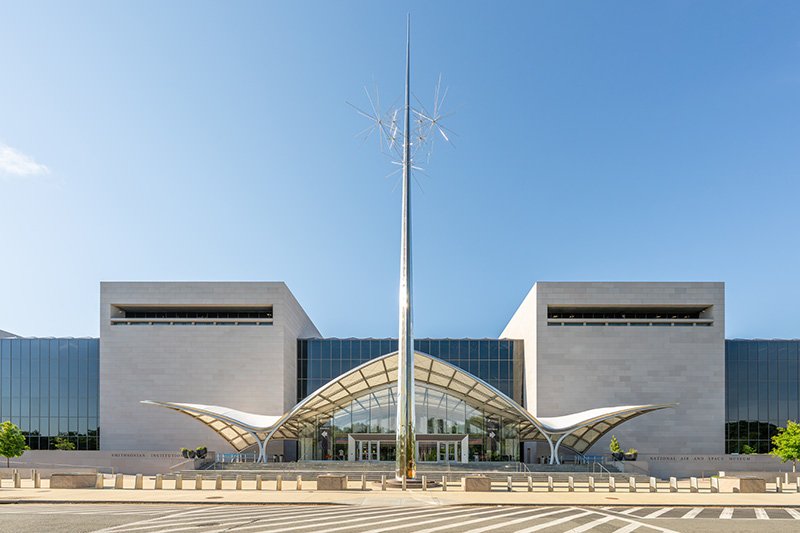
National Air and Space Museum with Kids (Washington, DC)
Stand beneath historic aircraft, encounter the Apollo 11 spacecraft and discover how airplanes actually fly at the Smithsonian National Air and Space Museum on the National Mall. Admission is free, but every visitor - including babies - needs a reserved timed-entry pass for the Washington, DC building.
Every age receives free admission; reserve a timed-entry pass in advance. Planetarium films, IMAX screenings and food may add to the cost.
Free access and extras →A targeted visit takes roughly two hours; add time for How Things Fly, the Moon galleries, demonstrations and a show.
Large aircraft and hands-on flight activities work well from preschool onward; older kids can dig into the history and science.
Indoor galleries and free admission help, but timed passes, security lines, National Mall parking and crowds require planning.
See the full Family Friction score →From the Wright Flyer to Moon rocks: aircraft that make kids stop and stare
The first surprise for children is scale. In the Boeing Milestones of Flight Hall, real aircraft and spacecraft hang above their heads or sit close enough to reveal the details of their construction. Instead of treating aviation history as dates to memorize, turn it into a scavenger hunt: find the earliest-looking flying machine, a sleek aircraft designed for speed, and a spacecraft that looks impossibly small for a human journey. The 1903 Wright Flyer creates a powerful starting point. Parents can ask why its wings and wooden frame look unlike an airplane at the airport today, then follow the story through decades of experiments, risks and breakthroughs. Children may recognize astronauts and rockets long before they understand engineering, and seeing actual objects rather than photographs makes the scale of flight feel real.
For elementary-age children, the most rewarding combination is Destination Moon, the spacesuit worn by Neil Armstrong, and the Apollo 11 Command Module Columbia. The capsule offers a startling contrast: a journey to the Moon involved immense rockets, but the astronauts returned in a cramped, heat-scarred spacecraft. Ask your child where three astronauts could sit, sleep or store their gear. Then visit Kenneth C. Griffin Exploring the Planets to compare the Moon with Mars and the rest of the solar system. Children who enjoy stories may prefer the astronauts’ challenges; curious older kids can think about engineering trade-offs, scientific instruments and why spacecraft must survive both launch and re-entry. These are genuine historic artifacts, not amusement-park replicas.
An especially good reason to visit in 2026 is the refreshed hands-on program. TEXTRON How Things Fly, opened July 1, 2026, features nearly 50 interactives about lift, drag, thrust and other flight forces. Rather than simply watching a plane, children can experiment and discuss what changes when air or motion changes. RTX Living in the Space Age links space technology to everyday life, and U.S. National Science Foundation Discovering Our Universe makes astronomy a story about the tools humans use to investigate the cosmos. Look for staffed Discovery Stations, demonstrations and family programs, but remember these operate on schedules. This is not an attraction where every child must see every object: a younger child may remember one enormous airplane and one good experiment far more clearly than ten galleries rushed in a row.
From the first airplane to the wider National Mall. After exploring the flight galleries, build a Washington itinerary around nearby Smithsonian museums, monuments and kid-friendly breaks with our Washington, DC with kids guide.
Who will get the most out of cockpit displays, rockets and flight experiments?
Infant
A baby can accompany the family in a stroller, and elevator access makes a short visit feasible. The museum is visually rich but primarily intended for older children; prioritize comfort, feeding and a short route.
Toddler
Some toddlers love spotting airplanes overhead, but dense galleries and long explanations can exceed their attention span. Choose a quick airplane-and-rocket loop and avoid trying to complete the museum.
Little Kids
A strong age for How Things Fly, the dramatic suspended planes and simple questions such as “what makes it stay in the air?” Mix short gallery visits with hands-on stops and snacks.
Big Kids
Excellent for children starting to connect mechanics with history. Pair the Wright Flyer and flight experiments with Apollo 11, and let children explain their own theory of how an aircraft flies.
Tweens
A very good match for planetary exploration, astronaut challenges, the engineering of the Moon mission and more demanding flight experiments. Give them a few subjects to investigate deeply.
Teen
Teens interested in engineering, space technology, history or design can explore the exhibits with more independence and context. Those who dislike museums may appreciate a shorter visit centered on their interests.
Family Friction: crowds and booking matter more than the price
This eight-factor KidWaypoint score measures the effort of getting in, finding the right exhibits, moving with children and controlling sensory fatigue - not the museum’s free admission price.
An unusually high-value indoor outing: the exhibitions are free, the galleries have elevators and most families can build their own short route. The friction lies outside the admission fee. Every child needs a timed pass, security screening can create a line, parking near the Mall is limited and interactive galleries can get loud. Plan your transport and choose a few must-see objects rather than forcing a full-building tour.
| Factor | Score | Why |
|---|---|---|
| Parking & Arrival | 3/5 | No general visitor parking is supplied at the museum. Limited metered street spaces around the National Mall, expensive garages and traffic restrictions make Metrorail more predictable. L’Enfant Plaza and Smithsonian stations are each roughly a ten-minute walk. |
| Queue & Wait Time | 2/5 | A free timed-entry pass does not bypass the mandatory security check. Lines may form outside on holidays and busy days; a slightly later arrival within the permitted admission window can sometimes avoid a peak at the hour. |
| Heat & Weather Exposure | 1/5 | Exhibits are indoors and climate-controlled, but families may wait in the outdoor entry queue or walk from a Metro station in sun, rain or cold weather. |
| Walking Distance & Terrain | 2/5 | Large halls and multiple levels add steps. The experience is easier when families prioritize a compact set of galleries and allow a rest rather than trying to cover every exhibition. |
| Stroller & Mobility Access | 1/5 | Strollers are permitted, the Jefferson Drive entrance has ramps, and several elevators serve the building. Crowded interactive areas still require patience and safe stroller parking while children participate. |
| Restroom & Baby-Care Access | 1/5 | Accessible restrooms and dining facilities are available. Families should identify facilities on the museum map and ask staff for the nearest suitable changing or feeding area rather than assume a dedicated nursing room. |
| Sensory & Crowd Load | 2/5 | Suspended aircraft, videos, demonstrations and busy hands-on activities create excitement but also noise and queues. The museum offers sensory bags with headphones and fidgets at the Welcome Center. |
| Schedule Flexibility | 1/5 | Timed-entry passes require planning, but admission is free and a pass does not limit time spent inside. Leaving and returning is a different matter: a new pass is required for re-entry. |
| Scored total | 13/40 | Low Friction |
Strollers, elevators and rest breaks across the flight galleries
Bring the stroller into the building rather than leaving it outside: it is allowed through screening and useful for long galleries. Elevators and entrance ramps help, although the busiest interactive displays can be awkward with a large stroller.
The museum directs all visitors to doors facing the National Mall. Ramps on both sides of the entry vestibule make this the practical step-free approach.
Multiple elevators connect gallery levels. Start with the museum map at the Welcome Center and identify a short route that reduces repeated floor changes.
At How Things Fly, position your stroller safely out of circulation, keep belongings together and stay close while children use exhibits.
Accessible restrooms and Mars Café are onsite. Plan food breaks before leaving: the museum requires a new timed-entry pass to come back.
National Air and Space Museum tickets, hours and getting there
The DC location charges no general admission, but every visitor needs a free timed-entry pass, including infants. An IMAX film or some planetarium programs are separate; check the specific show before promising it to children.
| Activity or service | Cost | What to know |
|---|---|---|
| Museum admission (all ages) | $0 | A free reserved timed-entry pass is required for each person, including infants. |
| Children under age 3 | $0 | Still need their own timed-entry passes, despite free admission. |
| TEXTRON How Things Fly | $0 | Interactive gallery included with general museum access. |
| Destination Moon and flight galleries | $0 | Permanent exhibition galleries are included. |
| Free tours and Discovery Stations | $0 | Subject to staff schedules and availability. |
| Planetarium programs | Free or ticketed | Some live presentations are free; other shows have an extra fee. Check the exact program. |
| IMAX documentaries | Additional cost | Show-specific price and schedule; purchase separately. |
| Parking or Metro | Varies | No dedicated public visitor parking; consider Metro or a commercial garage. |
Family cost example: Two adults and two children can visit the permanent exhibits for $0 when all four reserve free timed-entry passes. Food, paid screenings and transport are additional; the free pass alone never guarantees entry to a separately ticketed show.
What are the National Air and Space Museum hours and entry rules?
- Standard published hours: 10:00 a.m.-5:30 p.m.; closed December 25, with event or holiday changes possible.
- All visitors enter at 650 Jefferson Drive SW on the National Mall, not the opposite side of the building.
- Reserve free timed-entry passes for each person before arrival; security screening is mandatory.
- You may stay beyond your ticketed arrival time until closing, but leaving the building means obtaining a new pass for re-entry.
Check the live visitor page before departure. The museum may announce temporary changes in gallery access as renovation work concludes, and independently ticketed programs have their own start times.
Make the airplanes and spacecraft the story of your day
Think of the museum as a sequence of memorable discoveries rather than a checklist of every aircraft on display.
- Book passes for everyone.Do not forget the baby or a non-participating adult. Even though admission is free, every person must have a timed-entry pass.
- Lead with the story your child knows.A Moon-obsessed child should see Destination Moon before fatigue sets in; a budding engineer may prefer How Things Fly first.
- Do not confuse the two museum locations.The National Mall building is in Washington, DC; the much larger Udvar-Hazy Center is in Chantilly, Virginia, and has different transport arrangements.
- Treat the security line as outdoor time.Bring weather-appropriate layers and keep bags compact. Bottled water is permitted; outside food is not allowed.
- Check today’s demonstrations.Ask the Welcome Center about docent-led highlights, Discovery Stations, story times and other programs available during your visit.
- Plan lunch without sacrificing re-entry.Eat inside at Mars Café if you want to continue exploring; after leaving the building, a new timed-entry pass is required to return.
National Air and Space Museum: detailed family questions
Pass reservations, where the DC museum is located, the best exhibits for children, hours, transport and how to make a free visit work for your family.
Where is the National Air and Space Museum in Washington, DC?
The Smithsonian’s National Air and Space Museum on the National Mall is at 650 Jefferson Drive SW, Washington, DC 20560. The visitor entrance faces the National Mall on Jefferson Drive; arriving on Independence Avenue puts you on the other side of the building and may require walking around it. This address is for the Washington, DC building - not the Steven F. Udvar-Hazy Center beside Dulles International Airport in Chantilly, Virginia. For most families staying in central Washington, the simplest option is Metrorail: L’Enfant Plaza (Exit A) and Smithsonian stations are each approximately a ten-minute walk. Allow extra time in summer heat or with a stroller, and check for temporary pedestrian diversions on the Mall.
How do I get National Air and Space Museum tickets for my family?
General admission is completely free, but the Washington, DC building uses timed-entry passes. Reserve them from the official museum visitor page before setting out, selecting a date and arrival time and requesting one pass for every person in your group, including babies. A pass controls entry time, not how long you may spend inside. On arrival, have the passes ready for scanning and allow time for security screening; a reservation does not eliminate the outside queue. Group visits of ten or more use a separate reservation process. Do not pay an unrelated ticket reseller for basic museum admission. If no passes are available for your chosen date, change the date or check the official release information rather than assuming you can enter by walking up.
What to see at National Air and Space Museum with kids first?
For a first visit with a four- to six-year-old, start with the aircraft hanging in the Boeing Milestones of Flight Hall, then choose a hands-on stop in TEXTRON How Things Fly. A simple challenge - spot the oldest plane, the fastest-looking plane and a spacecraft - turns a large museum into a manageable game. Children roughly seven to twelve often enjoy the Apollo 11 Command Module Columbia, Neil Armstrong’s spacesuit in Destination Moon and the planets galleries, especially if you give them time to ask questions instead of rushing. Teens drawn to science can explore the aircraft engineering, human spaceflight and Discovering Our Universe displays more deeply. The current gallery list matters because the multi-year renovation has been finishing in stages during 2026; check that the objects you care about are on view before making them the highlight of your promise to a child.
What are the National Air and Space Museum hours?
The museum’s standard published schedule is 10:00 a.m. to 5:30 p.m., with closure on December 25 and possible changes for major events or special programming. Timed-entry passes specify when your party can enter, not a fixed length of stay. A two- to four-hour visit fits most families who want time for several galleries, experiments and a rest break; an hour can still work if you deliberately limit the route. The museum recommends having your passes ready for the security line, which can form outside on busy days. Look at the official hours page on the morning of your visit and check separately for the planetarium or IMAX showtimes, which do not necessarily match general gallery admission times.
When did the National Air and Space Museum open?
The museum’s National Mall building officially opened on July 1, 1976, during the United States bicentennial. Its ribbon-cutting was triggered by a signal from the Viking 1 spacecraft travelling near Mars - a detail children may find more memorable than the date itself. In 2026, the building celebrated its fiftieth anniversary with five newly opened or reimagined exhibition galleries on July 1, including How Things Fly and Living in the Space Age. The museum has another location in Chantilly, Virginia, which opened in 2003 and is not the same site. Parents can use that timeline to help older children distinguish historic aircraft from today’s continuously changing aerospace technology.
Is the Smithsonian National Air and Space Museum good for young children?
Yes, provided you match the visit to your child’s attention span. Four- to six-year-olds are often captivated by the huge airplanes, space capsules and the concrete experiments in How Things Fly, even without understanding every written explanation. Toddlers may enjoy watching the planes and rockets for a shorter period but can become tired in crowded galleries; the exhibits are not all toddler play spaces. Strollers are allowed, ramps and elevators are available, and accessible restrooms help families manage the practical side. The museum also offers sensory bags with headphones and fidget items. Choose two or three favorite stops, let the child interact when appropriate, and finish before the visit becomes an endurance exercise.
Does the National Air and Space Museum have parking?
There is no dedicated public visitor parking facility for the museum’s Washington, DC building. A small number of nearby metered on-street spaces may be available, but time limits, fees and restrictions make driving into the National Mall area unpredictable. Commercial garages outside the Mall are another possibility, but families should check operating hours, vehicle clearance and walking distance before reserving a space. The museum identifies L’Enfant Plaza and Smithsonian Metro stations as practical alternatives, both roughly ten minutes away. Accessible parking spaces are available on Jefferson Drive and additional qualifying metered parking options exist on Independence Avenue; posted regulations still apply. For most sightseeing families, Metro is simpler than circling with tired children in the car.
Are the planetarium, food and returning to the museum included?
The galleries themselves are free with your timed-entry pass, and some educational programs and live planetarium presentations are offered without an additional charge. Other planetarium shows and IMAX films may require separate tickets, so check the exact program and price rather than assuming every show is included. Mars Café provides an option for food inside the building; the visitor guidelines permit bottled water but do not allow outside food. This matters because leaving the museum for lunch is not the same as taking an ordinary short break: the museum says you need a new free timed-entry pass to re-enter. Decide in advance whether you want to eat inside, finish the museum first, or risk needing a second reservation.