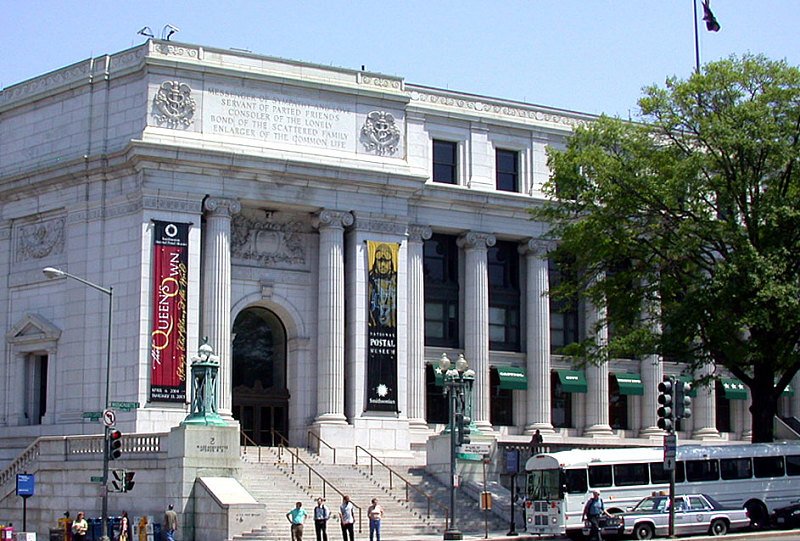
National Museum of American History with Kids
What does American history look like to a child? At the Smithsonian National Museum of American History in Washington, DC, it may look like a huge steam locomotive, the real flag that inspired the national anthem, a pair of ruby slippers or an invention your child gets to design. Admission is free, but families visiting for hands-on play should check the separate Wonderplace and Spark!Lab schedules before setting out.
Museum admission costs $0 for adults and children, and no entry pass is required. Busy-day Wonderplace sessions may use free on-site timed tickets.
Free access and extras →Two hours works for Wonderplace or Spark!Lab plus a few highlights; three to four hours allows a relaxed history-focused route.
Wonderplace is for children 0-6, Spark!Lab focuses on 6-12, and the larger collections reward curious older kids and teens.
Free entry, accessible galleries and strong family facilities simplify visits; Mall parking, security and queues for play areas add friction.
See the full Family Friction score →A tiny historian’s playroom, a giant locomotive and objects with unforgettable stories
For young children, the biggest discovery is that a history museum can be somewhere to play rather than somewhere to stay silent. Wegmans Wonderplace, on the first floor in 1 West, is a 1,700-square-foot interactive environment designed for children six and younger. Young visitors can investigate child-sized scenes and objects that connect everyday activities with the past while caregivers follow their curiosity rather than lecture them about dates. It is especially useful for toddlers who learn by touching, pretending and repeating activities. This is a destination within the museum, not an all-day childcare facility: it has limited capacity and, on busy days, staff distribute free 30-minute timed-session tickets on site. Families who make Wonderplace their main reason for coming should visit Wednesday through Sunday, when the space is scheduled to open from 10 a.m. to 4 p.m.; it is closed Monday and Tuesday even though the rest of the museum opens.
When children are ready for bigger stories, start with America on the Move. The transportation gallery feels almost like walking through chapters of a time-travel adventure: a massive 1401 locomotive, an early road-trip automobile, a historic city transit car and changing streetscapes reveal how railroads, cars and cities transformed everyday life. A seven-year-old may simply want to compare the steam engine with the train they rode today; an older child can consider what happened to towns when railroads arrived, or why container shipping altered trade. The Star-Spangled Banner gallery offers a completely different kind of encounter. Instead of a model or an illustration, children see the enormous original flag that inspired Francis Scott Key to write the words that became the U.S. national anthem. Low lighting protects the textile, and photography is forbidden in that specific gallery. These contrasts - loud-looking machinery and a quiet historic flag - help a museum day feel varied rather than like an endless hallway of display cases.
For children who like solving problems, Draper Spark!Lab offers invention activities aimed primarily at ages six through twelve. Its activities encourage kids to test ideas, adjust a design and discover that engineering rarely works perfectly on the first attempt. Spark!Lab is separately scheduled Wednesday-Sunday, 10 a.m.-4 p.m., and may have a wait when participation is high. Elsewhere, objects such as the ruby slippers from The Wizard of Oz link historical collecting to familiar movies, while displays about national life, work, technology and culture give tweens and teens a chance to ask harder questions about whose stories get preserved. The best family visit combines a single hands-on space with two or three memorable historic objects, not an attempt to read every panel across this two-block-long museum.
One museum opens the door to a much bigger Washington story. After steam engines, inventions and the original Star-Spangled Banner, explore nearby monuments, free Smithsonian collections and outdoor breaks in our Washington, DC with kids guide.
From first pretend play to big questions about American history
Infant
Babies can accompany caregivers through the galleries, and Wonderplace includes developmentally appropriate exploration for very young visitors. Plan around naps and feeding; this is not an infant-only play facility.
Toddler
A particularly good match for Wonderplace, where hands-on exploration is more meaningful than reading labels. Stay close, protect time for a 30-minute session if tickets are in use, and add only one larger gallery afterward.
Little Kids
Excellent for Wonderplace, big locomotives, colorful cultural objects and simple questions about the past. Six-year-olds can also begin exploring invention activities at Spark!Lab, depending on interest and capacity.
Big Kids
Very strong for hands-on invention at Spark!Lab, America on the Move and the history behind the original flag. Let children choose one object to investigate instead of crossing every floor.
Tweens
Strong for exploring design failures and breakthroughs, transportation history, cultural artifacts and the stories behind national symbols. Combine Spark!Lab with deeper gallery discussion.
Teen
Good for teenagers interested in civics, media, technology, design or complex U.S. history. Most will get more from self-selected exhibitions and thoughtful discussion than from the younger-child play spaces.
Family Friction: easy admission, but choose your day for the play rooms
Our eight-part measure looks at the effort beyond admission: getting here, waiting for hands-on sessions, navigating with a stroller, finding care facilities and keeping children comfortable in busy exhibits.
This is one of the easier large Smithsonian visits for families: admission is free without advance passes, stroller access is strong, restrooms and a private lactation room are available, and many collections are indoors. The biggest difficulties are the lack of Smithsonian visitor parking, security lines and the limited schedules or capacity of Wonderplace and Spark!Lab. Choose the right day, use transit when possible and build a short child-led route to avoid museum fatigue.
| Factor | Score | Why |
|---|---|---|
| Parking & Arrival | 3/5 | The museum has no public visitor garage on the National Mall. Nearby metered spaces are few, subject to restrictions and often competitive; commercial garages charge separate fees. Federal Triangle or Smithsonian Metro is more practical for many families. |
| Queue & Wait Time | 2/5 | All guests pass a metal detector and bags/strollers are inspected. General museum admission needs no pass, but popular Wonderplace sessions may require free on-site 30-minute tickets and Spark!Lab may have a line. |
| Heat & Weather Exposure | 1/5 | The museum is indoors and climate controlled; the main weather exposure is walking between Metro, nearby monuments and the entrances, or waiting briefly outside for screening. |
| Walking Distance & Terrain | 2/5 | The large museum spans two city blocks with multiple levels and long corridors. Routes can be shortened to one wing or one floor, but visiting distant exhibitions in a single outing can tire younger children. |
| Stroller & Mobility Access | 1/5 | Strollers are permitted and both entrances are accessible; elevators serve all levels. The automatic door at Madison Drive is currently out of service, so the Constitution Avenue entrance is preferable for fully automatic access. |
| Restroom & Baby-Care Access | 0/5 | Accessible restrooms, companion-care restrooms, a private second-floor lactation room, and a family restroom plus small nursing area within Wonderplace offer strong options for caregivers. |
| Sensory & Crowd Load | 2/5 | Security, bustling family labs, school groups and active exhibits may feel loud or crowded. The museum publishes sensory guidance and identifies quieter first-floor galleries, including Lighting a Revolution and Power Machinery. |
| Schedule Flexibility | 0/5 | The general museum is free and needs no advance pass, with daily published hours. Wonderplace and Spark!Lab follow Wednesday-Sunday schedules, but the wider collection remains available on Mondays and Tuesdays. |
| Scored total | 11/40 | Low Friction |
Bring the stroller - then plan the play-space switch
Unlike some historic buildings, this Smithsonian museum welcomes strollers and offers elevators to every floor. For the smoothest family visit, think about security, Wonderplace stroller parking, feeding privacy and how you will handle breaks.
Both museum entrances are barrier-free, but the automatic door on the Madison Drive side is currently out of service. Constitution Avenue is the most straightforward fully automated entrance.
The children’s play space has its own stroller parking. Move valuables into a small bag, and be ready to supervise closely inside while the stroller is not beside you.
The second-floor Welcome Center has a private, lockable lactation room; it does not have a sink or changing station, but restrooms nearby provide diaper-changing options.
If younger children become overloaded, the first-floor Lighting a Revolution and Power Machinery areas are identified as generally quieter. Avoid scheduling too many large galleries back-to-back.
National Museum of American History tickets, Wonderplace times and the best way to arrive
General admission is free and unticketed. The main planning question is whether your visit includes the separate children’s spaces, which have shorter hours and sometimes manage entry in timed sessions.
| Activity or service | Cost | What to know |
|---|---|---|
| General museum admission | $0 | All ages; walk in during general museum hours, no advance entry pass. |
| Wegmans Wonderplace | $0 | Ages 0-6; Wednesday-Sunday, 10 a.m.-4 p.m.; busy days may use free on-site 30-minute session tickets. |
| Draper Spark!Lab | $0 | Primarily ages 6-12; Wednesday-Sunday, 10 a.m.-4 p.m.; capacity and waiting may apply. |
| Permanent exhibitions | $0 | Includes transportation, national symbols and other available history galleries. |
| Museum dining | Additional purchase | Meals and snacks from onsite cafeterias; menu prices vary. |
| Museum shops | Optional purchase | Souvenirs, books and gifts are not included in free admission. |
| Nearby metered street parking | Varies | Limited supply, enforcement and time restrictions; no Smithsonian garage. |
| Nearby private garages | Varies | Check advance prices, walking distance and hours before driving. |
Family cost example: Two adults, one four-year-old and one nine-year-old pay $0 to enter the museum and visit its standard exhibitions. Wonderplace and Spark!Lab are also free when operating. The total rises only if you choose paid food, shopping, parking or other optional services.
When can families visit Wonderplace and Spark!Lab?
- Museum galleries: daily 10:00 a.m.-5:30 p.m., except announced holidays or special changes.
- Wegmans Wonderplace for ages 0-6: Wednesday-Sunday, 10:00 a.m.-4:00 p.m.; Monday-Tuesday closed.
- Draper Spark!Lab for ages 6-12: Wednesday-Sunday, 10:00 a.m.-4:00 p.m.; Monday-Tuesday closed.
- Wonderplace busy-day sessions: 30 minutes; free timed tickets collected outside the room, not reserved online.
Wonderplace and Spark!Lab are individual activity spaces within a much larger museum; their hours do not match the galleries. For Wonderplace, an initial 10:00-10:30 a.m. session may be unticketed, while later sessions can use free on-site tickets when the room is busy. Check the daily schedule and any staffing-related changes before promising your child a particular play experience.
The museum day that works: one play space, one big object, one good story
Small choices make this enormous free museum feel welcoming rather than overwhelming for families.
- Choose Wednesday through Sunday for hands-on rooms.A weekday visit is not interchangeable: Wonderplace and Spark!Lab are both closed on Monday and Tuesday even while the main galleries remain open.
- Make Wonderplace your first stop with toddlers.Go to 1 West and ask about the current queue. Free 30-minute tickets may be issued in busy periods; these cannot be booked online.
- Give older children an invention challenge.At Spark!Lab, invite them to improve a design instead of finishing an activity quickly. Pair the experience with one object from America on the Move.
- Keep your bag compact for security.Strollers and bags are screened. Sealed snacks may be carried inside, but food can only be eaten in designated museum cafeterias.
- Use the quieter galleries intentionally.When the family needs a reset, seek calmer first-floor spaces or a bench. A short break can be better than pushing through one more busy interactive area.
- Protect your timing for one must-see object.A train-loving child should see the locomotive early; a movie fan may head for the ruby slippers. Never assume your family will have energy for every wing.
National Museum of American History: thoughtful answers for a family visit
Understand what the museum contains, how free admission works, where to find Wonderplace, and how to avoid surprises with hours, food, parking and children’s activities.
Where is the National Museum of American History in Washington, DC?
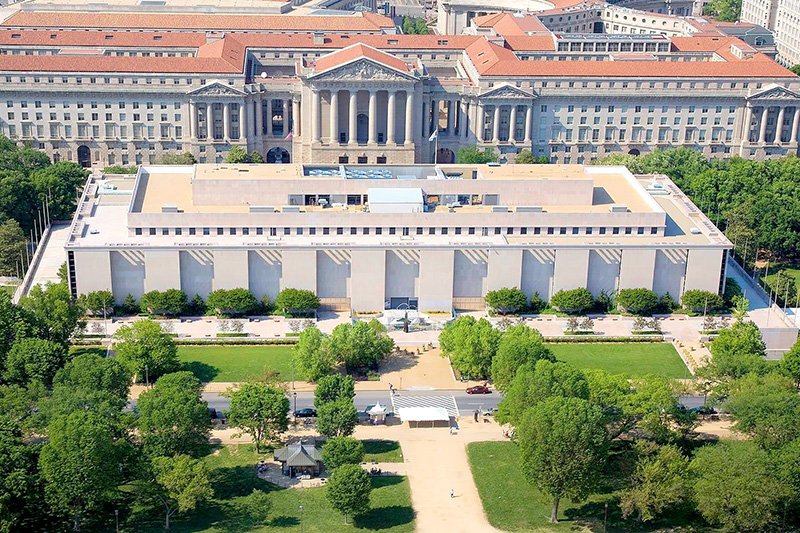
The Smithsonian National Museum of American History stands on the National Mall at 1300 Constitution Avenue NW, between 12th and 14th Streets. You can enter from Constitution Avenue on the north side at first-floor level or Madison Drive on the Mall side at second-floor level. The museum itself provides GPS coordinates of approximately 38.891239, -77.030198. For families with young children, Federal Triangle and Smithsonian Metrorail stations are useful starting points, although the final walk still crosses busy downtown streets or Mall paths. Both museum entrances are barrier-free; if you depend on an automatic accessible door, use Constitution Avenue because the museum currently lists the Madison Drive automatic door as out of service. Do not confuse this building with the nearby National Museum of Natural History or the Air and Space Museum; they are different Smithsonian museums with different exhibitions and rules.
What is the National Museum of American History, and what will children actually see?
It is a Smithsonian museum about life, culture, technology and change in the United States, told through real objects rather than only timelines. Younger children often make their first connection to history through Wegmans Wonderplace, a hands-on room for children aged six and under. School-age visitors may love the vehicles in America on the Move - including locomotives, cars and public-transit history - or inventing and testing ideas in Draper Spark!Lab, aimed at ages six to twelve. The original Star-Spangled Banner brings a major national symbol into focus, while cultural objects such as the ruby slippers from The Wizard of Oz show that films and everyday popular culture also form part of American history. Parents can frame the visit around a simple question: how did people travel, build things, communicate or entertain themselves before we were born? That creates a more engaging day than trying to read every exhibition label.
Is the National Museum of American History free for families?
Yes. General museum admission costs $0 for adults, children and babies, and the museum does not require advance admission tickets or timed-entry passes for its regular galleries. Wonderplace and Spark!Lab are also included at no charge, but the former may distribute separate free, on-site timed tickets during busy periods to control capacity. These Wonderplace session tickets are not available to reserve online in advance and generally cover a 30-minute visit. A parent should therefore distinguish three things: free museum admission, the operating days of the hands-on rooms, and potential waits to enter those rooms. Food in the cafeterias, souvenirs, private garage parking and any unrelated paid services remain separate expenses. You do not have to buy something to enjoy the core collections.
How do National Museum of American History tickets work for Wonderplace?
You do not need a ticket to enter the building. Wegmans Wonderplace is a smaller children’s environment on the first floor in 1 West, and when crowds are heavy its staff may issue free tickets for 30-minute sessions. Tickets are distributed at Wonderplace on the day of your visit on a first-come, first-served basis, rather than through an advance online booking system. The museum’s event guidance says the first 10:00-10:30 a.m. session does not require a timed ticket when this system is operating, with later tickets issued near the entrance and last ticketed entry at 3:30 p.m. Capacity and staffing can change this process, so ask the staff when you arrive. Wonderplace is intended for ages zero through six, though older siblings can come with a group that includes younger children and should play considerately. It is scheduled Wednesday through Sunday, 10 a.m.-4 p.m., not every day the museum is open.
What are the National Museum of American History hours?
The main museum publishes daily hours of 10:00 a.m. to 5:30 p.m., subject to holiday or special-event changes. Crucially, its two popular children’s spaces follow a shorter weekly schedule: Wegmans Wonderplace and Draper Spark!Lab are scheduled for Wednesday through Sunday from 10:00 a.m. to 4:00 p.m. and close on Monday and Tuesday. That means a Monday museum visit can still include the Star-Spangled Banner and major history galleries, but a family hoping for hands-on early-childhood play needs another day. Since children’s spaces can experience temporary changes due to staffing, check the museum’s current visit page just before leaving. Families with toddlers often benefit from arriving near opening, visiting Wonderplace first, taking a snack break in a permitted dining area, then choosing one more manageable exhibition before returning home.
Does the National Museum of American History have parking?
There is no Smithsonian-operated public visitor parking facility at this museum on the National Mall. The museum describes limited time-restricted metered street parking in the area, including spaces along Madison and Jefferson Drives, and numerous independently operated garages around downtown Washington. A parking space close to the museum is therefore not guaranteed, especially during school holidays, festivals or major events on the Mall. If driving is necessary, compare a garage’s walking distance, daily price and closing time before reserving; do not assume roadside parking is free or available all afternoon. For many families, Metrorail to Federal Triangle or Smithsonian is easier and avoids returning to a parking meter in the middle of a museum visit. Travelers with wheelchairs or strollers should check Metro elevator status as well as the museum’s entrance-accessibility notice.
Is Wonderplace suitable for babies, toddlers and older siblings?
Wonderplace was created specifically for children from birth through age six. Its small-scale, touchable activities let toddlers explore through play and pretend rather than through long historical explanations. A baby may participate in age-appropriate exploration with a caregiver, although the adult remains responsible for hygiene, safety and comfort. Older brothers and sisters are allowed when accompanying a group with a child aged zero to six; adults are asked to ensure that older children do not crowd out or endanger younger players. Families with children aged six through twelve may also want Draper Spark!Lab, which focuses more on invention and experimentation. Wonderplace has stroller parking, a family restroom and a small nursing area that is not private. On busy days, play sessions may be limited to 30 minutes, so consider it a meaningful short visit rather than unlimited daycare-style play.
Can we bring a stroller, snacks and baby supplies into the museum?
Yes, strollers are permitted and staff inspect them along with bags at security. Elevators connect the museum’s levels, and both public entrances are barrier-free, though the Madison Drive automatic door is currently out of service. Bottled water and food packed in properly closed containers can be brought inside, but eating is limited to the museum’s designated cafeterias; the museum does not allow families to picnic in exhibition galleries. Brown-bag lunches can be eaten outside on the museum terrace or the National Mall. For feeding privacy, the second-floor Welcome Center has a lockable lactation room with a chair and electrical outlet; changing facilities and sinks are in nearby restrooms rather than within that room. Companion-care restrooms are also available. Pack a compact bag to speed security and keep a short list of essentials accessible rather than buried beneath a stroller.
How long should a family spend at the National Museum of American History?
Two to four hours is a practical target, but the right length depends much more on ages and attention spans than on the museum’s size. With a toddler, consider 30 minutes in Wonderplace if timed sessions are operating, a feeding or bathroom break, and 20-40 minutes seeing the impressive vehicles in America on the Move. For a seven- to twelve-year-old, allow time for Spark!Lab plus the transportation gallery and one major historical object such as the Star-Spangled Banner. Older children who enjoy history could spend most of a day exploring selected exhibits, but the museum spans two blocks and requires a surprising amount of walking. The best strategy is to pick three priorities before entering, have a fourth as a bonus, and end while your children are still interested. If combining multiple Smithsonian museums, one primary museum plus a short second stop is often more realistic than two exhaustive visits.